Health & Wellness

Best Lysine Supplements for Cats of 2026

Plenty of cats carry feline herpesvirus, and most of them show it the same way: a sneeze that never quite clears, a watery eye that crusts over by morning. Lysine is what vets reach for first, and it should be simple — a scoop, some wet food, done. It isn't. The powder that smells like nothing gets sniffed once and abandoned; the one that reeks of tuna gets licked off the plate but carries a fraction of the lysine per scoop. A good supplement is the one your cat will actually finish, at a dose that means something.

I've been down this road with my own cat, and over four months my team and I worked through 14 formulas — powders, gels, chews, and a couple of soft treats — with my two cats and a steady rotation of foster kittens. The pattern held: palatability wins the first week, dose wins the third. The picks below account for the cat who walks away from the bowl as much as the one who cleans it.

1

Tomlyn L-Lysine Powder

Top Pick
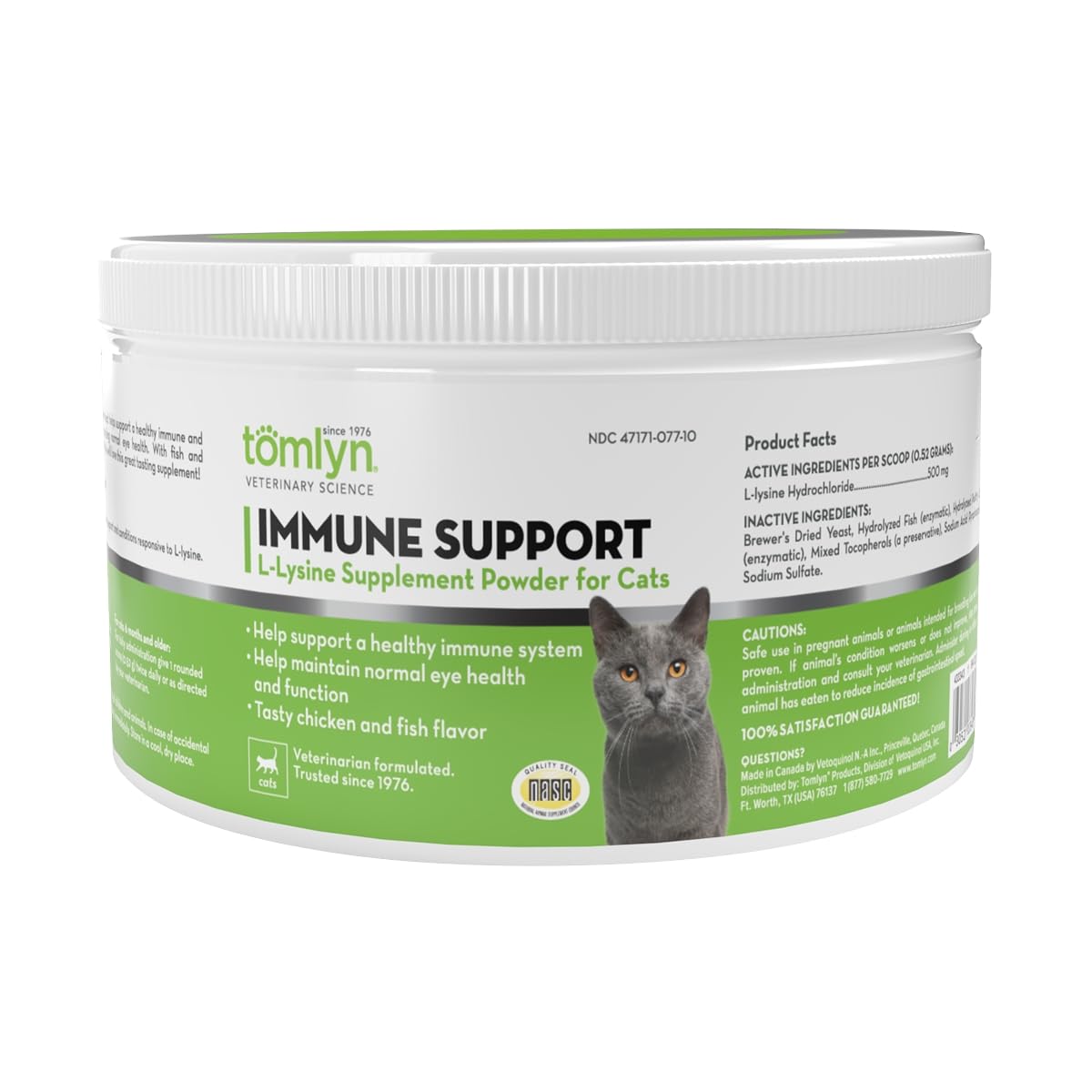
Tomlyn L-Lysine Powder

Daily powder routine

Our Score 9.2/10
Check Price

Worth Noting

  • Small jar empties fast with several cats
Form
Powder
Age Range
1 month and up
Container Size
3.5 oz
Read the full review

Twice a day is a lot to ask of a cat, so the format carries as much weight as the formula. Tomlyn's lysine arrives as a small jar of fine, meaty-flavored powder: shake it over a spoonful of wet food, stir, put it down. That is the whole routine, and it is why this is the first product we point to.

What convinced us was how little there is to go wrong. No tube to aim, no pill to hide, no syringe to rinse — a scoop, a stir, and a cat eating its breakfast as usual. The label is also unusually specific about the target, citing research in which 500 mg of oral lysine a day reduced the severity of conjunctivitis caused by feline herpesvirus, and that is the figure we hold other products against.

The powder smells distinctly meaty, which is an asset over wet food and less welcome on kibble, where a good deal of it ends up at the bottom of the bowl. Serve the dose in a small wet portion first and it goes in before your cat loses interest. The jar is labeled for kittens from one month of age, so it is a reasonable place to start with a young cat.

Nothing here is clever, and that is the appeal: a jar, a scoop, a spoonful of food, twice a day. After a couple of weeks it stops being a treatment and becomes part of feeding time, which is about the highest compliment a daily supplement can earn.

Bottom line: We recommend this first because a meaty powder stirred into a spoonful of wet food gets lysine into a cat twice a day with no fight.
2

Vetoquinol Viralys Lysine Powder

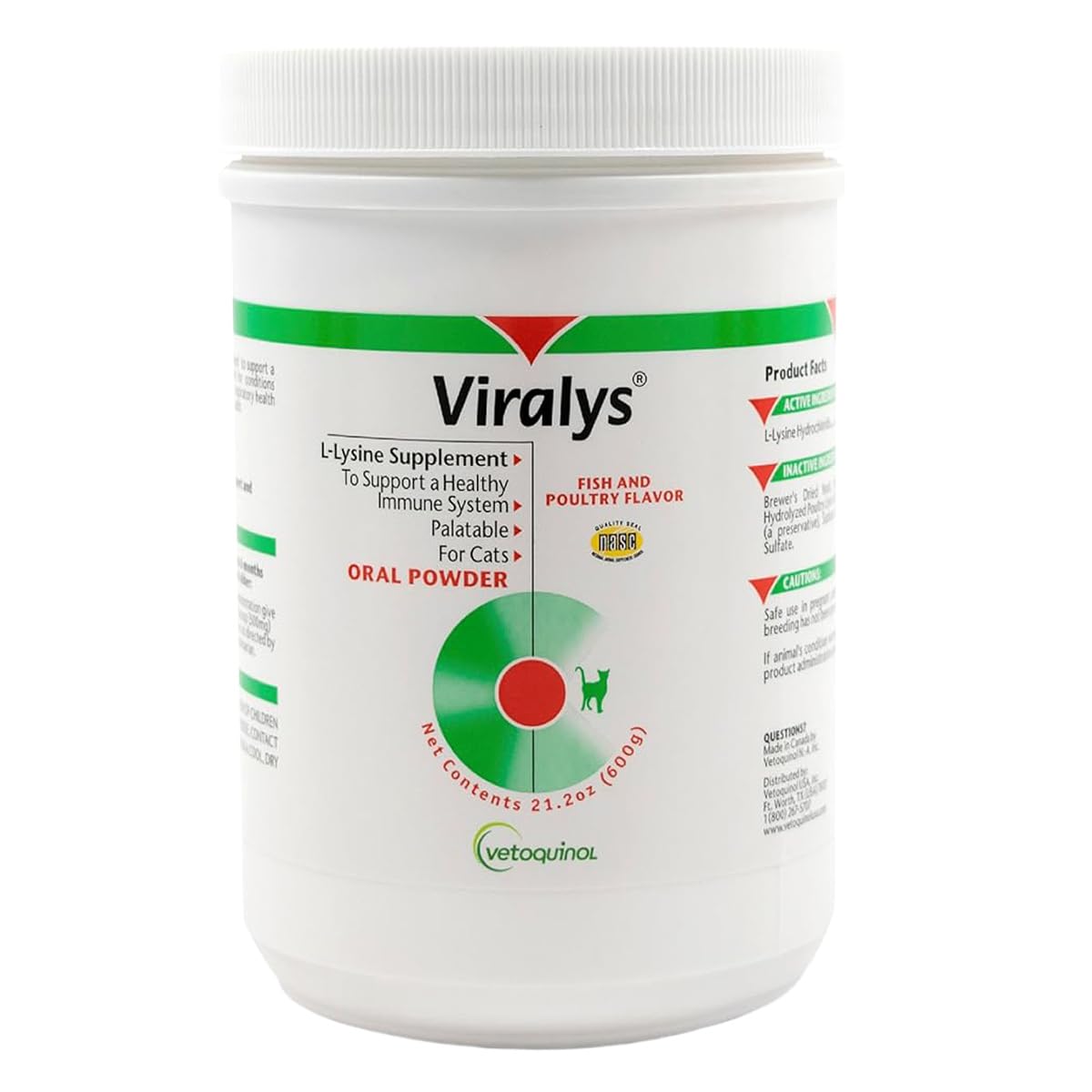
Vetoquinol Viralys Lysine Powder

Multi-cat households

Our Score 9.2/10
Check Price

Worth Noting

  • Large outlay and long storage for one cat
Form
Powder
Size
1.32 lb
Flavor
Fish and chicken
Read the full review

Six hundred grams is not a typo, and it changes who this tub is for. Where the gels and the small jars are built around one cat, this is the size that makes sense when you are dosing a foster litter, a rescue room, or the four cats who all caught the same thing in the same week.

The format is a fish-and-chicken flavored powder mixed into food twice a day, and it is the most readily eaten lysine in this guide — sprinkled over wet food, it disappears. Cats that turn their noses up at maple, or at a plain unflavored scoop, tend to take this one without an argument.

Our verdict is that you buy it for the household, not for the cat. One container lives in the cupboard instead of a shelf of small jars, and the flavor means you are not fighting anyone at dinner. With a single cat, the small Tomlyn jar is the better shape of the same product.

Bottom line: The right buy for a rescue room or a four-cat home, where one big tub beats a shelf of small jars.

3

Vetoquinol Viralys Lysine Gel

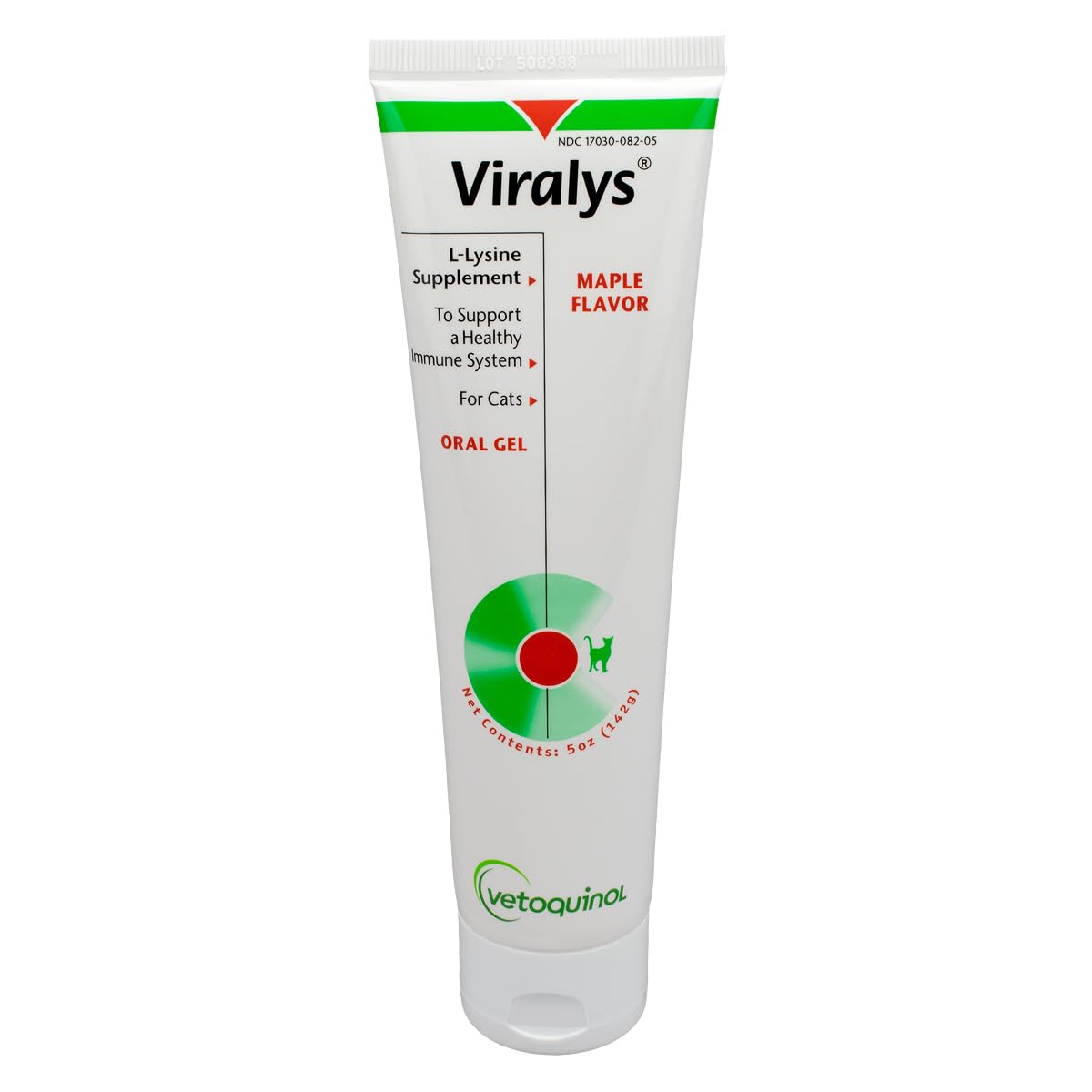
Vetoquinol Viralys Lysine Gel

Cats refusing food

Our Score 9.0/10
Check Price

Worth Noting

  • Gel can be flicked off a paw before it's licked
  • Dose is a ribbon, not a measured scoop
Form
Gel
Size
5 oz tube
Flavor
Maple
Age Range
All ages
Read the full review

The tube is the point. A ribbon of Viralys gel goes straight into a cat's mouth or across a paw, so a cat that has stopped eating, or that inspects every bowl before committing, still gets a dose. Of everything here, this is the one we reach for first when food is the problem.

It is a maple-flavored gel in a five-ounce tube, labeled for cats and kittens of all ages, and aimed primarily at sticky eye discharge — usually the symptom people are actually chasing. Maple is an odd choice on paper and a divisive one in practice: cats either lick it off the tube or back away from the paw it was smeared on. The salmon gel from Felisyl is the same delivery method in a flavor that tends to land better.

What you give up is precision, because you dose by the ribbon rather than by a weighed scoop. In exchange you get a dose that does not depend on your cat finishing a meal, and for a cat in the middle of a flare-up that trade is worth making.

Bottom line: This is the tube we reach for when a cat has stopped eating or distrusts the bowl, since the dose never has to touch dinner.

4

NOW Pet Health L-Lysine Powder

NOW Pet Health L-Lysine Powder

Unflavored budget pick

Our Score 9.0/10
Check Price

Worth Noting

  • Serving is a fraction of a teaspoon
Form
Powder
Size
8 oz
Flavor
Unflavored
Lysine HCl
276 mg
Read the full review

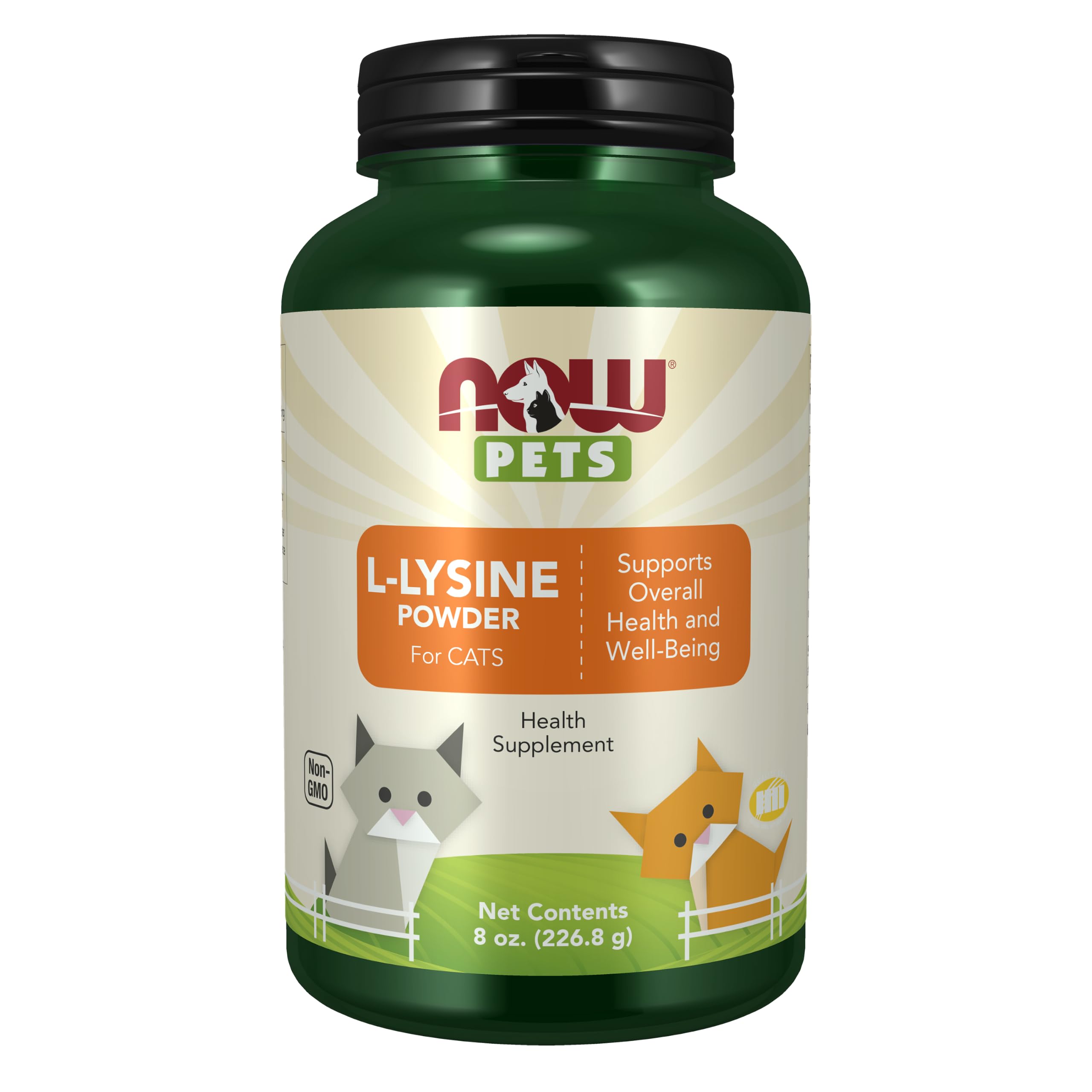
An eight-ounce tub of pure, unflavored lysine for less money than most of the flavored jars here makes this the value pick of the group, and the plainness is less a compromise than a different strategy.

Where it wins is concealment. There is no fish smell to give the game away and no maple sweetness to divide the household — it disappears into a spoonful of pâté, it is NASC-certified, and the label claims no fillers. What you take on is the dosing: a small measure twice a day, with a cat that licks the bowl clean getting every milligram and a cat that walks away getting none. That is true of every powder, but it is starkest with one this plain.

Bottom line: Buy this if you want plain, unflavored lysine for the least money and your cat cleans the bowl every time.

5

SANTKOL L-Lysine Drops

SANTKOL L-Lysine Drops

Liquid dosing

Our Score 9.0/10
Check Price

Worth Noting

  • 60 mL bottle drains fast with two cats
Form
Liquid drops
Size
60 mL
Flavor
Chicken
Read the full review

Some cats will not eat anything with powder on it, and a dropper bottle exists for exactly that cat. SANTKOL's lysine is a 60 mL chicken-flavored liquid in a dark bottle, given by dropper straight into the mouth or over food.

It is free of grains, alcohol, and gluten, and the label directs one to two servings a day based on the cat's condition — worth reading closely, because the serving line is where the actual amount lives. Chicken is the reason it gets taken: cats that ignore a fishy powder will often lick this off a plate.

Where it earns its place is timing. A cat that bolts its dinner has finished a doctored bowl before noticing, so a dropper lets you dose after the meal rather than during it, with nothing to measure or stir and nothing to spill in a travel bag. It sits below the powders here for one practical reason: the bottle is small, and two cats will drain it quickly.

Bottom line: A dropper bottle for the cat that bolts its dinner — dose after the meal instead of hiding it in the meal.

6

Pet Honesty Immune Lysine Chews

Pet Honesty Immune Lysine Chews

Treat-motivated cats

Our Score 9.0/10
Check Price

Worth Noting

  • No good if you want plain, dose-controlled lysine
Form
Crunchy chew
Flavor
Chicken
Supply
90-day supply
Key Ingredients
L-lysine, quercetin, colostrum
Read the full review

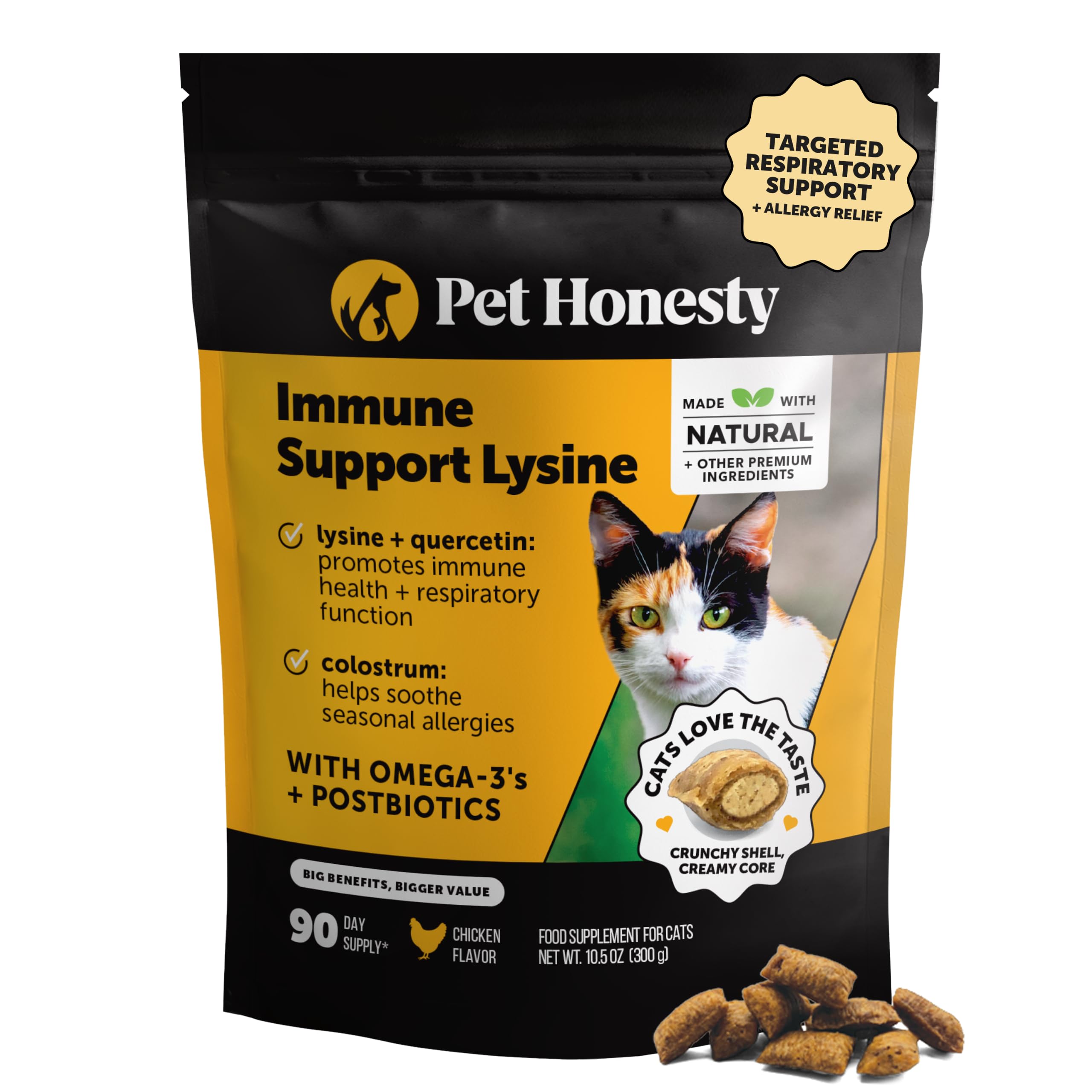
Treats are the easiest way to get something into a cat and the hardest thing to predict. That split runs right through these chicken chews: cats that accept them treat the bag as the best part of the day, and cats that don't will not be persuaded by anything short of a different product. It is the best option here for a cat that already begs for treats, and the riskiest if yours doesn't.

What is in them goes beyond lysine. Quercetin and colostrum sit alongside it, aimed at the itchy, sneezy, seasonal-allergy side of the problem rather than at herpesvirus alone, and the texture is crunchy outside with a creamy center. The tub is sold as a 90-day supply, so the dose is a snack rather than a stir-in.

A refused chew is a missed dose with nothing to fall back on, so if your cat is fussy about food, keep a tube of gel in the cupboard as backup. For the cat that comes running at the rattle of the treat bag, nothing here is easier.

Bottom line: For a cat that already begs for treats, this is the least argumentative way to get lysine in twice a day.

7

Felisyl L-Lysine Gel

Felisyl L-Lysine Gel

Salmon gel swap

Our Score 8.8/10
Check Price

Worth Noting

  • Some cats refuse the salmon gel outright
Form
Gel
Size
5 oz
Flavor
Salmon
Certification
NASC certified
Read the full review

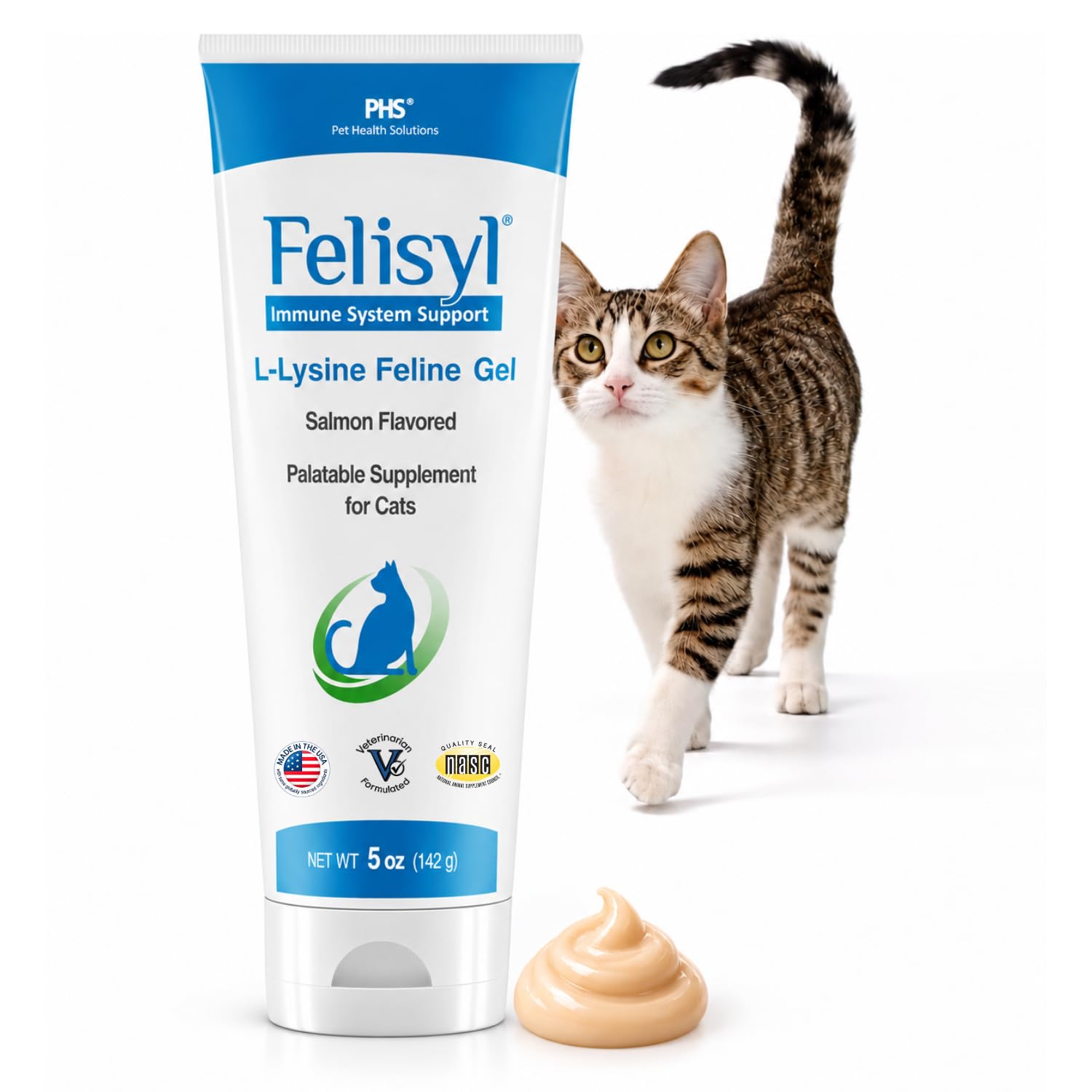
Salmon is the answer to a maple problem. Felisyl is a five-ounce gel in a fish flavor, which makes it the direct swap for a cat that backs away from a maple tube.

This is the tube we reach for when a gel is the only workable format and the maple version has already been turned down. It is NASC-certified, made in the U.S., and it costs less than the maple gel, which is a rare combination in a category where the pricier product usually wins on palatability alone. The gel is smooth enough to lick off a plate or a paw, and it does not need to touch the food bowl.

It sits in also-consider rather than higher because it does one thing: it delivers lysine in a gel. There is no unflavored version and no bulk size, so it is a single-cat solution — the tube you keep for the cat that will not take anything else.

Bottom line: The tube we swap in when the maple gel has been refused, since salmon lands with cats that dislike sweet flavors.

8

Trulysine L-Lysine Powder

Trulysine L-Lysine Powder

Simple dosing

Our Score 8.8/10
Check Price

Worth Noting

  • Needs food, so no use for a cat that's off food
Form
Powder granules
Size
4 oz (100 g)
Flavor
Fish and poultry
Lysine Per Scoop
500 mg
Read the full review

The scoop does the arithmetic. Trulysine is a fish-and-poultry powder measured at 500 mg of lysine per level scoop, which is the twice-daily figure the research and most labels are built around — so a dose is one scoop, twice a day, with no converting and no half-chews.

It is a granular powder, four ounces to the tub, made in the U.S. in NASC-inspected facilities, and meant to be sprinkled over food or stirred in. The fish smell is pronounced, which is precisely why cats take it: the ones that like fish dive in, and the ones that don't will leave the bowl.

As a middle-of-the-road pick it does what it says without ceremony — plain lysine, a scoop that means something, and an aroma that gets cats to the bowl. Nothing here is fancy, and nothing needs to be.

Bottom line: Buy this if you want one scoop to equal one dose, and your cat likes a strong fishy smell on dinner.

9

VetriScience Lysine Chews

VetriScience Lysine Chews

Treat-loving cats

Our Score 8.4/10
Check Price

Worth Noting

  • Firm texture puts off some cats
Form
Soft chew
Count
120 chews
Flavor
Chicken
Lysine Per Chew
250 mg
Read the full review

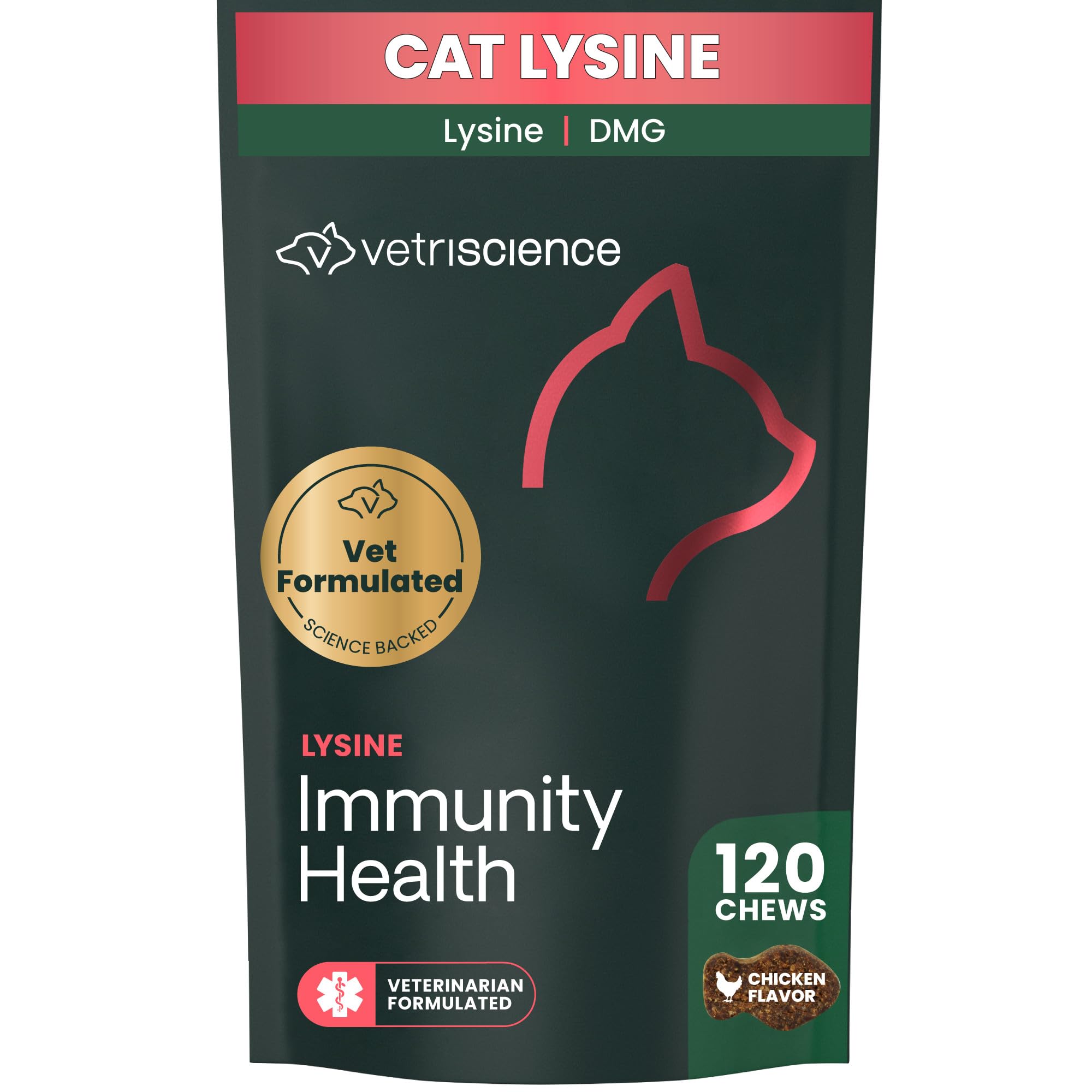
A soft chew carrying 250 mg of lysine and 50 mg of DMG, chicken flavored, 120 to the tub. The numbers matter more than the flavor here, because 250 mg means two chews make the 500 mg dose.

The DMG is what separates this from a plain lysine product: it is included for immune and tissue support, and it is the reason to choose these over a simpler chew if you want more than one ingredient working. The chew is firm rather than pillowy.

For a cat that already treats chews as candy, this is the least fussy way to dose twice a day — two chews, gone, no bowl to wash. For a fussy cat the divided acceptance is enough of a risk that we steer toward a powder or a gel instead.

Bottom line: A chew for the cat that already treats supplements as candy, with the caveat that a firm texture loses some cats.

How We Tested Lysine Supplements for Cats

We narrowed the field on paper first: single-ingredient L-lysine versus blends, the actual grams per scoop rather than the big number on the front of the tub, powder versus gel versus chew, and whether the maker published third-party testing or carried a quality seal. Cost per dose, not cost per container, did most of the cutting. Fourteen formulas made it to the kitchen counter.

For four months, every formula ran through the same routine — morning and evening feedings, stirred into a spoonful of wet food for the powders, dabbed on a paw or offered by hand for gels and chews. We noted which bowls were licked clean inside a minute, which were half-finished, and which cats sniffed once and walked off. Right out of the tub we smelled each one, then checked whether that smell carried into the food and whether the cat still ate it.

With the cats that had a history of weepy eyes and morning sneezes, we kept a two-week log of crust and sneeze counts on each formula, and watched appetite and stool for the first week of every switch. Powders got stirred into a little water first to see whether they clumped, dissolved, or left grit in the bottom of the dish. We also weighed scoops on a kitchen scale — a tub claiming sixty servings rarely gave sixty, and that changed the math on what was worth rebuying.

How to Choose Lysine Supplements for Cats

Pick the Form Around Your Cat's Habits

Powder is the easiest route for most households: stir it into a spoonful of wet food and most cats never notice. A gel or paste skips food entirely, which is what you want when a cat has stopped eating or inspects every bowl with suspicion, but it has to be licked off a paw or delivered into the mouth, and some cats object loudly. Drops sit between the two, and chews only work if your cat already takes treats.

The trap here is buying the form you find convenient. A gel smeared on a paw can be shaken onto the floor, and a refused chew is a dose that never happened. Buy one small unit first, confirm it goes in, and only then commit to a larger container.

Do the Dose Math Before You Buy

Feline herpesvirus support is usually discussed around 500 mg of lysine twice a day, and the products here express that in very different units: 250 mg per chew, 500 mg per scoop of granule, 276 mg per measure of the unflavored powder. Two chews can be a dose; one scoop can be a dose. Read the serving line rather than the front of the label, then work out how many doses the package actually holds.

Flavor Decides More Than the Formula

Maple, salmon, chicken, fish, or nothing at all. Cats are conservative eaters, and a flavor that reads as a treat to one cat reads as contamination to another — which is why the two gels in this guide are the same idea in maple and salmon. Unflavored powder is the safer bet for a cat that dislikes fish, while a strong fishy smell is often exactly what gets a powder eaten.

Start with the smallest size of whatever you pick. A tub is only good value once you know the contents disappear from the bowl rather than sit in it.

Know What Else Is in the Tub

Plain lysine is one amino acid. Some products add quercetin, colostrum, DMG, or taurine, aimed at itch, immune, or tissue support. Those extras earn their place if you are chasing a specific problem, and get in the way if you want to control the lysine amount on its own. Look for the NASC seal on a U.S. supplement; it signals the maker participates in a quality program.

Whichever extras you choose, the number that matters after the purchase is cost per dose, not the price on the shelf. A chew given twice a day runs out far sooner than a scoop from a powder tub.

Frequently Asked Questions

Final Verdict

The Tomlyn powder is the one we recommend first: a small jar, a meaty flavor most cats accept, and a scoop that vanishes into a spoonful of wet food twice a day. It is the least dramatic product here, which is exactly why it gets used.

If your cat turns its nose up at doctored food, switch to the Viralys gel and dose from the tube. If you are feeding a houseful, the six-hundred-gram Viralys powder is the size that stops the constant reordering — and the NOW tub is the one to buy when you want plain, unflavored lysine for the least money.