Pet Honesty Hairball Remedy Chews
Top Pick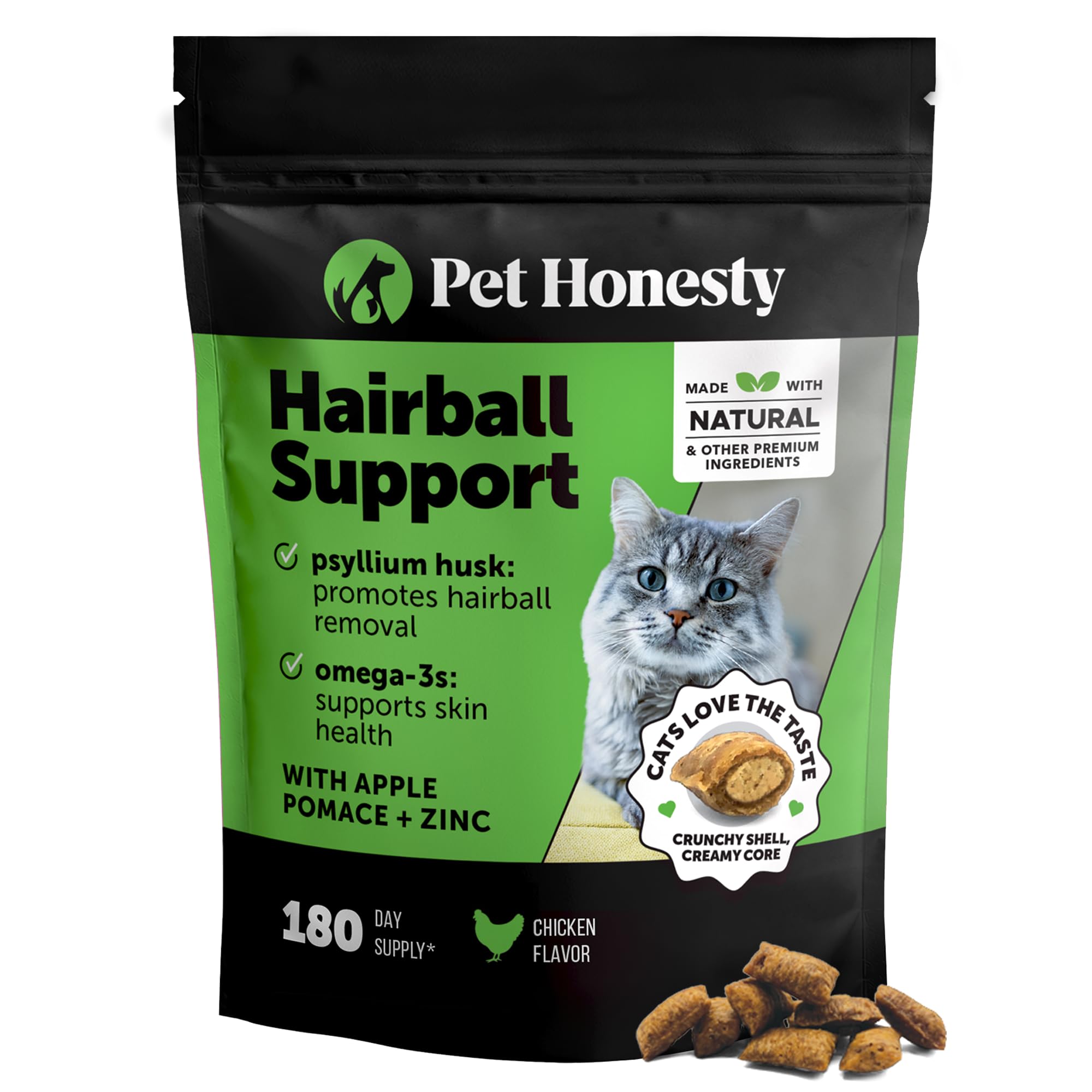
What We Like
- Cats take it as a treat, not a dose
- Psyllium plus apple and citrus fiber
- Omega-3s target the coat and shedding
- 180-count tub lasts months for one cat
Worth Noting
- Premium price for a daily chew
- Form
- Crunchy Bites
- Count
- 180 Count
- Made For
- Cats
- Active Ingredients
- Citrus Pulp, Apple Pomace, Psyllium Husk, Zinc Methionine, Omega-3s (Fish Oil, Lecithin)
Read the full review
A fiber supplement only does anything if the cat eats it, and that single fact is why this one leads our list. The psyllium husk, apple pomace, and citrus pulp are baked into a crunchy shell with a creamy center and a chicken flavor, and the tub gets the same reaction as a bag of treats — a cat arrives at a run. Powder gets sniffed, licked around, and left in the bowl; a chew gets eaten on purpose.
The formula is built around hairballs rather than around runny stool. The psyllium and fruit fibers add bulk that helps swallowed hair travel through the gut instead of coming back up, and the fish oil and lecithin address the coat itself, which is where the hair comes from in the first place. Less loose hair going in and more of it moving out is a sensible pairing, and it's the combination that matters most for a long-haired cat in spring.
One tub covers 180 days of daily chews for a single cat by the label's count, so the routine is a handed-over chew rather than a measuring spoon. What it isn't is universal: a cat that turns its nose up at crunchy textures won't be persuaded, and texture is usually the sticking point rather than flavor. That's when we point people to a crushed tablet stirred into wet food and save the chews for the cat that will take them.
Bottom line: For hairball-prone cats that will eat a treat, this is the fiber supplement we recommend first: psyllium and fruit fiber in a chicken chew, with omega-3s for the coat.


