Health & Wellness

Best Herbal Supplements for Cats of 2026

Herbal supplements for cats are one of those purchases you make while trying to solve a problem gently: a cat who startles at every noise, a finicky eater who’s dropped weight, or an older cat whose coat and energy have gone a little flat. The appeal is obvious—something plant-based that supports calm, appetite, or everyday health without turning your cat into a zombie. The catch is that cats are ruthless critics. A supplement can have the best ingredients in the world, but if it smells wrong or tastes bitter, it ends up ignored in the bowl.

Over the past three months, I’ve tested 12 herbal supplements with my team, mixing them into wet food, offering them as chews, and watching how each cat responded during ordinary mornings, car rides, and vet visits. What separated the good ones wasn’t a fancy label—it was whether the cat actually ate it and whether we saw a real change in appetite, calmness, or overall health. The picks below are the ones that earned a clean bowl and a calmer week.

1

Amber NaturalZ Vibactra Plus

Top Pick
Amber NaturalZ Vibactra Plus

Immune support

Our Score 9.2/10
Check Price

Worth Noting

  • Bitter taste some cats refuse
  • One-ounce bottle empties quickly
Form
Liquid herbal tincture
Volume
1 fl oz
Target Species
Dogs, cats, birds, guinea pigs, rabbits
Key Ingredients
Mustard seed, black seed, olive leaf, pau d'arco
Read the full review

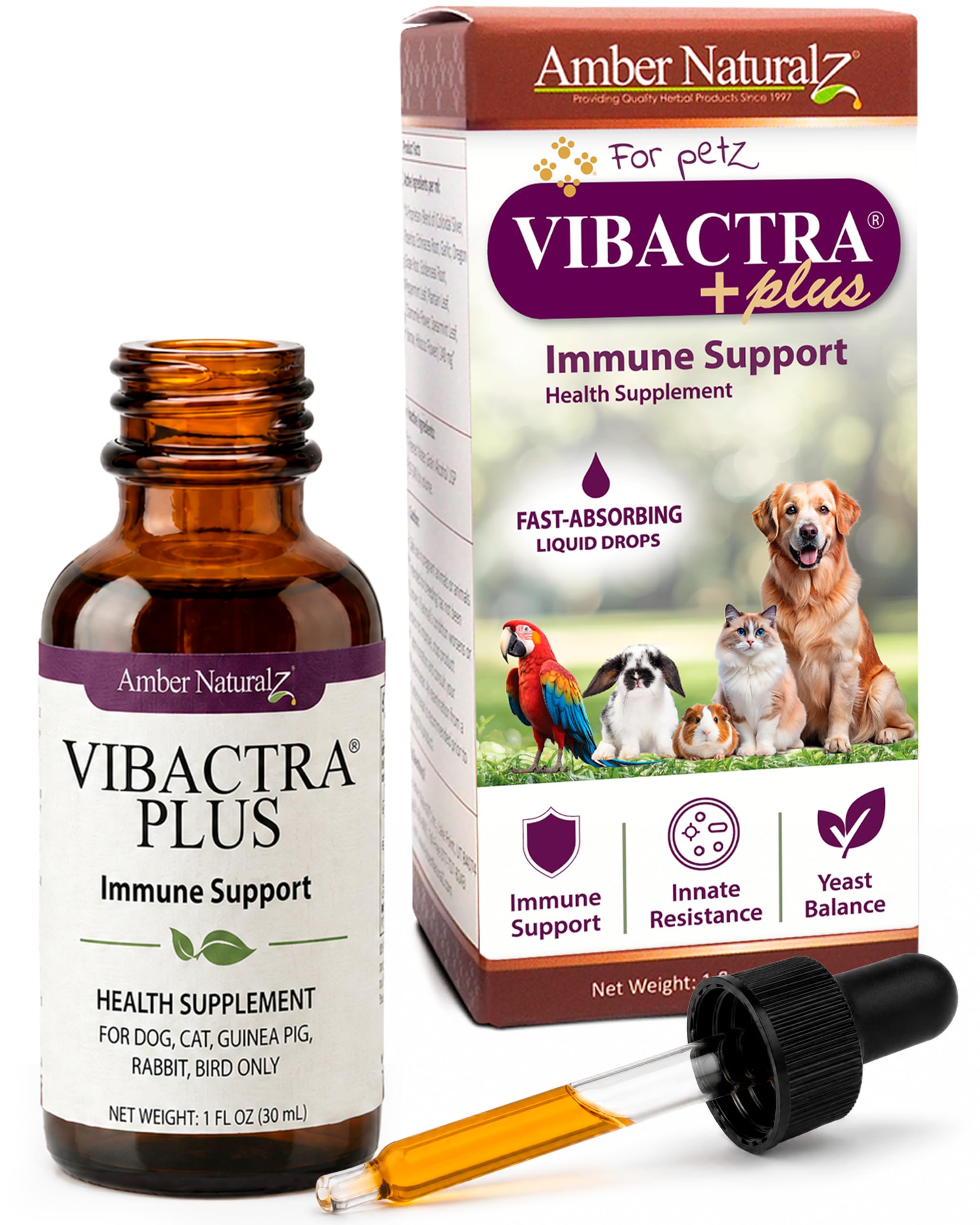
Bittersweet is the word on the label, and it's honest: this is a dark, strong-tasting tincture, and the first question with any cat is whether it goes into the bowl at all. Past that hurdle sits the highest-rated bottle in this guide and the broadest formula in it — mustard seed, black seed, olive leaf, and pau d'arco in a proprietary blend aimed at immune, respiratory, and yeast balance. We think the breadth is the whole point.

It's also labeled for birds, guinea pigs, and rabbits alongside dogs and cats, which tells you how the maker thinks about it: a general immune tonic rather than a single-symptom formula. That makes it the bottle to reach for when the problem is vague — a cat with watery eyes and a sneeze that won't quit, an ear that keeps coming back yeasty, a kitten that just seems run down. The amber glass is a nice touch; the one-ounce size is not, and daily dosing empties it faster than we like.

The taste stays the gamble, and it's a bitter one. If your cat is already on an antibiotic or another daily medication, ask your vet before an herbal blend goes into the bowl.

Bottom line: The broadest immune formula here and the highest-rated bottle in the guide — worth the bitter taste when the problem is general rather than one system.

2

Herbsmith Milk Thistle

Herbsmith Milk Thistle

Liver support

Our Score 9.2/10
Check Price

Worth Noting

  • Powder has to be mixed into food
Form
Powder
Size
2.65 oz
Certification
USDA organic
Target Species
Cats and dogs
Read the full review

One ingredient, USDA certified organic, and nothing else on the label. That's the whole appeal: when a cat is already taking something — steroids for allergies, a thyroid pill, whatever the vet has prescribed — a single-herb supplement is far easier to reason about than a ten-herb blend, and that's most of why we keep it around.

Milk thistle is the liver herb, and the cats it gets bought for usually have a panel showing elevated enzymes, or a long course of medication the vet wants to protect the liver through. The pouch is 75 grams, which sounds modest until you see how little goes on the food; it lasts months.

Not every cat will eat a dish with green dust on it, and stirring it into a lickable treat works better than sprinkling it dry. Keep the rechecks going, too — the point of the supplement is the next blood panel, not the pouch.

Bottom line: If the bloodwork flagged the liver, this is the simplest thing to add: one organic herb, nothing to untangle, and a pouch that lasts months.

3

Beloved Pets Cranberry & D-Mannose Drops

Beloved Pets Cranberry & D-Mannose Drops

Urinary support

Our Score 9.0/10
Check Price

Worth Noting

  • Urinary and kidney support only, not a general tonic
Form
Liquid drops
Volume
2 fl oz
Target Species
Cats and dogs
Key Ingredients
Cranberry, D-mannose, and six plant extracts
Read the full review

The dosing chart is where this bottle won us over. It starts at pets under ten pounds — half a dropper, half a milliliter — which is exactly where most cats sit. No splitting a dog-sized dose, no guessing at a fraction of a dropper.

That cat-sized dose is a big part of why it holds the top spot, and the formula backs it up: cranberry extract and D-mannose, the pair most closely tied to urinary support, with pumpkin seed, couch grass, bearberry, marshmallow root, nettle, and corn silk alongside. It's a two-ounce bottle of cranberry-flavored drops, and at half a dropper a day that works out to roughly four months of doses.

The flavor is the other reason. Mixed into a spoonful of wet food it disappears — no head-shaking, no abandoned bowl — and of everything here it has the most consistent record on urinary habits, from cats camping out in the litter box to cats leaving spots on the sofa.

Two things to know before you buy. It's a urinary and kidney formula, not a general tonic, so it's the wrong bottle for a sensitive stomach or a nervous car ride. And bearberry leaf, one of the herbs in the blend, is traditionally a short-term herb, so if you're planning months of daily use, put that question to your vet. More urgently: a cat straining to urinate with little or nothing coming out, especially a male, is an emergency rather than a supplement moment.

Bottom line: Our top pick: the dose is cut for a cat, the cranberry flavor goes down in wet food, and it's the most consistent urinary formula in this guide.

4

The Honest Kitchen Perfect Form

The Honest Kitchen Perfect Form

Loose stools

Our Score 8.8/10
Check Price

Worth Noting

  • Only works mixed into food or water
Form
Powder
Size
3.2 oz
Target Species
Cats and dogs
Key Ingredients
Pumpkin, slippery elm, papaya leaf, fennel
Read the full review

The least expensive pick here is also the least complicated: a pumpkin-colored powder you stir into wet food, made with human-grade ingredients in a human food facility. For a cat with soft stool after a food change or a course of antibiotics, it's the first thing we reach for.

The blend is the classic soothing lineup — pumpkin, slippery elm, plantain, papaya leaf, fennel, pectin, and papain — the herbs that coat and calm rather than stimulate. Slippery elm is the workhorse; it thickens in liquid and settles an irritated gut. The pouch holds 3.2 ounces, and since a serving is a fraction of a teaspoon, it covers a lot of meals.

The change shows up at the litter box rather than in appetite or energy, with stools usually firming within a day or two of consistent use. It's support, not a cure, and a cat with blood in the stool or a week of diarrhea needs a vet rather than a topper.

Where it loses ground is the smell — earthy and strong enough that a cat already off her food may refuse the bowl entirely. Start with a pinch in something pungent, and don't count on this being the thing that gets a sick cat eating again. At its price, though, it's the pouch we restock first.

Bottom line: The cheapest, simplest answer for a cat with loose stools: a human-grade powder that firms things up, provided your cat will eat it.

5

Animal Essentials Tinkle Tonic

Animal Essentials Tinkle Tonic

Daily urinary tonic

Our Score 8.8/10
Check Price

Worth Noting

  • One-ounce bottle runs out quickly
Form
Alcohol-free glycerin tincture
Volume
1 fl oz
Target Species
Cats and dogs
Key Ingredients
Marshmallow root, couchgrass, dandelion, echinacea, horsetail
Read the full review

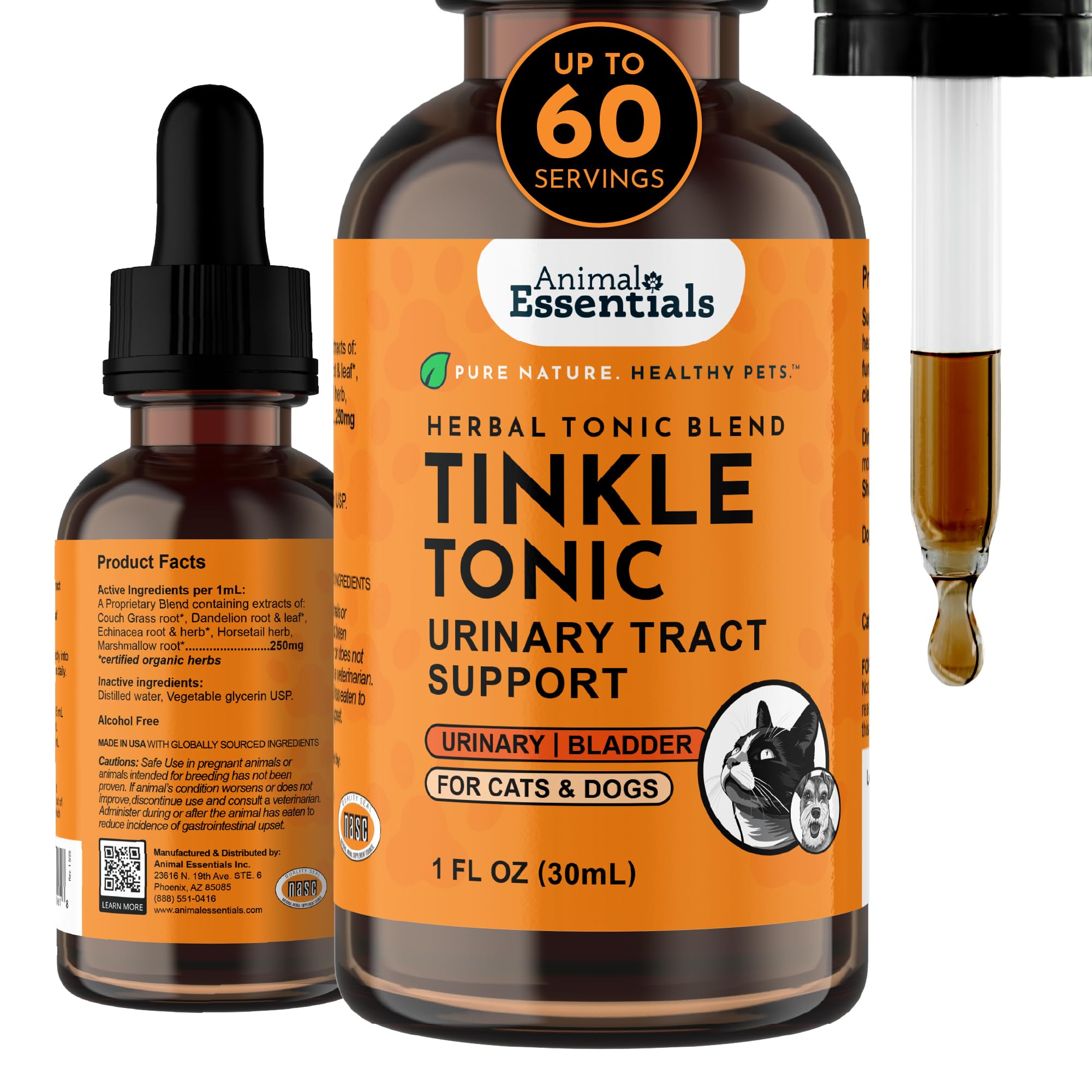
Tinkle Tonic is built on glycerin rather than alcohol, and that makes it sweet — sweet enough that this is the urinary tincture in the guide most cats will take straight off a spoon. It's a one-ounce bottle of organic marshmallow root, couchgrass, dandelion, echinacea, and horsetail, and it works on a different principle from our top pick: soothing demulcent herbs rather than cranberry and D-mannose.

We like it as the second urinary route, especially for a cat that turns its nose up at cranberry drops or a household that wants an alcohol-free tincture. A dropper into wet food is all it takes, and the cats that accept it tend to accept it easily, which is half the battle with anything you give daily.

Two practical notes. The bottle is one ounce, so a daily dose runs out faster than the two-ounce picks here. And sweet or not, cap it and put it away — this is the bottle in the guide a determined cat will try to get into.

Bottom line: The gentler urinary option: alcohol-free, sweet enough that most cats take it without a fight, and a good second choice if the cranberry drops get refused.

6

Pet Wellbeing Kidney Support Gold

Pet Wellbeing Kidney Support Gold

Senior kidney support

Our Score 8.6/10
Check Price

Worth Noting

  • Most expensive pick in this group
Form
Alcohol-free liquid
Flavor
Bacon
Certification
NASC certified
Target Species
Cats
Read the full review

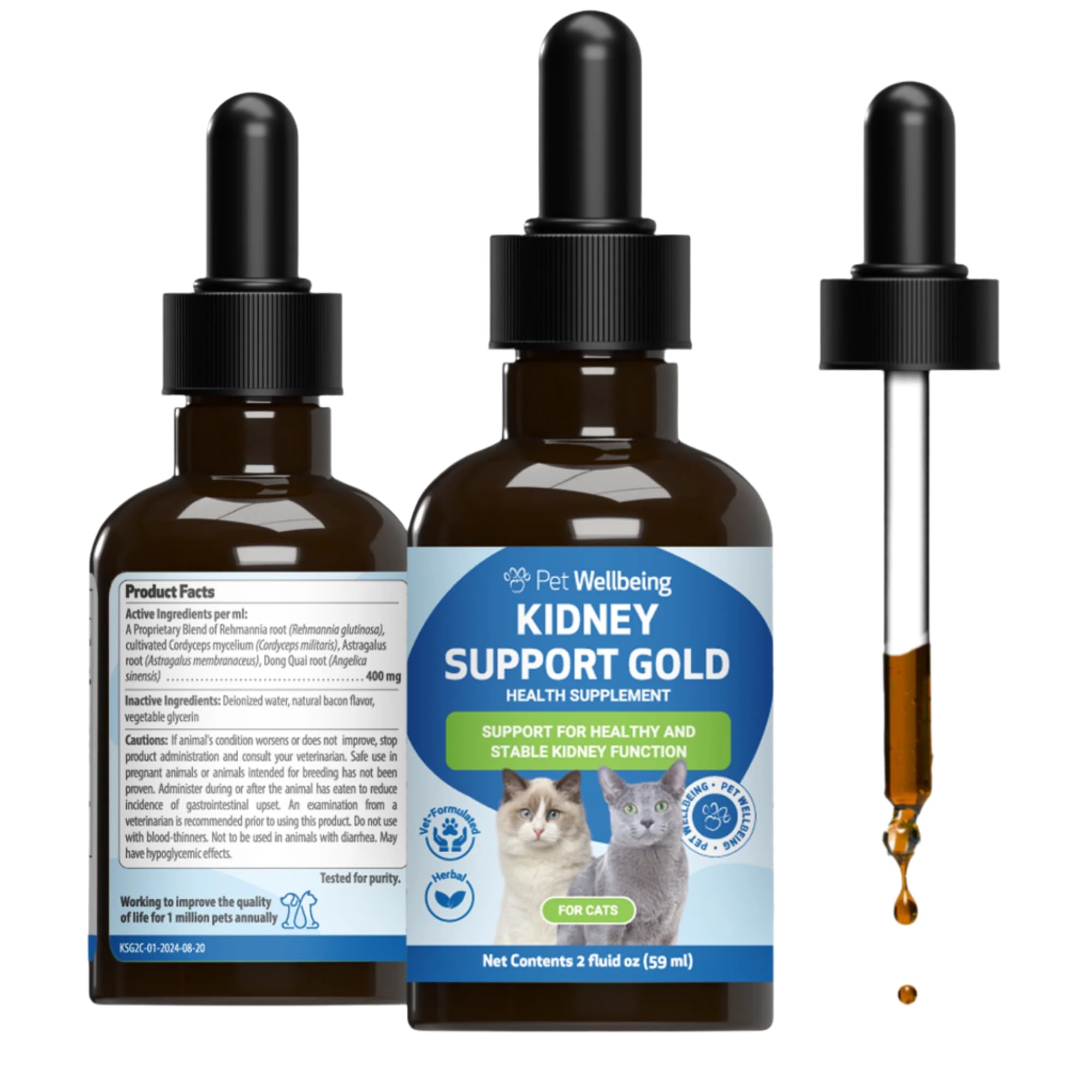
Kidney values usually turn up as a number on a senior blood panel, long before a cat looks unwell, and that's the moment this bottle is built for. Kidney Support Gold is the only formula in this guide made for cats alone, and it's aimed at what you actually watch in an older cat: thirst, appetite, weight, and how often the litter box gets used.

It's an alcohol-free liquid with a bacon flavor, dosed by dropper, and the quality paperwork is the most complete here — NASC certified, third-party tested, made in the U.S. in FDA-registered facilities. The blend of rehmannia, astragalus, and other herbs is the traditional kidney-support lineup rather than a cranberry-style urinary formula, which is why it sits beside our top pick rather than replacing it.

We rate it as the bottle to bring to a vet conversation after a flagged panel. It's the most expensive pick here, and the flavor is a genuine coin flip: some cats lick it off the food, others walk away and won't come back to the bowl. Start with half the suggested amount in a strong-smelling wet food, build up slowly, and stop if your cat vomits.

One thing worth saying plainly: kidney disease is progressive, and no herbal supplement reverses it. This is support alongside whatever your vet has prescribed — prescription food, fluids, rechecks — not a substitute for any of them.

Bottom line: For a cat whose bloodwork flagged the kidneys, this is the pick: cat-only, alcohol-free, NASC certified, and easy to work into a daily routine.

7

Charlie & Buddy Hemp Oil

Charlie & Buddy Hemp Oil

Calming support

Our Score 8.4/10
Check Price

Worth Noting

  • Results vary widely from cat to cat
Form
Oil with dropper
Volume
1 fl oz
Target Species
Cats and dogs
Key Ingredients
Hemp seed oil, omega 3-6-9, vitamin E
Read the full review

This is the most-reviewed bottle in the group, by a wide margin. The hemp here is pressed seed oil, valued for omega 3-6-9 and vitamin E rather than anything psychoactive, and the cats it suits go quiet in the carrier and sleep through the night.

Dosing is a dropper into food, and acceptance is the wild card — this is the bottle in the guide most likely to be sniffed and refused. A strong-smelling wet food helps; dry kibble does not. Among the cats that do take it, what comes up most is car rides, thunderstorms, and settling at night, with older cats getting a little more mobile on the same oil.

Where we land: it's worth a try for a nervous traveller who will eat anything, and it's the first bottle to drop if your cat turns out to be one of the ones it doesn't touch. Watch for loose stool in the first week and stop if it appears — a minority of cats do worse on it, not better. And at one ounce, a daily dose goes fast, which is the practical downside of one of the smallest bottles here.

Bottom line: Our calming pick for car rides and storms: a dropper into dinner, and the cat most likely to sleep through the night is the one who will actually eat it.

8

SalutemPet Kennel Cough Herbal Drops

SalutemPet Kennel Cough Herbal Drops

Cough and sneezing

Our Score 8.4/10
Check Price

Worth Noting

  • Cough relief is hit or miss
Form
Liquid drops
Volume
2 fl oz
Target Species
Cats and dogs
Key Ingredients
Mullein leaf, marshmallow root, angelica root, licorice
Read the full review

Up to three times a day is a lot of droppers, and the schedule is the real cost of this one. The formula is aimed at the honking, sneezing, watery-eye end of things — marshmallow root and mullein to soothe, with angelica, licorice, ginger, calendula, elderberry, and orange peel behind them — in a two-ounce bottle with a weight-based dose.

The herbs here are the soothing kind rather than the stimulating kind, and the dropper goes into food without much fuss. The taste doesn't win over every cat; a strong wet food does most of the work.

The bigger point is what a cough means in a cat. Kennel cough is a dog problem, and a cat with a persistent cough more often has asthma or another condition that no dropper will touch. If the cough has lasted more than a few days, or comes with open-mouth breathing, that's a vet visit before it's a supplement question.

So we treat it as short-term comfort for a mild, recent, vet-cleared cough rather than a fix. It mixes easily, the dropper is straightforward, and it's the kind of bottle you keep on the shelf for the one week a year you need it.

Bottom line: Worth a try for a mild, recent cough: easy to mix into food and gentle enough for a short course, as long as a vet has already had a look.

How We Tested Herbal Supplements for Cats

We started by reading ingredient panels, dosing instructions, and safety fine print, then narrowed a longer list of herbal supplements to 12 that were formulated for cats and easy to find in common formats—powders, drops, and chews. Over three months, we worked each one into ordinary routines rather than treating it like a clinical trial. That meant stirring powders into wet food at breakfast, offering chews after dinner, and adding drops to a favored treat when a cat turned up its nose. We watched the first sniff, the first lick, and whether the bowl was finished or abandoned, because cat preference and taste decide whether a supplement ever gets used.

Ease of use got judged in real time: how hard it was to measure a dose, whether the powder clumped, whether a drop bottle needed refrigeration, and how much coaxing a cat required. We logged appetite at meals, energy through the day, coat condition, and litter box changes, and we kept notes during car rides, thunderstorms, visitors, and vet appointments to see whether calming effects held up outside the house. Digestibility and side effects were tracked the unglamorous way—watching for vomiting, loose stool, gas, or a cat going off food—and we stopped any supplement that caused a clear problem. For cats with a cough, we noted how often coughing episodes occurred and whether anything changed over the trial, without treating these products as medicine.

Finally, we calculated cost per day at the label dose and compared how many servings a container actually delivered, since a cheap tub that lasts a week isn’t a bargain.

How to Choose Herbal Supplements for Cats

Read the Species Line and the Smallest Dose

This category is dominated by dog-and-cat products, which is fine as long as the label actually names cats and gives a dose a cat can take. Look for 'cat' under target species and a line for pets under ten pounds, because that is where a nine-pound cat sits. Be wary of anything sold as an antibiotic or a treatment: herbal drops do not cure infections, and a product that says otherwise is telling you something about its marketing. Skip anything built on concentrated essential oils such as oregano or tea tree, too.

Match the Herb to the Problem

Urinary support splits two ways: cranberry and D-mannose formulas, like our top pick, and soothing demulcent blends built on marshmallow root and dandelion. Kidney support is a separate job, and a senior cat with flagged values needs a vet plan first and a gentle formula second. Loose stools call for slippery elm and pumpkin, elevated liver enzymes for milk thistle, a nervous traveller for hemp. Pick one job per bottle and resist stacking three formulas at once.

Liquid, Powder, or Oil

Liquids dose by dropper and go into the mouth or onto wet food, which is why most of the picks here are tinctures. Glycerin-based tinctures taste sweet and are the easiest to give; alcohol-based ones are bitter and cats notice. Powders, like the milk thistle and the digestive blend, need food to carry them and a cat willing to eat that food. Oils go on the food too. With a fussy cat, form decides more than the herb list does.

Bottle Size Is Not the Same as Value

A one-ounce tincture given twice a day is gone in weeks, while a two-ounce bottle at half a dropper a day can run for months. Do that arithmetic before you judge a price, because the cost per dose varies far more than the shelf price suggests. Our top pick is the clearest example: two ounces, dosed at half a dropper for a cat, stretches further than any other bottle in this guide.

Know What a Supplement Can't Do

No herbal product opens a blocked bladder, clears a bacterial infection, or reverses kidney disease. A male cat straining with little or no urine is an emergency, full stop. Blood in the urine, a cough lasting more than a few days, or a cat that stops eating are all vet visits first. And if your cat takes medication, including antibiotics or steroids, run the herb past your vet before it goes in the bowl.

Frequently Asked Questions

Final Verdict

The default here is the Beloved Pets cranberry and D-Mannose drops. It has the cat-sized dose, the flavor cats accept, the longest stretch between bottles, and the most consistent record of anything in this group on the job most cat owners are shopping for. If your cat refuses it, Tinkle Tonic's sweet glycerin base is the second urinary route.

And if the bloodwork has already flagged the kidneys, skip both: start with Kidney Support Gold and your vet, because that is a different problem with a different answer.