Health & Wellness

Best Immune Support Supplements for Cats of 2026

A cat that sneezes through every season change is its own kind of worry. You can't explain to them why they feel crummy, you can't steam up the bathroom and hope for the best, and you can't hand them a bowl of chicken soup. Immune support supplements are meant to fill that gap, whether it's lysine, colostrum, beta-glucans, or a blend aimed at the sniffles that come with a stressful stretch or a new foster in the house. The catch is that none of it works if the cat won't touch it, and a cat's nose has veto power over the entire label.

Over the past four months, my two cats and a rotating crew of foster kittens have worked through 12 of these supplements, and the results were rarely about what looked best on paper. A tub of powder refused on day three is worse value than a plainer formula that vanishes into dinner every night. We paid attention to the sneezing, sure, but also to the smell of the tub, the texture in wet food, and what the litter box looked like the next morning. The picks below are the ones that got eaten and that we felt good about keeping in the rotation.

1

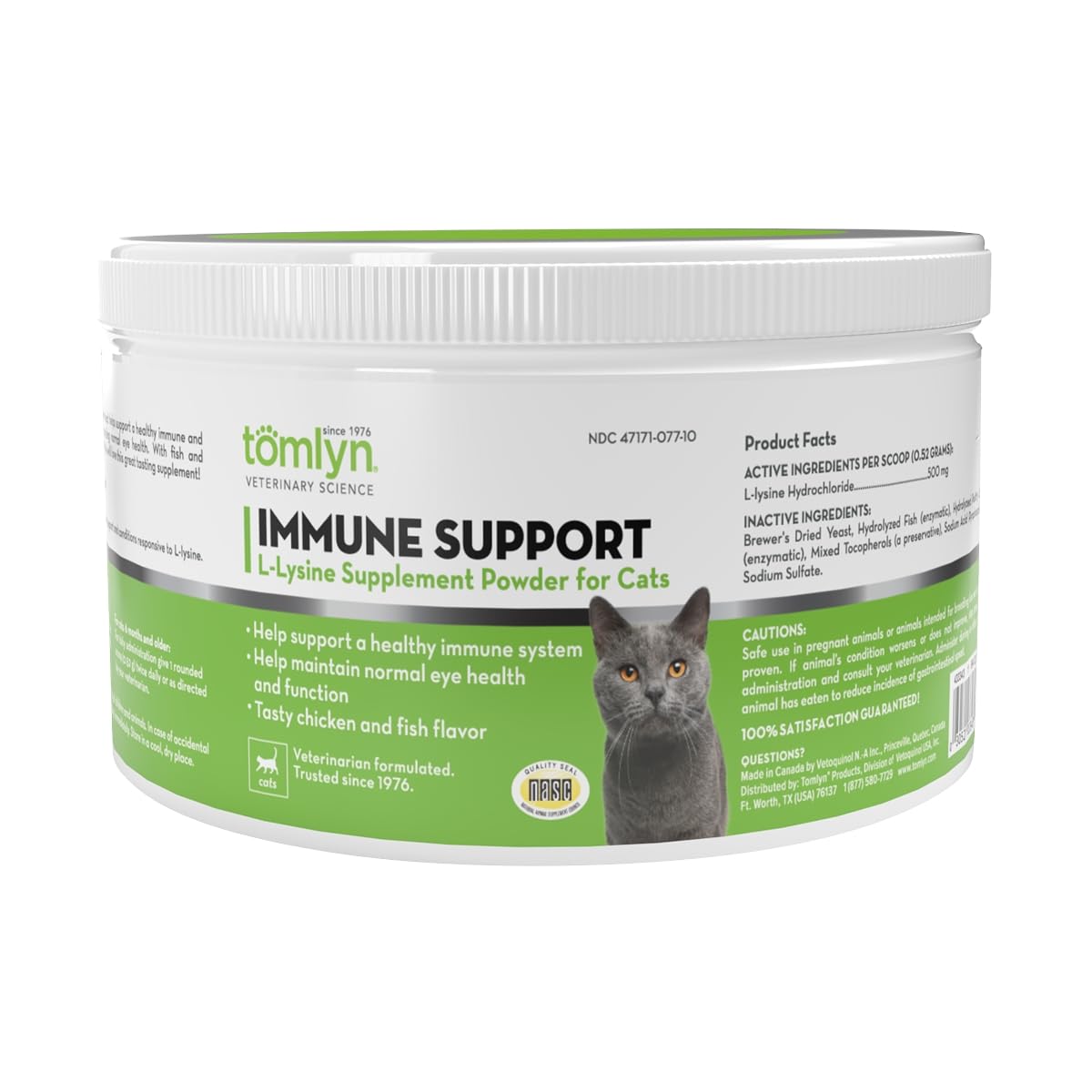
Tomlyn L-Lysine Powder

Top Pick
Tomlyn L-Lysine Powder

Daily immune support

Our Score 9.2/10
Check Price

Worth Noting

  • Meaty smell can be strong
Form
Powder
Size
3.5 oz
Life Stage
Cats and kittens
Key Ingredient
L-Lysine
Read the full review

The reason Tomlyn earns the top spot is that it clears the first hurdle every daily supplement faces: getting eaten. The powder mixes smoothly into a spoonful of wet food, and the savory flavor gives a cat something to accept rather than something to tolerate. The label is focused on L-lysine for immune, respiratory, and eye support, with directions for kittens and adult cats, and the powder format lets you adjust the amount you stir in instead of forcing a whole chew or a tube of gel.

What we appreciate most is the everyday practicality. A powder disappears into pate or a little canned food, so you are not chasing a cat around with a syringe. The scoop makes a daily routine feel less like a pharmacy visit, and because you control the serving, it is easy to keep the ritual the same from one day to the next. For a cat that already has a wet-food meal, it is the least disruptive way to add lysine.

The trade-off is supply. This is not the jar to buy if you are supplementing a multi-cat household or want to stretch one purchase across months; it is the one for a single cat whose food bowl reliably comes back empty. Compared with the unflavored NOW powder, Tomlyn offers more flavor and less flexibility; compared with a gel, it gives you a dose you can hide. We keep it as the default because it fits a wet-food meal and the dose is easy to hide.

Bottom line: We recommend Tomlyn as the default daily lysine powder for cats that eat wet food, because it is flavored enough to accept and easy to stir into a small meal.
2

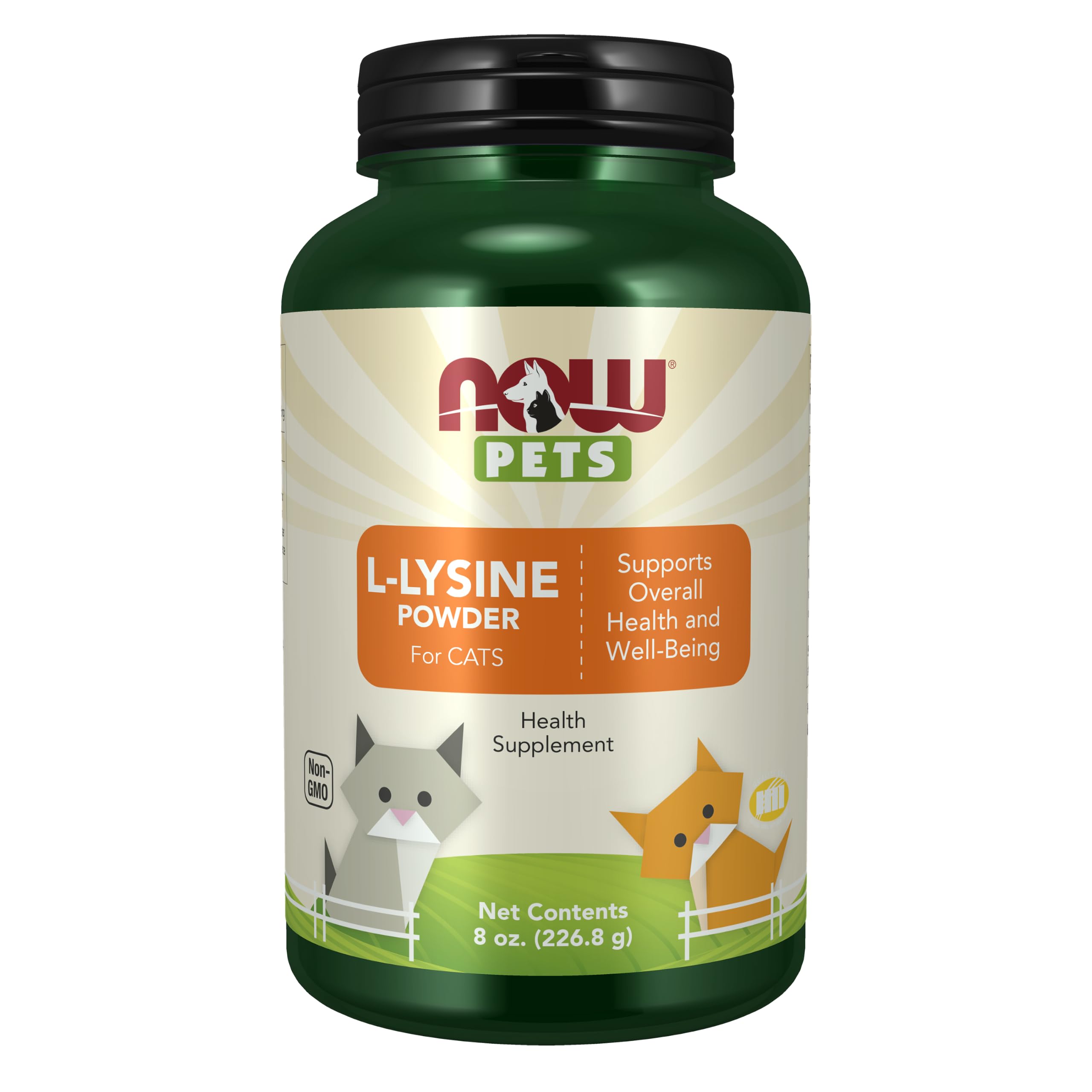
NOW L-Lysine Powder

NOW L-Lysine Powder

Picky cats

Our Score 9.0/10
Check Price

Worth Noting

  • Needs a food carrier
Form
Powder
Size
8 oz
Flavor
Unflavored
Certification
NASC certified
Read the full review

An eight-ounce tub of plain, unflavored L-lysine is the least glamorous thing on this list, and that is exactly why it has a place. There is no maple syrup, no chicken flavor, and no creamy center to negotiate—just a fine powder you can stir into a strong-smelling wet food. For a cat that turns up its nose at anything new, that is a useful kind of boring.

This is our value pick, and not only because the tub is large. The powder is pure lysine with no fillers, it is NASC certified, and it disappears into a spoonful of pate without changing the smell of the meal. When a cat refuses a flavored supplement, an unflavored powder gives you somewhere to hide the dose; when a cat accepts it, you are not paying for flavoring you do not need. The 8-ounce size also means fewer reorders for a single cat.

We keep it for cats that eat canned food reliably and for anyone who wants to control the dose without a flavor negotiation. It is the powder we reach for when a cat has already rejected a maple gel or a chicken chew, because a little pate covers the taste. It will not win over a cat that expects a snack, but it is not trying to.

Bottom line: Choose NOW if your cat refuses flavored supplements or you want the most powder for the money; it is plain, unflavored, and easy to hide in a spoonful of wet food.

3

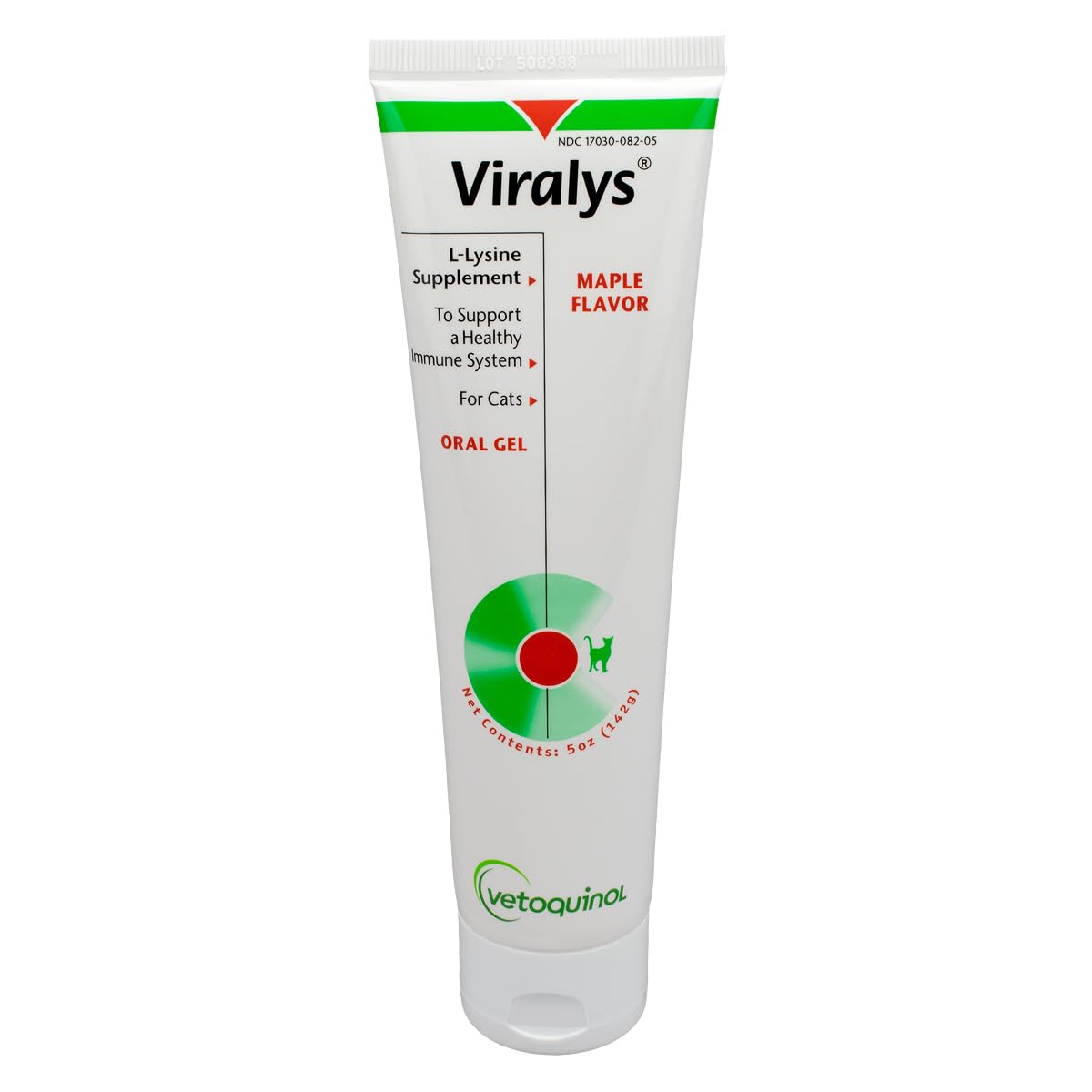
Viralys Lysine Gel

Viralys Lysine Gel

Direct gel dosing

Our Score 9.0/10
Check Price

Worth Noting

  • Strong maple smell
Form
Oral gel
Size
5 oz
Flavor
Maple
Key Ingredient
L-Lysine
Read the full review

Viralys is the gel we reach for when a cat will take something directly from a tube but will not tolerate a powder in its food. The maple-flavored gel is thick, so you can put a ribbon on a paw or a plate, and the 5-ounce tube gives you a clear daily dose without measuring.

The texture is not universally loved. The gel can flick off a paw before the cat licks it, and a cat that dislikes sticky textures will make you work for it. A syringe or a smear on the roof of the mouth is tidier, but that is a two-person job with a determined cat.

Where Viralys earns its place is in the cat that already accepts a paste dewormer or hairball gel. It is more expensive than the bulk powders, but it gives you a direct dose without relying on the cat cleaning a bowl. For a cat that needs lysine and will not eat it mixed into food, that convenience is the whole point.

We also like that the dose is visible. You know how much went on the paw and how much the cat actually swallowed, which is harder to judge with a powder stirred into a whole bowl. It is one of the most direct ways to give lysine.

Bottom line: Reach for Viralys if your cat takes paste directly but refuses powder in food; the maple gel gives a visible daily dose without measuring.

4

SANTKOL Lysine Drops

SANTKOL Lysine Drops

Liquid dosing

Our Score 9.0/10
Check Price

Worth Noting

  • Small 60 mL bottle
Form
Liquid drops
Size
60 mL
Flavor
Chicken
Key Ingredient
L-Lysine
Read the full review

The SANTKOL bottle looks more like a tincture than a pet supplement: dark glass, a dropper, and a chicken flavor that is meant to go straight into the mouth or over food. That dropper is the reason to consider it if you are dosing one cat at a time and want to skip spoons and scoops.

Liquid is also the easiest form to adjust around a cat that eats only a little at a time. We liked that the dark bottle protects the contents and that the dose can be put on a plate rather than worked through a whole bowl of food. The chicken flavor is the other draw; it is the kind of savory note that can make a cat lick a dish clean instead of leaving a puddle. And because it is a liquid, it carries L-lysine for immune, respiratory, and eye support without a gritty texture.

A liquid can be messier than a powder if a cat shakes its head or walks away mid-dose. The dropper also needs a steady hand when the cat is already squirming. Those are trade-offs of the format, not signs that the supplement is weak.

For a cat that will lick chicken-flavored liquid from a dish, this is the least fussy way to dose, and the dropper makes it easy to keep the amount consistent. We reach for it when a powder has already failed.

Bottom line: Choose SANTKOL if you want a chicken-flavored liquid and a dropper for one-cat dosing; it is the least fussy option for a cat that licks liquid from a dish.

5

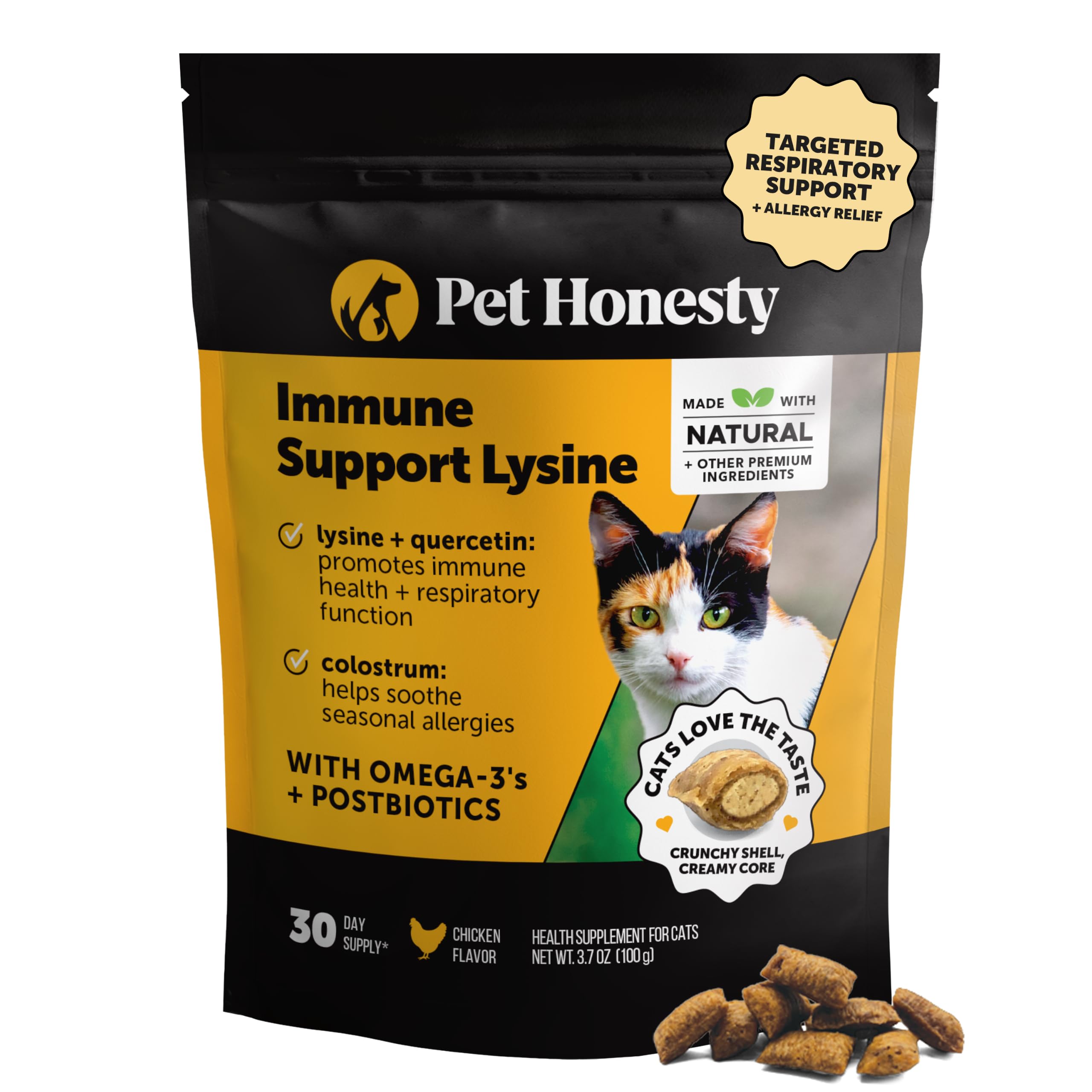
Pet Honesty Immune Lysine

Pet Honesty Immune Lysine

Treat-style routine

Our Score 9.0/10
Check Price

Worth Noting

  • Contains chicken, so not for poultry-sensitive cats
Form
Crunchy chews
Flavor
Chicken
Supply
30-day
Key Ingredients
L-Lysine, colostrum, quercetin
Read the full review

The treat format is what makes Pet Honesty worth considering: a chicken-flavored chew with a crunchy shell and a creamy center is a far easier sell than a scoop of powder for a cat that already expects a snack. We like that it turns a daily immune supplement into part of the treat routine rather than a negotiation.

The formula is broader than plain lysine. Alongside L-lysine, it includes colostrum, quercetin, omega-3s, and beta-glucan, which makes it interesting for a cat with seasonal itchiness or respiratory flare-ups as well as routine immune support. That is a different job from a single-ingredient lysine powder, and it is the reason this one stays on the list.

The catch is that a chew only works if the cat finishes it. A cat that turns up its nose at chicken chews will leave the dose on the floor, and a bag of uneaten chews is no bargain. The 30-day supply is sized for one cat, so a multi-cat home will go through it faster. For a reliable treat taker, though, we think it is the most pleasant routine here.

Bottom line: Pick Pet Honesty for a cat that already takes chews, especially if you want lysine plus a broader immune and allergy-oriented blend in a treat.

6

VetriScience DMG Liquid

VetriScience DMG Liquid

Non-lysine support

Our Score 9.0/10
Check Price

Worth Noting

  • Small 30 mL bottle
Form
Liquid
Size
30 mL
Flavor
Unflavored
Key Ingredient
DMG
Read the full review

DMG is the pick for someone who has already tried lysine and wants a different immune-support ingredient. VetriScience's liquid supplies dimethylglycine, an amino acid derivative the label ties to immune response, antioxidant activity, and physical stress, in an unflavored dropper bottle. It is a different lane from the lysine powders that dominate this list.

That difference is why it earns a place here. The liquid is genuinely easy to hide in food, and because it is labeled for dogs and cats, a multi-pet home can use one bottle. We also appreciate that it is unflavored and unscented; a cat that rejects chicken or maple will not smell this one coming. The dropper makes a small daily dose easy to place on a plate or stir into a spoonful of dinner.

It is not a lysine replacement for a cat under a vet's direction for herpesvirus-related symptoms; it is a second lane of immune support. For one cat, it is a straightforward daily add-in, and the dropper keeps the dose simple. We keep it for the cat that needs something other than another lysine powder, or for a household that already has a dog on DMG.

Bottom line: Choose VetriScience DMG if you want a non-lysine immune-support ingredient in an unflavored liquid that can be shared with a dog.

7

VOSIFSDIY Cat Multivitamin

VOSIFSDIY Cat Multivitamin

All-in-one support

Our Score 8.8/10
Check Price

Worth Noting

  • Strong smell may put cats off
Form
Liquid drops
Size
60 mL
Nutrient Count
15-in-1
Read the full review

The VOSIFSDIY bottle is not a single-ingredient lysine supplement. It is a 15-in-1 liquid multivitamin that folds immune support in with glucosamine, cranberry, and skin-and-coat nutrients.

That breadth is the appeal if you want one bottle to cover several everyday concerns. The liquid format is easy to drop onto food, and the bottle is small enough to keep in a cabinet. For a generally well cat, it is a low-effort addition to the routine, and the 15 nutrients cover more ground than a plain lysine powder.

The trade-off is focus. A cat that needs a specific lysine dose is not getting the same targeted formula here, and the 15 nutrients make it harder to know which one is doing what. It is a broad multivitamin, not a lysine powder with a few extras.

We see it as a starter multivitamin for a generally well cat that needs broad support, not a cat in the middle of a flare-up. It is the bottle to try when you want one daily liquid rather than three separate supplements. If you are treating a specific immune issue, start with a targeted product and your vet's advice.

Bottom line: Choose VOSIFSDIY if you want one broad liquid multivitamin with immune support rather than a single-ingredient lysine product.

8

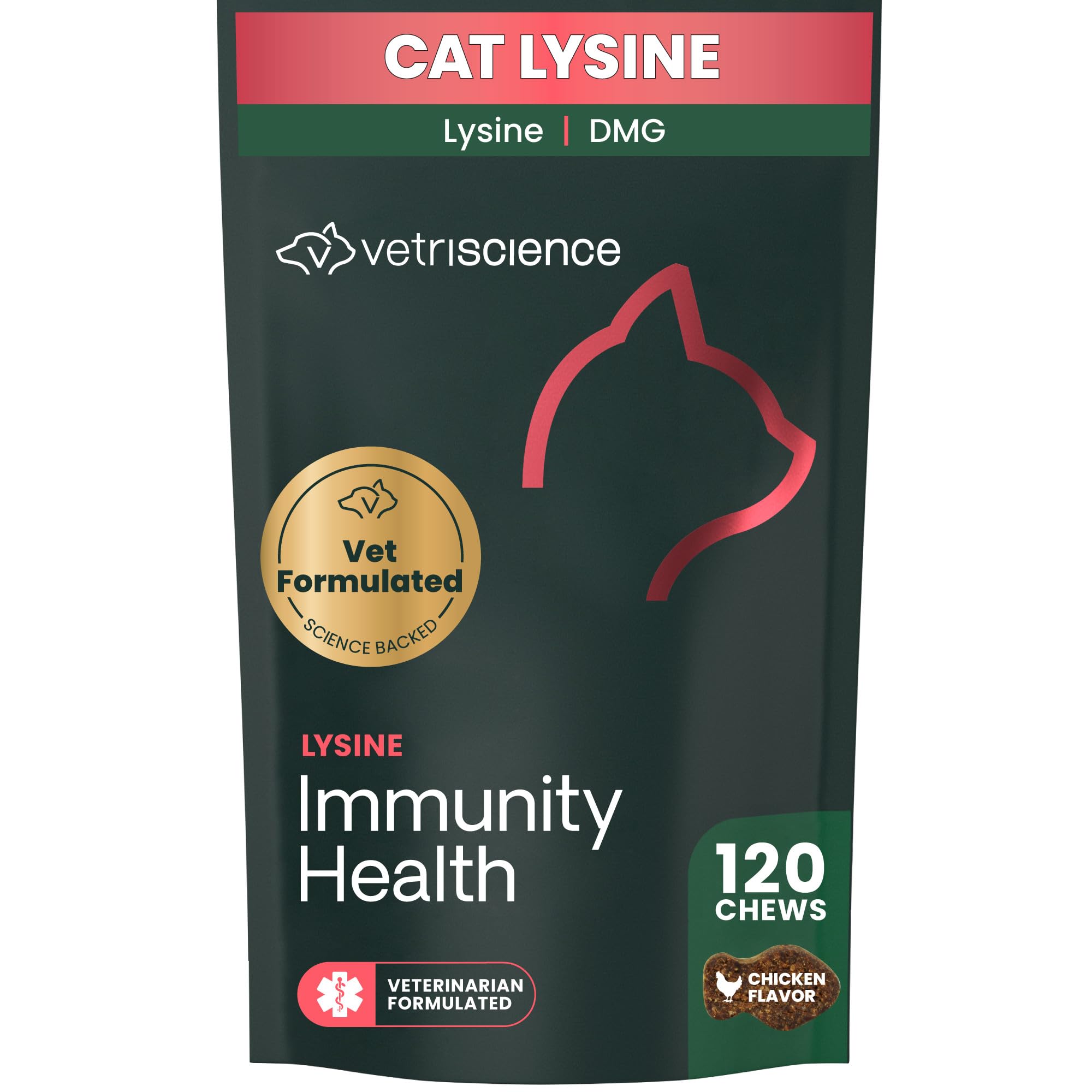
VetriScience Lysine Chews

VetriScience Lysine Chews

Multi-cat homes

Our Score 8.4/10
Check Price

Worth Noting

  • Cats may refuse the chew
Form
Soft chews
Count
120 chews
Flavor
Chicken
Key Ingredients
L-Lysine, DMG
Read the full review

The 120-count tub is the bulk option here, and the label is refreshingly direct: 250 mg of L-lysine and 50 mg of DMG in each soft chew. That is a clearer starting point than a powder you have to measure by scoop, especially in a house with more than one cat.

The combination makes it more than a plain lysine treat. DMG adds a second immune-support ingredient, and the chicken flavor is the hook that gets the chew eaten. The soft-chew format is also easier to hand out than a tube of gel, which matters when you are dosing several cats at once. The 120-count tub is sized for a routine, not a trial, so it makes sense once you know chews work in your house.

We choose these for a multi-cat household or a cat that already takes chews willingly. The stated dose makes it easy to keep track of what each cat gets, and the bulk count means fewer reorders. It is also easier for a pet sitter to hand out than a dropper bottle. For the right cat, it is the most practical chew here.

Bottom line: Consider VetriScience Lysine Chews for a multi-cat home that wants a stated lysine-and-DMG dose in a bulk soft chew.

How We Tested Cat Immune Support Supplements

I started with roughly 30 supplements sold in the U.S. and cut anything without a full ingredient panel, anything that buried its doses inside a proprietary blend, and anything priced so a daily serving would cost more than the cat's food. That narrowed it to 12 products: powders, soft chews, and two liquids. Testing ran four months, long enough to get past the novelty of a new topper and see what happened once each cat formed an opinion.

Every supplement went into the same morning routine. A spoonful of wet food in a small dish, the dose mixed in, the dish set down while I stood back and watched. I noted how quickly the cat approached, how much was left after 10 minutes, and whether a powder clumped, sank, or started separating from the food as it sat. I smelled each container on opening, and the strong ones were usually the ones left in the bowl. Before mixing anything, I offered a pinch alone on a plate, since a supplement that fails that test rarely recovers.

The next 24 hours told me about digestibility: stool firmness, gas, and any departure from that cat's normal. Once a week I counted sneezes during a 10-minute play session, and I kept loose notes on coat and appetite so I wasn't crediting a powder for a good week. For value, I worked out cost per day at the label dose, not cost per tub. The handful that survived all of it were the ones the cats finished without a fight and that produced a cleaner litter box and fewer sneezes.

How to Choose Immune Support Supplements for Cats

Start With the Form Your Cat Will Take

Powders are the most flexible because you can stir them into a spoonful of wet food, but they require a food the cat reliably finishes. Gels and liquids suit cats that take medication directly or lick a plate clean; chews work only for a cat that already sees treats as part of the routine. If your cat is suspicious of new textures, an unflavored powder such as NOW's is easier to hide than a maple gel or chicken chew. If you need a direct dose, a gel or dropper liquid is tidier than chasing a half-eaten bowl.

Know What the Active Ingredient Is Doing

Most feline immune supplements are built on L-lysine, an amino acid commonly used for cats prone to herpesvirus-related eye and respiratory flare-ups. DMG is a different ingredient, and a 15-in-1 multivitamin covers broader ground without a targeted lysine dose. Decide whether you want a single-ingredient lysine product or a broader formula; don't assume more ingredients means more immune support. If your vet has recommended a specific lysine dose, start there and choose a product that states its strength clearly.

Check the Dose, Package Size, and Life Stage

Lysine products vary from a 250 mg chew to powders you measure by scoop, and the package size determines how long a bottle lasts. A 120-count chew tub suits a multi-cat home; a 30 mL dropper bottle is better for one cat. Kittens and adult cats often use the same product but not always the same dose, so read the label rather than scaling up. If you are supplementing several cats, a bulk powder is usually the most economical format; if you have one cat, a smaller gel or liquid may be easier to finish.

Look for Clear Sourcing and a Palatable Formula

NASC certification and made-in-USA claims are useful signals that a supplement is made under pet-specific standards, but they don't replace a clear ingredient panel or a dose you can follow. Flavor and smell matter as much: a strong maple or fish odor can make a cat refuse a food it otherwise likes. Buy the smallest size that lets you test acceptance, then move to the bulk format once you know the cat will take it. In a multi-cat home, test one cat before mixing a new supplement into everyone's dinner.

Frequently Asked Questions

Final Verdict

We recommend Tomlyn L-Lysine Powder as the default because it pairs a clear lysine dose with a flavored powder that mixes into wet food and is easy to repeat daily. If your cat refuses flavored food, choose NOW's unflavored powder and hide the dose in a small spoonful of dinner. If your vet wants a non-lysine immune ingredient, VetriScience DMG is the alternative we keep on the list.