Health & Wellness

Best Kidney Supplements for Cats of 2026

The phrase "a little high" is not what you want to hear at your cat's annual exam. Kidney supplements will not reverse damage, and no powder replaces veterinary care — but the right one can make the daily routine easier, supporting appetite, weight, and the values your vet is already tracking. The catch is that a supplement only works if your cat actually eats it, which is where most formulas fall apart.

Over the past six months, my team and I have mixed 12 different formulas into wet food, watched a lot of bowls, and compared notes with our own vets. Cats are suspicious of smell and texture, and the ones that disappeared fastest were not always the ones with the longest ingredient lists. Solubility turned out to matter as much as the label: a powder that clumps in wet food gets left behind, while one that dissolves cleanly gives your cat a chance at the full dose. The picks below are the ones that held up in real bowls, not just on paper.

1

Epakitin Kidney Support Powder

Top Pick
Epakitin Kidney Support Powder

Everyday phosphate support

Our Score 9.2/10
Check Price

Worth Noting

  • Can cause vomiting in some cats
Form
Powder
Size
2.12 oz
Labeled For
Cats and dogs
Active Ingredient
Chitosan
Read the full review

Phosphate binders can turn mealtime into a negotiation. Epakitin is the one we reach for first because the routine is so simple: measure, sprinkle, stir. The powder is fine and blends into wet food without leaving a gritty layer, and the chitosan formula avoids aluminum hydroxide. That combination is why it's our default for a cat on a vet-approved phosphate-binding plan.

The 60 g tub is compact, and the powder is easy to portion with a small spoon. We like that it's labeled for cats and dogs, so a multi-pet home can keep one tub, but the dose still has to be set for the cat in front of you. It's not a complete renal diet or a replacement for medication; it's a binder that works with the food in the bowl.

The formula includes calcium carbonate, which is worth flagging. Not every cat with kidney disease needs a calcium-based binder, and your vet may prefer a different type if the lab work points elsewhere. That's a conversation to have before you open the tub, not after.

What we keep coming back to is the lack of fuss. The powder disappears into a spoonful of pate, the tub doesn't take up counter space, and the routine is short enough to repeat at every meal. For a cat that is already tired of being handled, that matters.

Bottom line: For a cat on a vet-approved phosphate-binding plan, this chitosan powder is our default because it mixes easily into wet food and keeps the routine short.

2

AminAvast Kidney Support

AminAvast Kidney Support

Cat-specific daily support

Our Score 9.2/10
Check Price

Worth Noting

  • No phosphate-binding action
  • Premium price for a daily supplement
Form
Sprinkle capsule
Count
60 capsules
Labeled For
Cats and small dogs up to 20 lb
Active Ingredients
Amino acids and peptide blend
Read the full review

AminAvast comes in a small bottle of sprinkle capsules, and the label is specific: cats and small dogs up to 20 pounds. That specificity is the point. If you have a cat and a large dog, this isn't the tub you share, and the dose is already aimed at a cat-sized patient.

The capsule pulls apart without scissors, and the powder is light enough to disappear into a teaspoon of pate. No refrigeration, no measuring, no sticky gel. We tried it over a strong-smelling wet food and found it easy to distribute evenly, which is more than we can say for some powders that clump at the first stir.

What earns it a place in this guide is the daily routine. The blend is amino acids and a peptide, and the label positions it around renal health, coat, appetite, and energy. We see it as a support layer, not a replacement for a prescribed diet or medication. For a cat that needs a little encouragement at meals, the low-effort delivery is the real selling point.

Bottom line: AminAvast is the cat-specific sprinkle capsule we hand to someone who wants daily renal support that opens easily over wet food and needs no refrigeration.

3

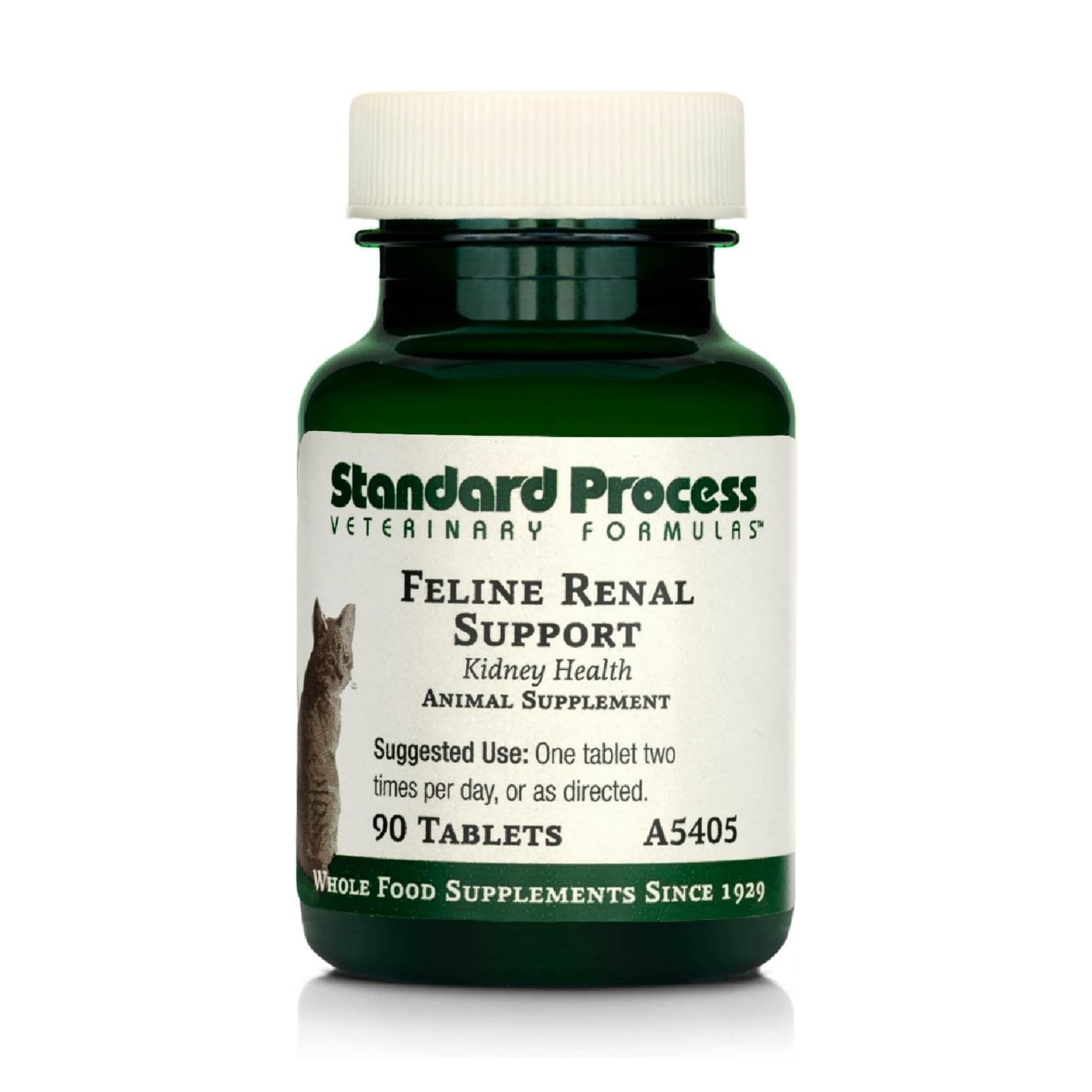
Standard Process Feline Renal Support

Standard Process Feline Renal Support

Crushable cat tablet

Our Score 9.2/10
Check Price

Worth Noting

  • Twice-daily dosing schedule
Form
Tablet
Count
90 tablets
Formula
Whole food based
Labeled For
Cats
Read the full review

Standard Process Feline Renal Support is the tablet option, and it's one of the few here that's cat-specific and designed to be crushed. The bottle holds 90 tablets, and the label's routine is simple enough to work into a meal.

The tablet can be given whole or crushed and mixed with food, which gives you options if your cat is cooperative one day and suspicious the next. The formula is whole-food based, and the dose is set by your vet.

We see it as a good fit for a cat that already takes tablets or for someone willing to crush and mix. The whole-food formula is the appeal, and the 90-tablet bottle is a sensible size for a daily routine. It's not the fastest routine, but it's familiar.

Our judgement is that it earns a place for the cat that will take a tablet, especially if you want a cat-specific whole-food option. For a cat that fights pills, a liquid or sprinkle capsule is the better route.

Bottom line: Standard Process is the cat-specific tablet we reserve for cats that already take tablets, with a whole-food formula that can be crushed into food.

4

Rx Vitamins Phos-Bind

Rx Vitamins Phos-Bind

Bulk binder value

Our Score 9.0/10
Check Price

Worth Noting

  • Some cats refuse the powdery texture
Form
Powder
Size
7.05 oz
Includes
Scoop
Active Ingredient
Aluminum hydroxide
Read the full review

The 200 g jar is the first thing you notice about Rx Vitamins Phos-Bind. It's a bulk-size aluminum hydroxide powder, the kind of package you buy when you expect to be doing this for a while. The included scoop is a small measure, and the powder is fine enough to mix into wet food with a few stirs.

We reach for this one when we want a no-frills binder with a long runway. The powder is tasteless, and it disappears into a spoonful of wet food without turning the meal into a science experiment. The scoop is a useful touch because a fine powder is easy to overdo. For a multi-cat household or a cat on a long-term binder, the 200 g jar is the reason to choose it over Epakitin.

The texture takes a little care. It's a very fine powder that can drift when you open the jar, and it doesn't dissolve in water, so wet food is the right vehicle. We scoop gently and mix it into a teaspoon of wet food first, then add the rest of the meal. That small step is worth the extra ten seconds.

Bottom line: The 200 g jar makes this our pick for multi-cat homes and long courses, where a tasteless aluminum hydroxide powder and a scoop matter more than a tiny tub.

5

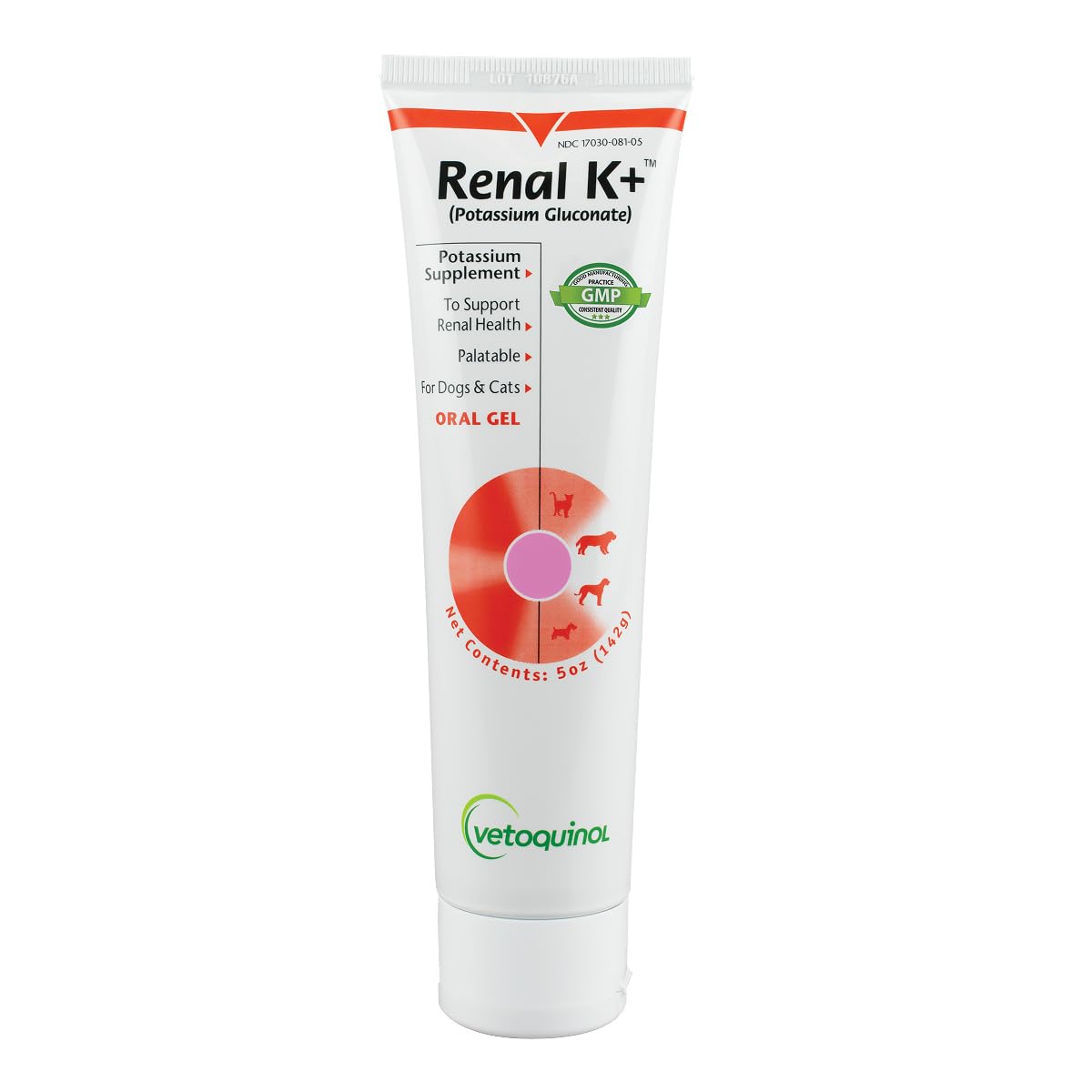
Vetoquinol Renal K Gel

Vetoquinol Renal K Gel

Confirmed low potassium

Our Score 9.0/10
Check Price

Worth Noting

  • Strong maple flavor some cats reject
Form
Gel
Size
5 oz
Flavor
Maple
Active Ingredient
Potassium gluconate
Read the full review

Renal K is a potassium supplement, not an all-purpose kidney formula. That distinction matters: it's for a cat with low blood potassium, often alongside kidney disease, and the dose should come from your vet. If the lab work hasn't shown low potassium, this isn't the product to add on a hunch.

The delivery is the appeal. The maple-flavored gel can be smeared on a paw or mixed into food, and it's far less stressful than forcing a pill. The tube is 5 oz, and the gel is thick enough to stay where you put it. For a cat that needs daily potassium, that ease is the whole point.

It is sticky, and the gel needs a careful hand on the measuring end; a little goes a long way. We put a dab on a saucer or mix it into a small amount of wet food rather than trying to dose a furry paw.

Our judgement is simple: if your cat's potassium is confirmed low, Renal K is the most manageable form here. If it isn't, skip it. Adding potassium blindly is not a good idea, and no gel is convenient enough to make that risk worthwhile.

Bottom line: When a cat has confirmed low potassium, this maple gel is the easier daily dose we reach for instead of pills.

6

Azovast Plus Kidney Probiotic

Azovast Plus Kidney Probiotic

Renal probiotic support

Our Score 9.0/10
Check Price

Worth Noting

  • Taste can put cats off when opened
Form
Capsule
Count
120 capsules
Potency
24 billion CFU per capsule
Active Ingredients
Four probiotic strains
Read the full review

Azovast Plus is the probiotic pick, and its best trick is that it doesn't need the fridge. That's a bigger deal than it sounds: refrigeration requirements can turn a simple daily supplement into a logistics problem. We like it for travel, for a cat that takes a capsule hidden in food, and for anyone who has ever forgotten to put the bottle back.

Each capsule carries 24 billion CFU from four probiotic strains, and the bottle has 120 capsules. The capsule is acid-resistant, so it can be swallowed whole; if you open it, the powder is fine and flavorless. It's a practical way to support renal toxin management alongside a vet's plan.

The capsule is on the large side for a cat. If yours won't swallow it, open it and mix the powder into a strong-smelling wet food. That's the workaround, and it's the reason we don't treat the size as a dealbreaker.

The 120-count bottle is a generous count, and the no-refrigeration storage means it can live in the cabinet with the rest of the cat supplies. For a household that travels or has a cat that takes capsules, that convenience is the reason to pick it.

Bottom line: This is the probiotic we suggest when refrigeration is the hurdle: 24 billion CFU per capsule and a bottle that travels easily.

7

Nutramax Naraquin

Nutramax Naraquin

Multi-binder convenience

Our Score 8.8/10
Check Price

Worth Noting

Form
Sprinkle capsule
Count
60 capsules
Labeled For
Cats and dogs
Active Ingredients
Ferric citrate, calcium acetate, chitosan
Read the full review

Naraquin is the most complicated binder here, and that's the point: it combines ferric citrate, calcium acetate, and chitosan in one sprinkle capsule, plus omega-3s. If your vet wants a multi-binder approach, this is the one that keeps the medicine cabinet from filling up with separate jars.

We see it as a strong alternative for a cat on a vet-directed phosphate plan. The capsule opens easily over food, the dose is straightforward, and the combination covers more than one binding route. It's a practical choice for someone who wants one product instead of three.

The catch is cat tolerance. The formula has a fishy smell that some cats find off-putting, and a refused dose is a dose that doesn't work. If your cat is sensitive to odors, start with a tiny amount in a strong-smelling food, and don't mix it into the whole bowl until you know it's accepted. The 60-count bottle is a reasonable size for a trial run.

Bottom line: We see this triple-action binder as a practical choice when a vet wants more than one phosphate-binding route in a single sprinkle capsule.

8

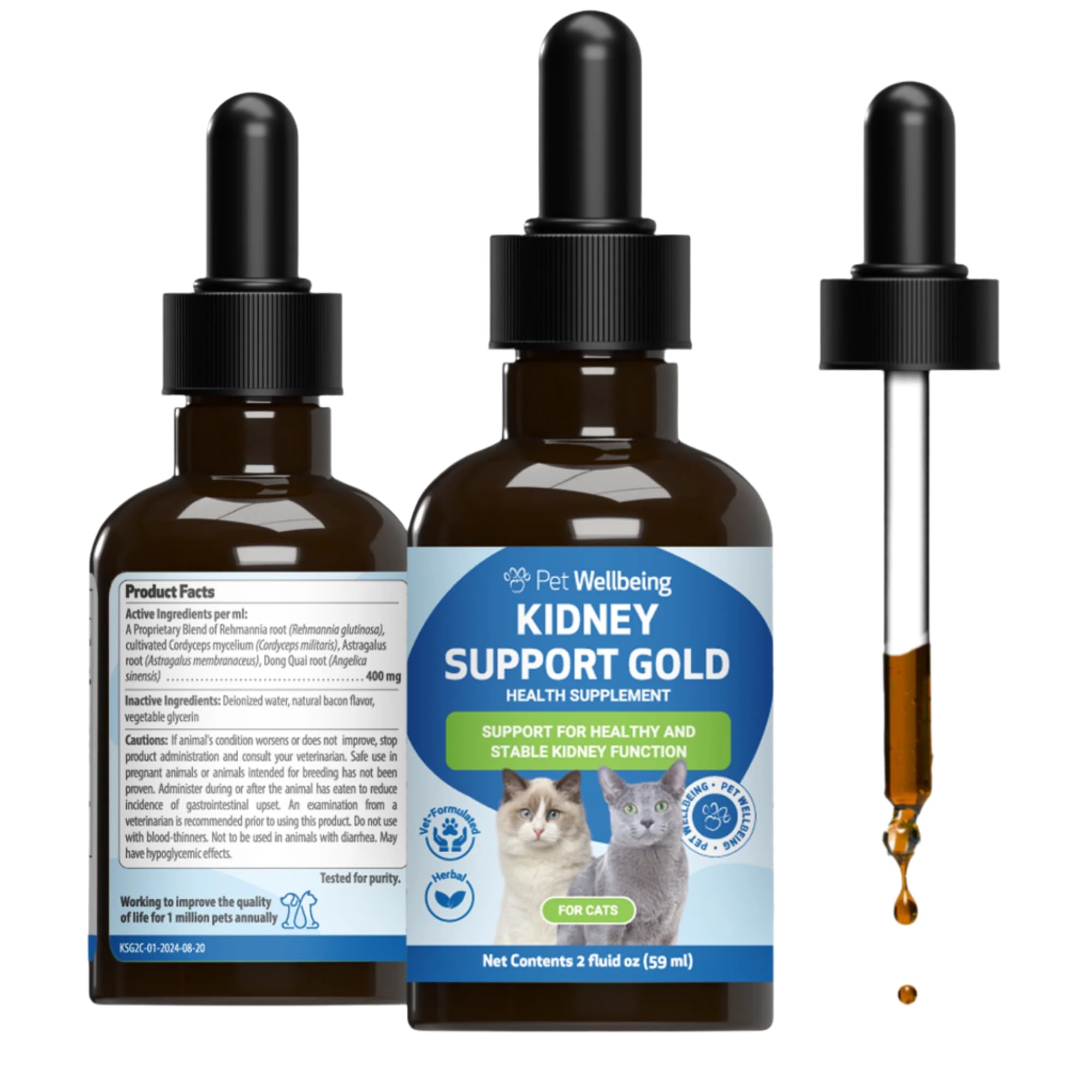
Pet Wellbeing Kidney Support Gold

Pet Wellbeing Kidney Support Gold

Liquid herbal support

Our Score 8.6/10
Check Price

Worth Noting

  • Bacon flavor doesn't win over every cat
Form
Liquid
Size
2 fl oz
Flavor
Bacon
Active Ingredients
Herbal blend
Read the full review

Kidney Support Gold is the liquid herbal option, and it's unapologetically cat-specific. The dose is measured in drops, and the flavor is bacon. For a cat that hates tablets, that combination is already a head start.

The formula is a vet-formulated blend of herbs traditionally used for kidney support, with no alcohol. We appreciate that it's easy to adjust the dose and that it can go directly into the mouth or over food. The dropper makes it easy to keep the routine consistent, which matters when the supplement is meant to be given daily.

What keeps it in the guide is the form, not a promise of a miracle. A liquid can be easier for a cat that refuses powders, and the bacon flavor is a smart attempt at palatability. It's the kind of thing we try with a vet's guidance rather than stockpile.

The 2 oz bottle is small, so it won't last as long as a bulk powder, but it's easy to hold and dose. That makes it a sensible trial size for a cat that has already turned down three other textures.

Bottom line: We keep this bacon-flavored herbal liquid for cats that refuse powders, and the dropper keeps the daily dose manageable.

How We Tested Kidney Supplements for Cats

We started by reading labels and vet guidance, then cut the list to 12 formulas that named their protein source, published a guaranteed analysis, were made for daily use, and did not require a prescription. Over six months, we tested each one in the same two-cat household, rotating every two weeks so no cat got stuck on a formula for too long. Each supplement was mixed into a measured half-can of wet food at breakfast and dinner, and we noted whether the cat ate around it, left a gritty ring, or walked away entirely.

We also mixed each powder with two tablespoons of water in a clear glass to see how it dissolved and whether it clumped. Texture mattered as much as taste: fine powders coated the food evenly, while gritty ones sank or left a film that cats licked around. We tracked appetite by weighing leftovers, watched for vomiting or loose stools after each switch, and kept a simple litter-box log for urine clumps and water-bowl refills. Every four weeks, our vet checked weight and reviewed bloodwork alongside the owner's notes.

Value was judged by cost per serving rather than sticker price, since a cheap tub that gets refused is no bargain. We also asked each owner whether they would keep buying it after the trial, and whether the cat seemed to like the taste or merely tolerate it. The formulas that scored highest were the ones that disappeared from the bowl, caused no digestive drama, and showed up as steady weight and appetite at the next checkup.

How to Choose Kidney Supplements for Cats

Match the Supplement to the Job

Kidney support is not one job. A phosphate binder attaches to phosphorus in the food so less is absorbed; a probiotic aims at renal toxins; an amino acid or peptide product is daily support; potassium is for a confirmed deficiency; herbal liquids are a gentler adjunct. Those are different tools, and stacking them without a vet can be unsafe or simply wasteful. Ask which number on the lab work you are trying to influence, then choose the form that fits. If phosphorus is the target, a binder like Epakitin or Rx Vitamins Phos-Bind is the relevant category; if potassium is low, Renal K is the one to discuss.

Palatability Decides Whether It Works

A supplement that stays in the bowl does nothing. Powders disappear best in a spoonful of wet food, not a whole bowl; capsules can be opened over strong-smelling food; gels can be dabbed on a saucer or a paw. Finicky cats often accept a new texture in a tiny amount first. We keep a separate spoon and mix the dose into a teaspoon of the cat's favorite wet food, then add the rest of the meal once that little bit is eaten. If your cat is texture-sensitive, a liquid like Kidney Support Gold or a sprinkle capsule like AminAvast may be easier than a gritty powder.

Check the Label, the Size, and the Storage

Cat-compatible does not always mean cat-sized. A capsule that is fine for a dog can be too large for a cat, and a tablet may need crushing. Check whether the product is labeled for cats, whether it needs refrigeration, and how big the container is. A no-refrigeration probiotic like Azovast Plus is easier to travel with; a bulk powder like Rx Vitamins Phos-Bind is better for a multi-cat home. The package size should match the dose your vet sets, not the biggest jar on the shelf. Read the storage line before you buy; a probiotic that arrives warm or sits in a warm cabinet may not be worth the money.

Keep It Inside a Vet-Led Plan

Kidney values change, and so does the right supplement. A cat with early CKD may need a different approach than a cat with high phosphorus and low potassium. Supplements do not replace a prescribed renal diet, medication, or hydration support. Recheck bloodwork on the schedule your vet sets, and bring the product label to the appointment so the dose and interactions can be checked. If your cat is vomiting, not eating, or losing weight, that is a reason to call the vet rather than add another product.

Frequently Asked Questions

Final Verdict

For most cats on a vet-approved phosphate-binding plan, Epakitin is the one we reach for first. The chitosan powder disappears into wet food, and the 60 g tub keeps the routine simple. If you need a cat-specific sprinkle capsule instead, AminAvast is the better fit. If you are managing a multi-cat household, Rx Vitamins Phos-Bind gives you more powder per jar. The deciding question is not which supplement sounds strongest; it is which job your vet has asked you to do.