Health & Wellness

Best Fish Oil for Cats of 2026

The hard part of fish oil for cats isn't buying it — it's getting the cat to eat it. Cats arrive at the bowl with opinions, and fish oil is a strong-smelling, oily addition to a meal they already approved of yesterday. The payoff sits on the other side of that standoff: less flaking along the spine, less scratching under the chin, a coat that feels softer under your hand. We spent three months working through 14 bottles to find the ones worth the negotiation.

Here's something a first-time buyer usually doesn't know: your cat's nose votes before her mouth does, so a milder oil that disappears into wet food often beats a stronger one with a better label. The richest bottles can also loosen stools, which is why starting at half a dose matters more than the label suggests. Somewhere below is the bottle your particular cat will actually finish — and a pump that won't leave you guessing how much went in.

1

Pet Honesty Cat Chews

Top Pick
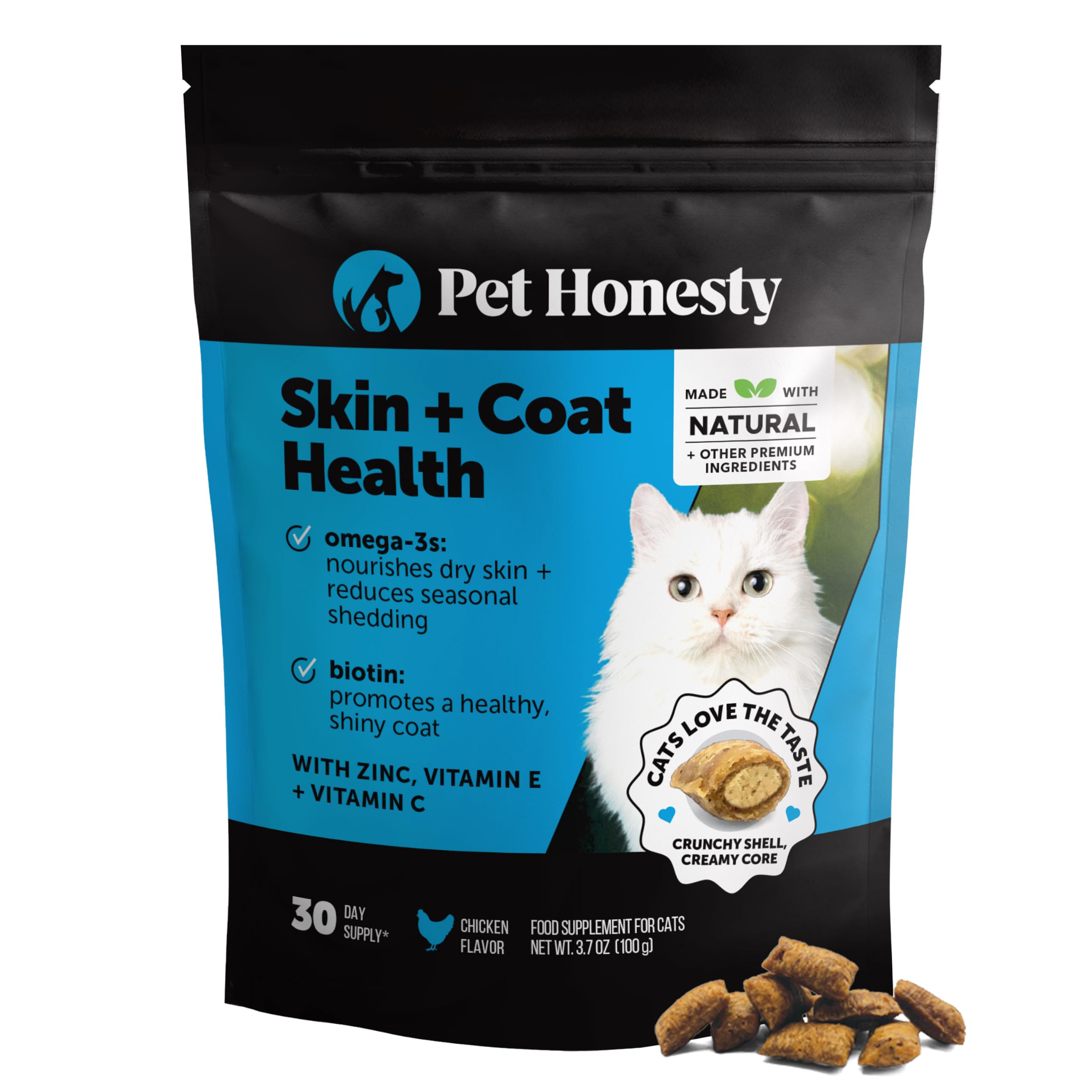
Pet Honesty Cat Chews

Picky cats

Our Score 9.2/10
Check Price

Worth Noting

  • Contains chicken meal and grains
Form
Crunchy chew
Count
30 chews
Flavor
Chicken
Texture
Crunchy outside, creamy center
Read the full review

The refusal problem is real: a cat who turns up their nose at oily food can make a bottle of fish oil useless. Pet Honesty's chews are built for that cat. They're chicken-flavored, crunchy outside and creamy inside, and they're made for cats rather than split between cats and dogs. Salmon oil supplies the omega-3s, with biotin and vitamin E rounding out the skin-and-coat formula.

We like the format because it removes the measuring, the pump, and the oily spoon. A cat that already likes chicken treats may take these as a reward rather than a supplement, which is the whole point. The chews are easy to portion into a treat routine, and they don't leave a fishy residue in the bowl.

The 30-count bag is easy to keep in a treat jar, and the chicken flavor is what makes the format work. It's a supplement, not a meal replacement, so keep it alongside a complete diet.

Bottom line: The cat-only pick for households where liquid oil gets refused: a chicken-flavored chew that delivers salmon oil and skin-support nutrients in a treat.
2

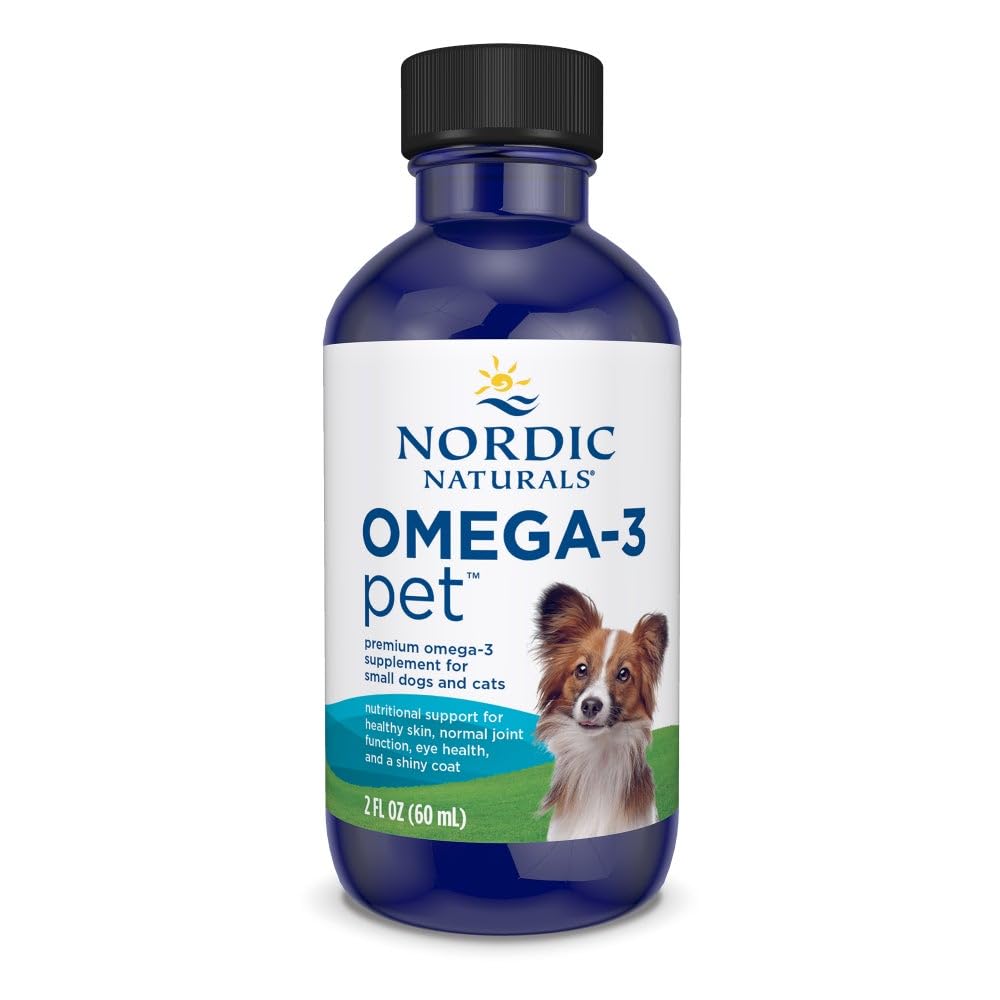
Nordic Naturals Omega-3 Pet

Nordic Naturals Omega-3 Pet

Single-cat households

Our Score 9.0/10
Check Price

Worth Noting

  • Costs more per ounce than large bottles
Form
Liquid
Flavor
Unflavored
Volume
2 fl oz
Omega-3 Per mL
294 mg
Read the full review

The number we look at first is 294 milligrams of omega-3 per milliliter, not the total weight of the fish oil. That's a concentrated liquid for a cat-sized dose, and it's the main reason this is our top pick for one cat. The 2-ounce bottle is small enough that a single cat has a realistic chance of finishing it while it's still fresh, which matters more with oil than with a chew. We also like that the label is built for cats and small dogs rather than a 70-pound retriever.

The formula is unflavored, and that's the right call for cats. A few drops stirred into wet food disappear more easily than a salmon-scented oil, and the bottle lets you start with a small amount instead of committing to a 32-ounce jug. Cats are still cats: some lap it up, and some refuse the food entirely. The small bottle is an advantage there, because you're not stuck with a year's supply if your cat says no.

The bottle is small for a multi-cat home, so you'll be reordering more often than with a 32-ounce jug. The dose is concentrated enough that you're not pouring a tablespoon to get there, and that's the balance we want in a cat-sized bottle.

Bottom line: Our default for a single cat: a concentrated, cat-and-small-dog formula in a small bottle that's easier to finish before the oil goes stale.

3

Zesty Paws Salmon Oil

Zesty Paws Salmon Oil

Multi-pet homes

Our Score 9.0/10
Check Price

Worth Noting

  • Pump can leak or spray
  • Strong fishy odor
Form
Liquid
Source
Salmon and pollock oil
Volume
32 fl oz
Dispenser
Pump
Read the full review

A 32-ounce bottle is a commitment for one cat. In a household with two cats, a dog, or a foster rotation, one bottle can cover the whole group. The oil is a blend of wild Alaskan salmon and pollock, with EPA and DHA for skin, coat, and general health support. It's a liquid, not a chew, so it goes on wet food or a topper. The bottle is heavy enough that it wants a shelf, not a crowded counter.

We like it best as a shared bottle, not as a cat-only purchase. The formula is intended for both cats and dogs, and a few pumps are enough for a multi-pet meal. It's a liquid, so it goes on wet food or a topper; there's no chew to crush or hide. The bottle is heavy enough that it wants a shelf, not a crowded counter.

The larger point is that this is a volume buy. If your cat is picky, a 32-ounce bottle is a lot to gamble on; start with the small Nordic bottle or a chew. If your cats already accept salmon oil, the per-serving math here is hard to beat, and a bottle this size means fewer reorders.

Bottom line: For a multi-cat or cat-and-dog home, this is the value pick: a big salmon-and-pollock bottle with a pump, as long as you can live with a fussy dispenser.

4

Iceland Pure Salmon Oil

Iceland Pure Salmon Oil

Odor-sensitive homes

Our Score 9.0/10
Check Price

Worth Noting

  • Pump can stop working
Form
Liquid
Scent
Unscented
Volume
8.75 oz
Omega-3 Per Tsp
1,118 mg
Read the full review

The first thing we noticed is what's missing: the fish smell. Iceland Pure labels this oil unscented. It comes in a brushed aluminum bottle with a pump, and the 8.75-ounce size is easier to store than a 32-ounce jug. The metal bottle also keeps light off the oil, which is a small but useful detail.

The label lists 1,118 milligrams of omega-3 per teaspoon, so a cat-sized amount is small and easy to stir into a meal. The formula is intended for dogs and cats, and the oil is rich in EPA and DHA. It's a concentrated oil, not a diluted one, which is what you want when you're adding only a small amount to a cat's food.

We like the concentration and the low-scent formula together. That combination makes it the best pick here for a cat that turns away from fishy food or a kitchen where the smell lingers. The bottle is more expensive per ounce than the big plastic jugs, so it makes the most sense for one cat or a household that really minds the smell. You're paying for concentration and a low-scent bottle, not for volume.

Bottom line: The pick for odor-sensitive homes: an unscented salmon oil in a compact metal bottle, concentrated enough that a teaspoon goes a long way.

5

Vital Pet Life Salmon Oil

Vital Pet Life Salmon Oil

Certification seekers

Our Score 9.0/10
Check Price

Worth Noting

  • Pump can leak around the top
  • Fishy smell is noticeable
Form
Liquid
Source
Salmon oil
Volume
32 fl oz
Certification
NASC certified
Read the full review

The NASC seal is the first thing we look for on this bottle. It means the product is certified through the National Animal Supplement Council's quality-standard program, which is a useful signal in a category where labels can be vague. That's the reason this one earns a runner-up spot over several cheaper 32-ounce oils. It's still salmon oil, not a medicine, but the certification gives you one more thing to check off.

The bottle is 32 ounces, intended for cats and dogs, and positioned for skin, coat, heart, and shedding support. We like it for a household that already knows fish oil works and wants a big bottle with a paper trail. The pump makes it easy to add to wet food, and the oil is a straightforward salmon oil rather than a blend with hemp or other extras.

If you want a smaller, lower-scent bottle, the Iceland Pure pick is the better choice. For a multi-pet home that goes through a bottle quickly, the 32-ounce size is the advantage; for a single cat, a smaller bottle is easier to keep fresh.

Bottom line: A sensible large bottle for a multi-pet home that wants a certification on the label: NASC-certified salmon oil for cats and dogs.

6

LEGITPET Salmon Oil

LEGITPET Salmon Oil

Easy daily pumping

Our Score 9.0/10
Check Price

Worth Noting

  • Large bottle is overkill for one cat
Form
Liquid
Source
Wild Alaskan salmon oil
Volume
32 fl oz
Dispenser
Pump
Read the full review

The routine is simple: keep the bottle in the fridge door, pump a few squirts over dinner, and put it back. LEGITPET's 32-ounce bottle is built for that kind of daily use, with a pump and a wild Alaskan salmon oil base. It's intended for cats and dogs, and the oil is positioned for skin, coat, joints, heart, and immune support.

The formula is a straightforward salmon oil with omega-3 and omega-6 fatty acids from EPA and DHA. It doesn't lean on a long blend, which makes it a familiar, easy-to-mix option for a cat already eating salmon oil. The pump is a genuine convenience, and the bottle is large enough that you're not reordering every few weeks.

The smell is milder than some fish oils, which matters if you're pumping it at the counter every night. It's still fish oil, so keep it cold and wipe the nozzle. The bottle is a practical one for a household that feeds both cats and dogs.

What puts it in the also-consider tier rather than a runner-up spot is that it competes on size and easy handling rather than a cat-specific formula. The Nordic oil is the more cat-focused choice, and Vital Pet Life is the one with the NASC seal. We still like it for a multi-pet home that wants a mild-smelling, easy-pump oil, but it's not the first bottle we reach for when a cat has a specific problem. The pump is the part that earns its place on the counter.

Bottom line: A strong large-bottle alternative for cats and dogs when you want easy pumping and a milder fish smell, with a 32-ounce bottle that suits multi-pet homes.

7

Pets Purest Salmon Oil

Pets Purest Salmon Oil

Budget multi-pet

Our Score 8.8/10
Check Price

Worth Noting

  • Pump can be faulty
  • Fishy odor can linger
Form
Liquid
Source
Wild salmon oil
Volume
32 fl oz
Omega Blend
3, 6 & 9
Read the full review

The price-per-ounce case for a 32-ounce bottle is simple: more oil, fewer reorders. This one undercuts most of the large bottles here, which is why it gets a spot for budget-minded multi-pet homes. The oil is positioned for cats, dogs, ferrets, and horses, with omega-3, omega-6, and omega-9 fatty acids.

It's a 32-ounce bottle with a pump, and the label leans on the 3-6-9 blend rather than a single salmon-oil story. That makes it a broad everyday topper rather than a concentration-first pick. If you want to compare EPA and DHA numbers, the concentration-first picks are easier to line up; this one is sold on its blend and its size.

We like it as the bottle you don't ration. A few pumps over dinner is a low-effort routine, and the broad species label means you can use one bottle across the household. The trade-off is that this is a value oil, not a concentration-first pick. That's fine for everyday coat support, but it's a reason we don't put it first for a cat with a specific skin or joint concern.

The bottle is large, so it needs fridge space. If you want a single bottle for several pets and you're not chasing the highest omega-3 concentration, this is the practical buy.

Bottom line: The budget large bottle for a multi-pet home: 32 ounces of salmon oil for cats, dogs, and other pets at a lower cost per serving than the premium picks.

8

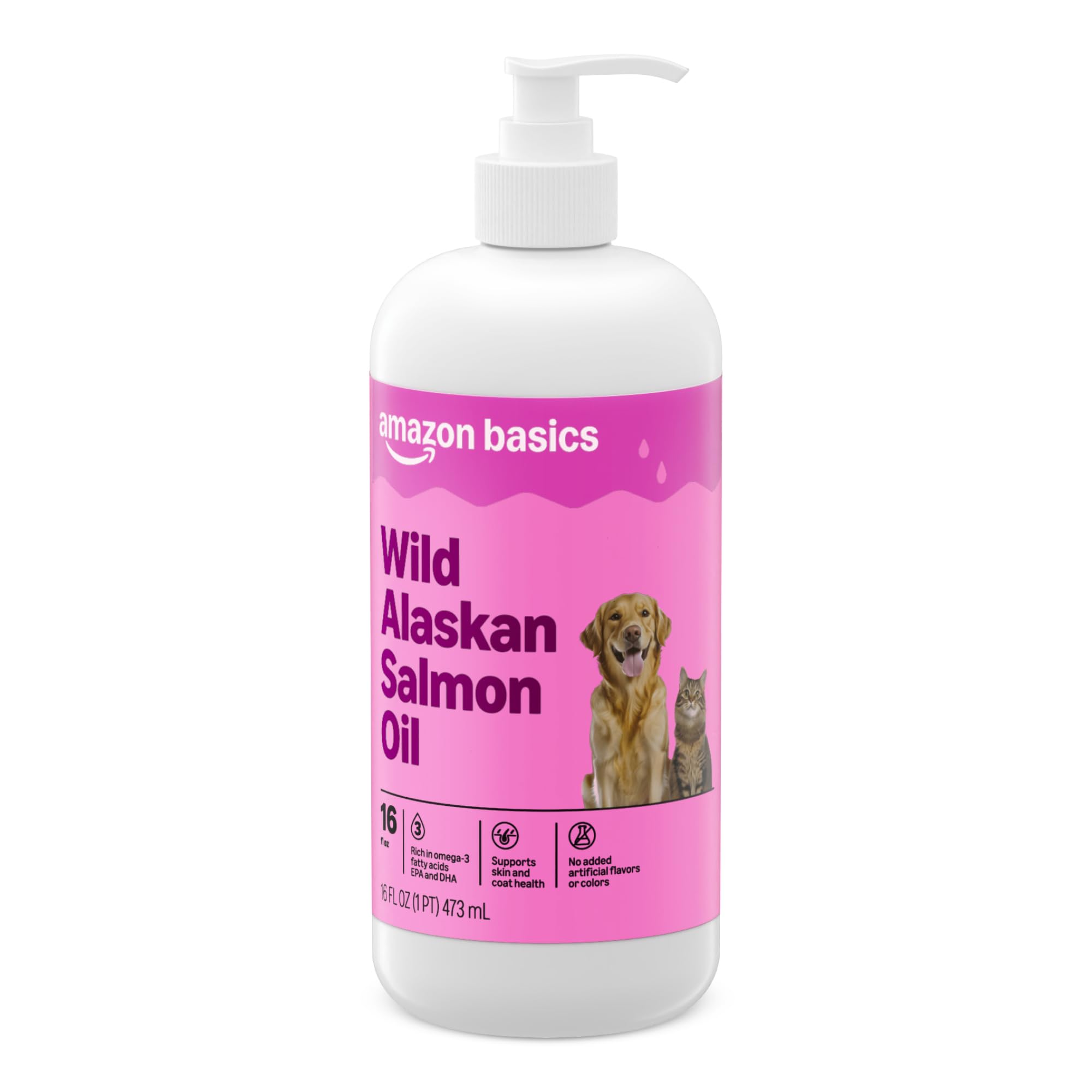
Amazon Basics Salmon Oil

Amazon Basics Salmon Oil

Simple daily topper

Our Score 8.8/10
Check Price

Worth Noting

  • Pump can malfunction
Form
Liquid
Dosing
1 pump per 25 lb
Volume
16 fl oz
Formula
Single-ingredient salmon oil
Read the full review

The ingredient list is one line: wild Alaskan salmon oil. It's a single-ingredient formula, which makes it easy to see what you're adding to your cat's food. The bottle is 16 ounces, which sits between the tiny trial sizes and the 32-ounce jugs, and it's labeled for both dogs and cats. There are no added artificial flavors, colors, or preservatives.

The feeding instruction is where cat owners need to pay attention: one pump per 25 pounds of body weight. A 10-pound cat gets less than half a pump, which is hard to eyeball. Use a syringe or measuring spoon to divide the pump, or choose a cat-specific product with a smaller dose. We like the single-ingredient approach, but the pump is calibrated for bigger animals.

The oil itself is a straightforward salmon oil, and the short ingredient list is a plus if you're trying to avoid extras. The 16-ounce size is manageable for one cat or a small household, and it's a reasonable way to try salmon oil without committing to a 32-ounce bottle. It's also a bottle that can do double duty in a cat-and-dog home.

This is the bottle we suggest when you want a simple, single-ingredient oil and you're willing to measure carefully. It's not the most convenient for a cat-only home, and it doesn't have the cat-specific dosing or small bottle of our top pick. But for a cat-and-dog household that already shares supplements, the short ingredient list is the reason to choose it over a blend; the measuring is the work you take on.

Bottom line: A straightforward budget bottle for a cat-and-dog home: one ingredient, a mid-size bottle, and a pump that needs a little patience for cat-sized doses.

How We Tested 14 Bottles of Fish Oil for Cats

We started with the label and worked backward. With a veterinarian's input, we screened for a guaranteed analysis that lists EPA and DHA separately rather than one vague fish oil percentage, fish sourced from small species, and third-party heavy-metal testing, then cut the field to 14 bottles in pump, dropper, and squeeze formats. Price per dose at the label's suggested amount counted too, since a cheap bottle that needs twice as much isn't cheap.

Then the cats voted. Over three months in five households, the bottles went into morning and evening meals for cats ranging from a seven-month-old kitten to a 14-year-old with a scabby patch she'd scratched at for years. We started each at half the label dose and watched stools for the first week, because a rich oil can loosen things up fast. Every oil went into wet food first; the ones that got a walk-away were re-tried over dry food and hand-fed.

We smelled each bottle directly — one odorless formula did not survive that test — and counted pumps, marking down anything that sputtered or delivered a different amount on the third press than the thirtieth. Bottles that dripped down the neck and left a slick ring on the fridge shelf lost points too. In the two homes with dogs, the dogs handled cleanup, which at least confirmed the oil hadn't turned.

Coat changes took the full three months. Every week we brushed each cat over a white towel, looked at how much flake came off, photographed the coat along the spine and behind the ears, and had owners note scratching under the chin and at the tail base. The bottles still in the running at the end were the ones where that towel got visibly cleaner.

How to Choose the Right Fish Oil for Cats

Look at Omega-3s, Not Just Ounces

Two bottles can both say salmon oil and deliver very different amounts of EPA and DHA. We compare the omega-3 figure per milliliter or per teaspoon, because that's what determines how much oil a cat actually needs. Nordic Naturals lists 294 milligrams per milliliter; Iceland Pure lists 1,118 milligrams per teaspoon. Those numbers are more useful than the total bottle size, which tells you how long the bottle lasts, not how concentrated it is.

If a label only gives the fish-oil weight and no EPA or DHA breakdown, treat it as a basic everyday oil rather than a precise therapeutic dose. That's not a reason to reject it, but it is a reason not to pay a premium for it.

Match the Form to Your Cat

Liquid oil is the most flexible: you can start with a drop, mix it into wet food, and adjust. But it only works if your cat eats the food. A chew solves the refusal problem for some cats, especially a chicken-flavored one like Pet Honesty's cat chews, though the formula includes chicken and grains rather than pure salmon oil.

The trap is a pump calibrated for dogs. A one-pump-per-25-pounds instruction is easy for a retriever and awkward for a 10-pound cat; measure that fraction with a syringe or choose a cat-specific product.

Buy for Freshness, Not Just Value

A 32-ounce bottle looks like the better deal until one cat has to finish it. Opened fish oil can turn rancid, and a cat who refuses the first few meals can leave you with a nearly full jug. For one cat, a 2-ounce bottle like Nordic Naturals is easier to finish and easier to store; for a multi-cat or cat-and-dog home, a 32-ounce bottle like Zesty Paws makes more sense.

Keep the bottle sealed and refrigerated as directed, and write the open date on the cap. A smaller bottle is not a compromise if it means the oil stays fresh.

Check the Certification and the Source

Certification isn't a magic guarantee, but it gives you a paper trail. NASC certification, which Vital Pet Life carries, means the product is certified through the National Animal Supplement Council's quality-standard program; it's a useful tiebreaker between two similar bottles. Look for a named fish source—wild Alaskan salmon, pollock, or a salmon-and-pollock blend—and decide whether you want a single-ingredient oil or a formula with extras like hemp or biotin.

For a cat with a specific skin or joint concern, a simpler oil makes it easier to judge what's working. A blend can be fine for everyday support, but it gives you more variables.

Frequently Asked Questions

Final Verdict

If you have one cat and want the easiest bottle to dose and finish, start with Nordic Naturals Omega-3 Pet. It's concentrated, labeled for cats and small dogs, and small enough that you're not storing a half-used jug. For a multi-cat or cat-and-dog home, Zesty Paws Salmon Oil is the value buy; for a cat who refuses liquid, Pet Honesty's cat chews are the fallback.

The deciding question is simple: will your cat eat it, and can you measure a cat-sized dose? If yes to both, the rest is budget and bottle size.