Grooming

Best Dematting Tools for Cats of 2026

The mat always turns up in the same place: a walnut-sized knot tucked behind an ear, in the one spot a cat least wants your fingers. I've held enough squirming cats under one arm to know that the wrong tool turns a two-minute groom into a wrestling match. A dematting tool isn't a brush — it's a short row of toothed blades built to slice a knot apart instead of dragging it out by the roots. The right one frees the mat without pinching skin, and it finishes the job fast enough that your cat forgives you by dinner.

I've also learned that the most aggressive blade is rarely the best one; a tool that's too sharp will cut through the knot and keep going into skin. Over the past four months, my team and I worked through 16 dematting tools on real mats, watching for flinching and hair pulling as closely as we watched how cleanly a knot came free. The ones that earned a permanent spot in my grooming bin stayed sharp, felt steady in one hand, and let go of the fur afterward without a fight. Here's how they ranked, and which coat each one suits.

1

SHINY PET Grooming Comb

Top Pick
SHINY PET Grooming Comb

Everyday cat detangling

Our Score 9.4/10
Check Price

Worth Noting

  • Not a first choice for solid, felted mats
Teeth
Rounded stainless steel
Handle
Rubberized non-slip
Material
Plastic, rubber, stainless steel
Tool Type
Dematting comb
Read the full review

The rounded stainless steel teeth are what put this comb at the top of our list. On a cat, the difference between a tool that glides and one that snags is often the tip shape, and these teeth are blunt enough to move through tangles without the rake-like scrape of a bladed dematter. The rubberized handle also earns its keep; it gives you something to hold when a cat decides the session is over, and the non-slip coating is more secure than the bare plastic handles on cheaper combs.

The comb is built for both undercoat and topcoat, and the teeth are long enough to reach through a long-haired cat's coat rather than just skating over the surface. It removes loose hair, dander, and dirt as it goes, so a short session does more than smooth the top layer. We reach for it first for the small knots that form behind the ears, under the legs, and along the tail. Work in short strokes and let the teeth do the separating; pulling harder only makes the cat tense.

The included guide is a small bonus if you are new to combing a cat, though the tool itself is simple enough to learn by feel. We keep this one within reach for routine sessions, not just mat emergencies.

Bottom line: For most cats, this is the dematting comb we recommend first: rounded teeth, a secure grip, and enough reach for daily tangles without the bite of a bladed rake.
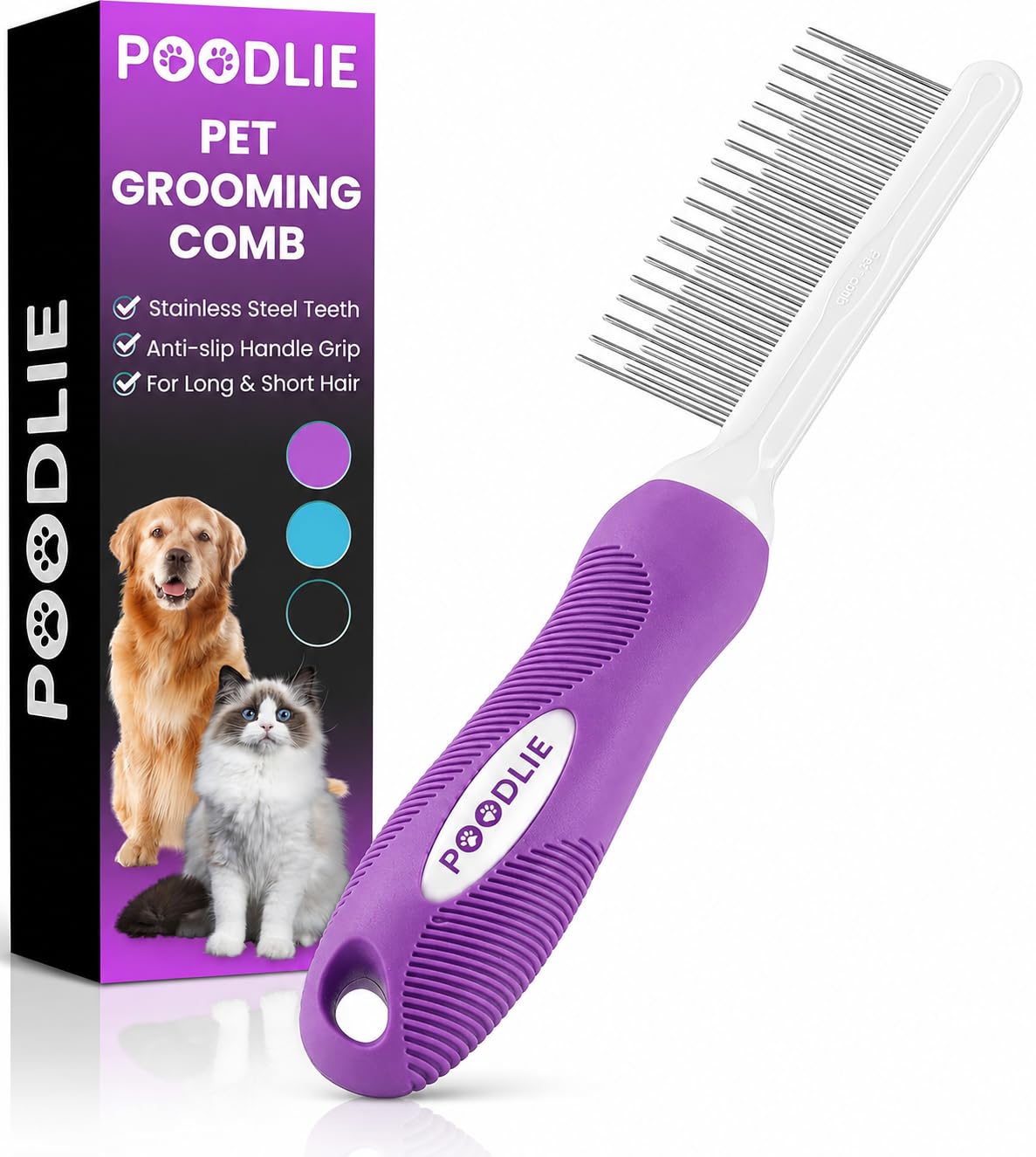
2

Poodlie Dematting Comb

Poodlie Dematting Comb

Stubborn mats

Our Score 9.2/10
Check Price

Worth Noting

  • Handle durability is uneven
Blades
2.5-inch stainless steel
Handle
Textured rubber
Tool Type
Dematting rake
Read the full review

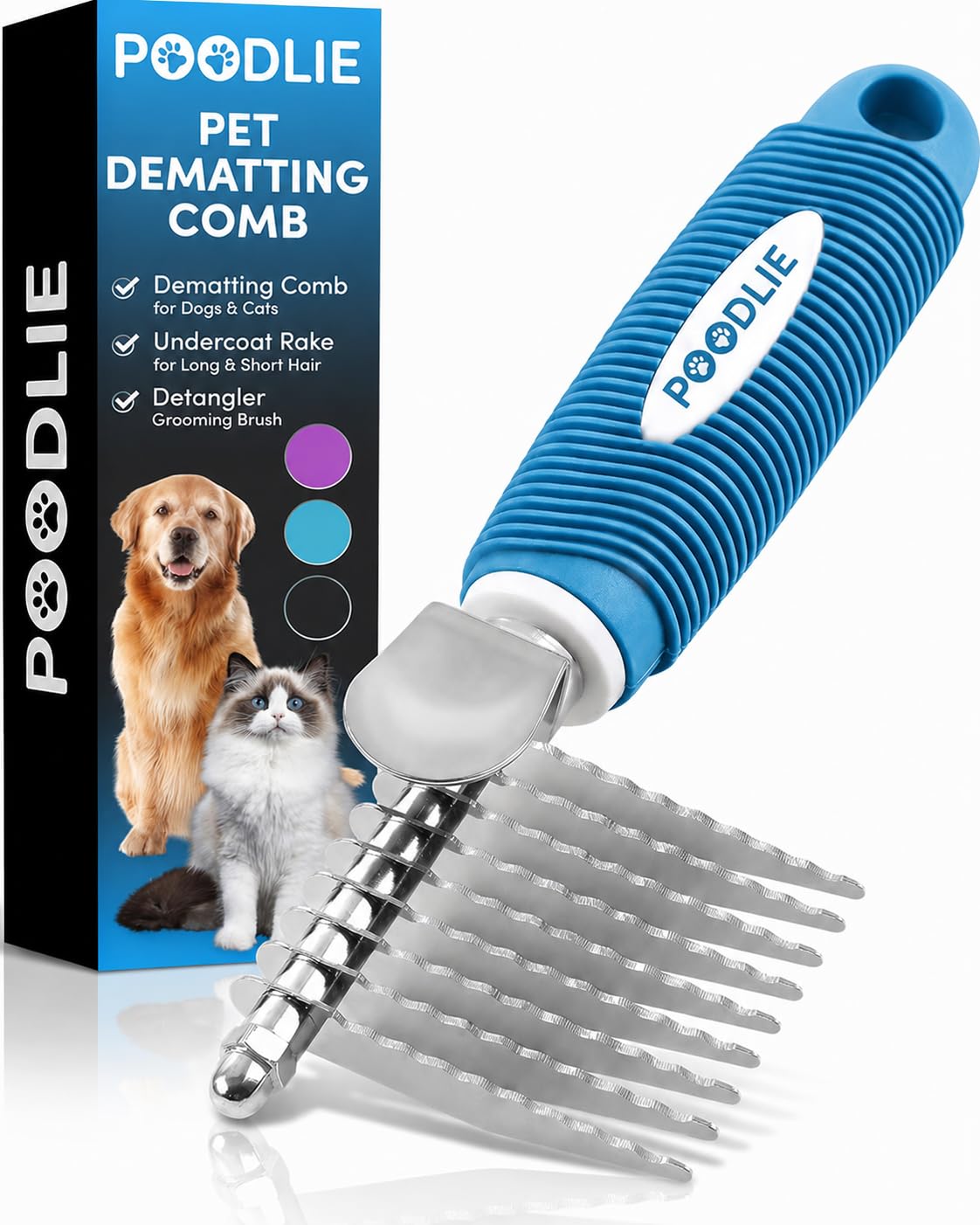
A cat with a tight mat behind the ear or under the leg needs a tool that can reach the base of the knot, and that is what the long 2.5-inch stainless blades are for. The Poodlie rake is built as a dematting comb rather than a finishing comb, with a rubber handle textured with wavy ridges and a hanging hole at the end. The blue color is easy to spot in a drawer, which sounds trivial until you are hunting for it with a cat on the table.

We reach for it when a comb skips over a mat instead of working through it. The sharp inner edges cut through the tangle, which is why it works, and also why we keep a hand between the blade and the skin and use short strokes rather than dragging the rake through. On a dense knot, it opens a channel that a comb can follow.

For a cat with a few problem spots, it earns its place. It is not the tool we use for a full-body session on a cat that only has loose tangles; the Poodle Pet comb is gentler and easier to control there. The blades are the reason to buy it, and they are also the reason to slow down.

Bottom line: When a comb skips over a tight mat, this long-bladed rake is the tool we reach for; just keep the sharp edges angled away from skin.

3

Poodle Pet Detangling Comb

Poodle Pet Detangling Comb

Daily long-haired care

Our Score 9.2/10
Check Price

Worth Noting

Teeth
Long and short stainless steel
Handle
Plastic
Coat Type
Long hair
Tool Type
Dual-length comb
Read the full review

The two tooth lengths are the reason this comb stays in our grooming cup: the longer teeth lift through a thick coat, and the shorter set finishes the cheeks, legs, and tail. The stainless steel tines are set in a plastic handle, which keeps the comb light in the hand, and the plastic body feels less serious than the working end.

We found it works well on long-haired cats because the fine teeth get under the topcoat without the rake's aggressive bite. The long teeth are the first pass through a tangle; the short teeth let you work closer to the skin on the face and paws without the comb feeling clumsy. For a Persian or a Norwegian Forest Cat, that combination is more useful than a single row of teeth. It also means you can use one tool for the whole cat instead of switching between a detangler and a finishing comb.

The comb is comfortable to hold, and the grip is secure enough for a cat that shifts mid-session. It is not a mat splitter, so a solid knot still needs a bladed tool first. It works as the finishing comb after the hard work is done, and as the everyday comb for a cat that tolerates brushing but hates pulling.

Bottom line: This is the comb we choose for daily work on a long-haired cat: two tooth lengths handle tangles and finishing without the aggression of a rake.

4

aumuca Undercoat Rake

aumuca Undercoat Rake

Sensitive cats

Our Score 9.2/10
Check Price

Worth Noting

  • Takes more passes on heavy undercoat
Teeth
Single row, rounded tips
Weight
1.5 oz
Tool Type
Undercoat rake
Head Width
2.2 inches
Read the full review

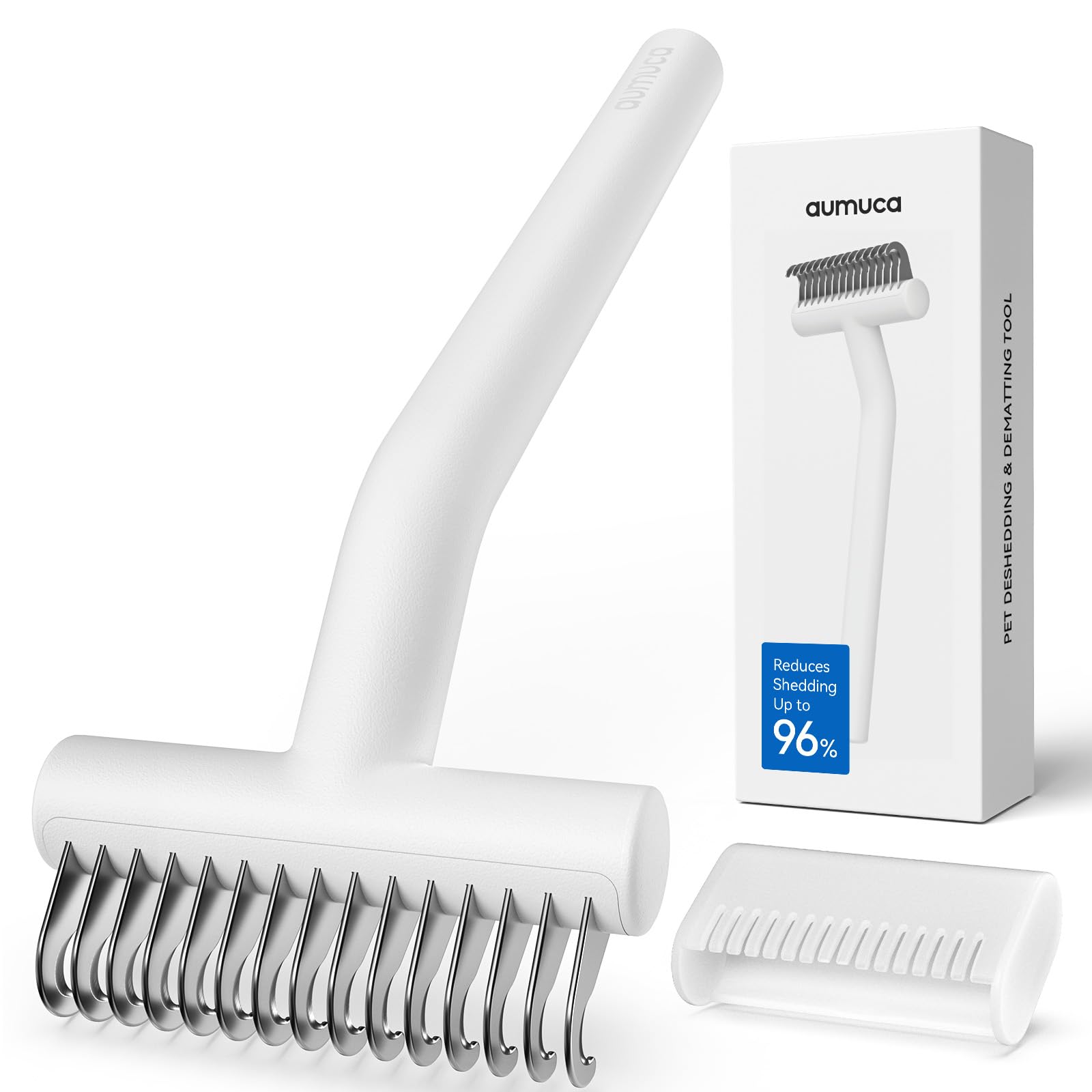
The aumuca rake is a single row of rounded teeth on a 2.2-inch head, and the whole tool weighs 1.5 ounces. That is light enough to move around a cat's face and legs without the tool feeling like a piece of equipment. The body is compact, and the head is small enough to keep the teeth where you put them.

A single row means fewer teeth drag at once than a double-sided rake, and the rounded tips are designed to stay comfortable on sensitive skin. The narrow head fits behind the ears and along the tail, where a wider rake can feel clumsy. It reaches past the topcoat to lift loose undercoat rather than just smoothing the surface. On a cat that dislikes being held, that smaller working area is easier to control.

We prefer this for cats that flinch at a bigger rake, and for older cats with thinner skin. It is not the tool for a heavy, felted mat; the single row works through tangles and loose undercoat rather than slicing a solid block. For daily maintenance on a long-haired cat, that gentler action is usually the right trade.

Bottom line: For a cat that flinches at a big rake, this light single-row tool is the one we hand over first: rounded tips, a small head, and enough reach for daily undercoat work.

5

Maxpower Planet Rake

Maxpower Planet Rake

Budget mat removal

Our Score 9.2/10
Check Price

Worth Noting

  • Bulkier than a comb around the face and paws
  • Teeth are not as fine as a finishing comb
Sides
9-teeth and deshedding
Weight
4 oz
Tool Type
Double-sided rake
Dimensions
6.6 x 3.9 x 2 inches
Read the full review

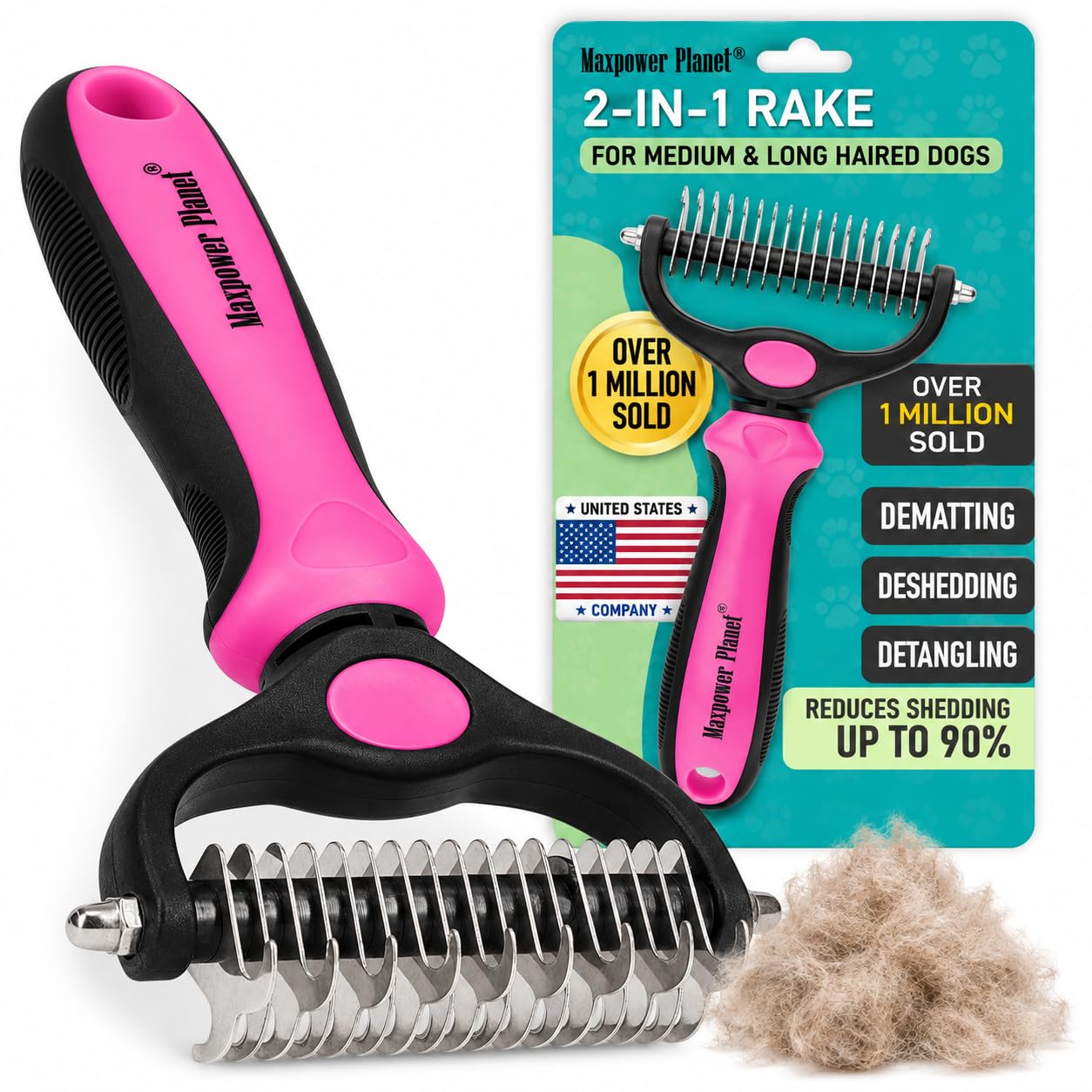
The Maxpower Planet rake is the budget option in this set, and it does not pretend otherwise: a plastic-and-rubber body, a nine-teeth side for mats, and a denser side for shedding. At 4 ounces, it has enough heft to feel controlled in the hand without being tiring. The non-slip rubber handle is comfortable, and the 6.6-inch body gives you a little reach without feeling unwieldy.

The nine-teeth side gives you more bite than a comb, and the teeth are sharpened but finely rounded. The denser side pulls loose undercoat, which makes the tool useful beyond the occasional knot. For a cat that mats a little and sheds a lot, one tool covers both jobs. The dual-sided design means you flip the tool rather than switching tools mid-session.

We think it is the right pick when you want one inexpensive tool for a cat that mats a little and sheds a lot. For a first dematting tool on a budget, it earns its place. We keep it for body work and leave the finer details to a comb.

Bottom line: This is the budget rake we keep for body work: two sides for mats and loose undercoat, and a price that makes it an easy first dematting tool.

6

Docrok Grooming Combo

Docrok Grooming Combo

Dematting and shedding

Our Score 9.0/10
Check Price

Worth Noting

  • Costs more than a single comb
  • Two pieces take more storage
Sides
Wide and dense
Tools
Rake and comb
Handle
TPR
Tool Type
Two-piece grooming set
Read the full review

A two-piece kit sounds like more than most cat owners need, but the Docrok set makes sense if one cat sheds heavily and mats in the same places. The rake has a wide side for dematting and a dense side for deshedding. The comb repeats that idea with a wide side for knots and smoothing and a dense side for loose hair.

The division of labor works: the rake opens a mat, the comb smooths the coat afterward. That is a more natural sequence than trying to do both jobs with one tool, especially on a cat that will only sit still for a short session. The TPR handle is light and comfortable in the hand, and the stainless steel teeth feel sturdy enough for regular use.

For a household with one cat and light shedding, a single comb is simpler. For a heavy shedder with mats behind the ears and under the legs, the pair earns its space. We keep both within reach during shedding season and use the comb on its own for quick touch-ups.

Bottom line: If your cat both sheds heavily and mats in the same spots, this two-piece set gives you a rake and a comb for less fuss than buying them separately.

7

Freshly Bailey Dematting Comb

Freshly Bailey Dematting Comb

Thick double coats

Our Score 9.0/10
Check Price

Worth Noting

Sides
Wide and narrow teeth
Teeth
Curved stainless steel
Weight
5.6 oz
Tool Type
Double-sided comb
Read the full review

The Freshly Bailey comb is built like a small wooden rake: a 7.60-by-3.75-inch body, curved stainless steel teeth, and a double-sided head with wide teeth on one side and narrow teeth on the other. At 5.6 ounces, it is heavier than the light rakes here.

The wood handle gives it a different feel from the plastic and rubber tools in this guide. It is smooth in the hand and gives you a firm grip when you are working through a thick coat. The wide side takes on larger mats, and the narrow side follows up on loose fur.

On a cat with a dense winter coat, the extra surface area is useful. You cover more of the back and haunches in one stroke, which matters when your cat will only sit still for a few minutes. The curved teeth are designed to protect the skin while they work through the coat.

We keep it for thick double coats, where the extra surface area pays off. It is not the easiest choice for a small cat or a nervous cat that needs a light touch around the face; the aumuca is the better fit there. For the body of a heavy-coated cat, the weight is part of what makes it feel controlled.

Bottom line: For a cat with a thick, double coat, this broad wooden rake covers more ground in one pass and feels steady in the hand.

8

Pet Republique Mat Splitter

Pet Republique Mat Splitter

Tight mat splitting

Our Score 8.8/10
Check Price

Worth Noting

  • Can pull on sensitive skin
Teeth
12+23 teeth
Blades
Sharp inside, rounded outside
Material
Stainless steel
Tool Type
Mat splitter
Read the full review

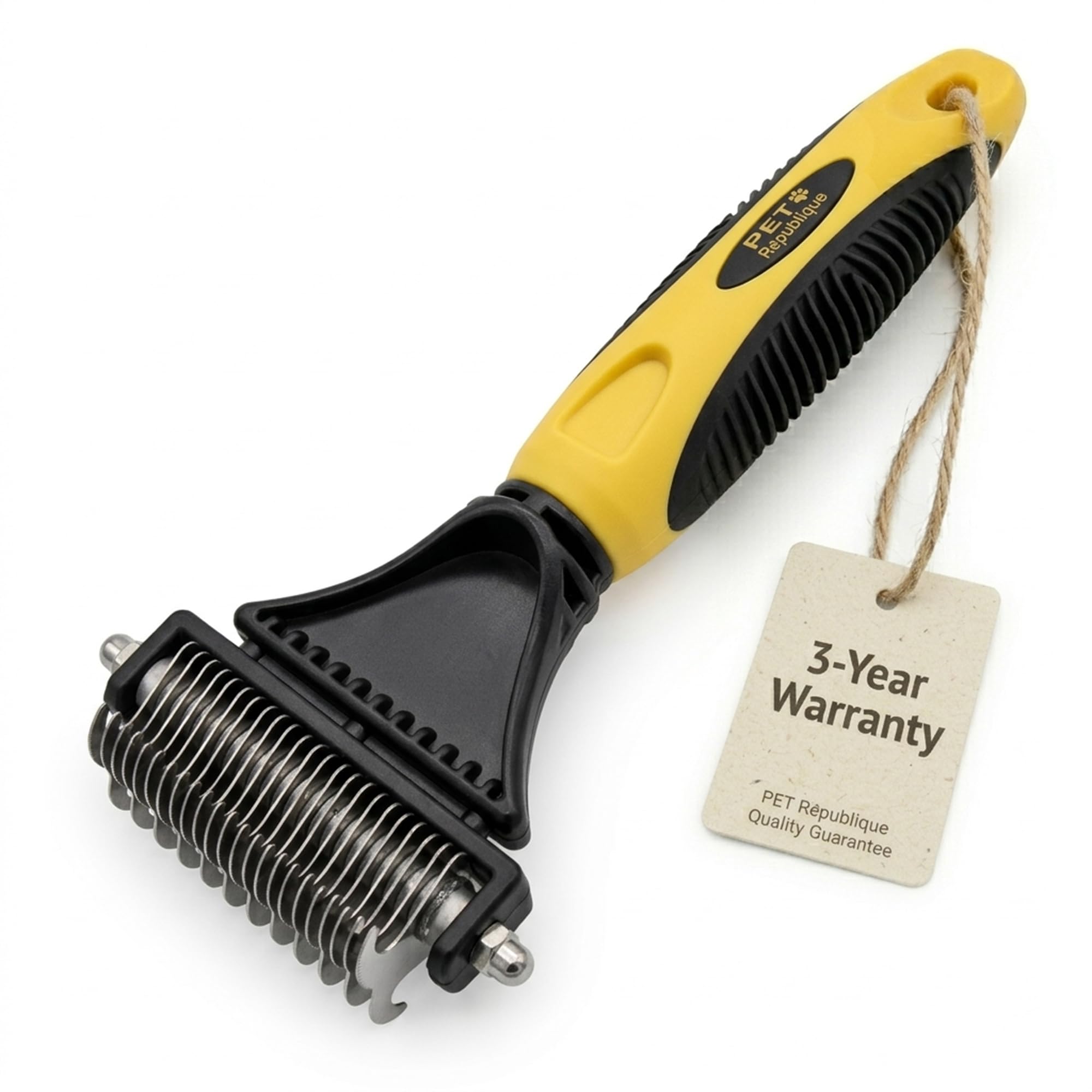
The Pet Republique Matt Splitter is a dual-sided tool with 12 teeth on one side and 23 on the other. The blades are sharp on the inside and rounded on the outer edge, a design meant to cut through a mat while the outside stays against the skin.

This is a mat splitter, not a finishing comb. The 12-tooth side opens a dense knot, and the 23-tooth side follows through on smaller tangles and loose hair. The stainless steel teeth are strong enough to work through a thick coat without bending under normal use.

The sharp inner edge is the point, but it also means the tool asks for more care than a comb. Keep the blade flat to the coat and work in short strokes; do not dig the tip into a mat that is tight against the skin. The rounded outer edge is there to reduce the chance of scratching, not to make the tool foolproof.

We reach for it when a comb skips over a mat and the cat is already tired of being handled. It is a problem-solver rather than an everyday tool, and that is how we treat it in the grooming cup. For a cat that comes home with burrs or a sudden knot behind the ear, it earns its place.

Bottom line: When a mat is too tight for a comb, this splitter gives you a dedicated first pass; keep the sharp inner edges flat to the coat and work slowly.

How We Tested the Best Dematting Tools for Cats

We started with a long list of roughly 40 tools pulled from retailer listings and grooming forums, then narrowed it on the things that matter on a living animal: tooth spacing, whether the blade sits behind a guard, grip shape, and whether the head is narrow enough to slip behind an ear. Anything with exposed, unfiled teeth or a plastic joint that looked like it would flex under pressure came off the list, which left 16 tools spanning budget to boutique pricing.

Testing happened on the bathroom floor and the kitchen counter, wherever each cat was calmest, across longhaired seniors, shorthaired cats with dense undercoat, and two foster cats that had never been groomed in their lives. We worked every mat from the edge in short strokes and counted the passes it took, noted whether the knot lifted out in one piece or shattered into smaller tangles, and watched how much skin tented under the blade. A flinch, a tail flick, or a sudden attempt to walk away counted against a tool as much as a dull edge did, and we tracked how much loose fur came off per session and whether it shook free of the teeth or had to be picked out by hand.

Every tool was used one-handed while the other hand steadied the cat, washed and dried weekly, and checked for rust, wobbling handles, and teeth that had gone dull or snagged on the second stroke. By month four the pattern was clear: price told us very little, and the tools that held their edge without feeling dangerous near thin skin were the ones still in rotation.

How to Choose Dematting Tools for Cats

Start with the mat, not the name

A comb, a rake, and a mat splitter do different jobs. A comb with closely set teeth is for loose tangles, finishing, and daily upkeep; a rake with longer blades reaches into dense undercoat; a mat splitter is the first pass on a tight, felted knot. We start most cats on a comb like the SHINY PET and keep a bladed rake for problem spots. If you buy only one tool, choose the one that matches the mats your cat actually gets.

Look at the tooth tips

Rounded tips are the safer choice for a cat's thin skin, especially around the face, belly, and legs. Sharp inner edges can cut through a mat, but they demand careful angling; the rounded outer edge on a mat splitter is a guard, not a license to dig. Run a finger along the teeth before you buy. If the tip catches, plan to use it only on the body and keep a comb for the sensitive areas.

Match tooth length to coat length

Long-haired cats need teeth long enough to reach through the topcoat to the undercoat. A dual-length comb gives you a long pass for the back and a shorter pass for the face and paws. For a thick double coat, a wider rake covers more ground, but it is easier to overshoot a small cat. We prefer a 2.2-inch head for cats and a wider head only for large, heavy-coated animals.

Weight and grip matter more on cats

A cat moves, shifts, and leaves. A 1.5-ounce rake is easier to control around the face and legs, while a 4- to 5.6-ounce tool gives more stability on a dense body coat. A rubberized or wooden handle helps when your hand gets slick from coat oil or grooming spray. We choose the light tool for nervous cats and the heavier one for a calm cat with a thick winter coat.

Plan for cleaning and wear

Hair packs between teeth and blades, so choose a tool you can clear quickly with your fingers or a comb. Stainless steel teeth resist rust, but thin tines can bend and handles can crack. We check the handle joint on a bladed rake before each session and retire any tool with a bent tooth that changes the angle. A dematting tool is only as good as its edge, and a dull blade pulls instead of cuts.

Frequently Asked Questions

Final Verdict

For most cat owners, the SHINY PET comb is the one to buy first. Its rounded teeth and secure grip make it the easiest tool here to use on a cat that is already tired of being handled, and it handles the small tangles that turn into mats. If your cat already has dense, felted knots, add the Poodlie Dematting Comb for the first pass, then finish with the SHINY PET. For a sensitive cat that flinches at a bigger rake, the aumuca Undercoat Rake is the lighter alternative.