Health & Wellness

Best Cat Paw Balms of 2026

Cracked paw pads are easy to overlook until your cat starts tiptoeing across the hardwood. That's usually when the search begins, and when you realize you can't explain to a cat that the waxy stuff on its toes is supposed to help. Anything you put on a paw gets licked off within minutes, so a balm has to absorb quickly, smell like almost nothing, and be harmless if some of it gets swallowed. We spent four months putting 14 balms to work on our own cats' chapped pads.

The surprise was how little price mattered. What separated the good ones was texture and how fast they sank in; a balm that still feels tacky after five minutes ends up on your rug, your duvet, and in the litter box. Fragrance was the quiet dealbreaker: faint got ignored, strongly herbal got a wrinkled nose and a fast retreat. Below are the tins that softened rough pads and soothed angry skin without a fight, including a couple of richer salves for heels that are genuinely split.

1

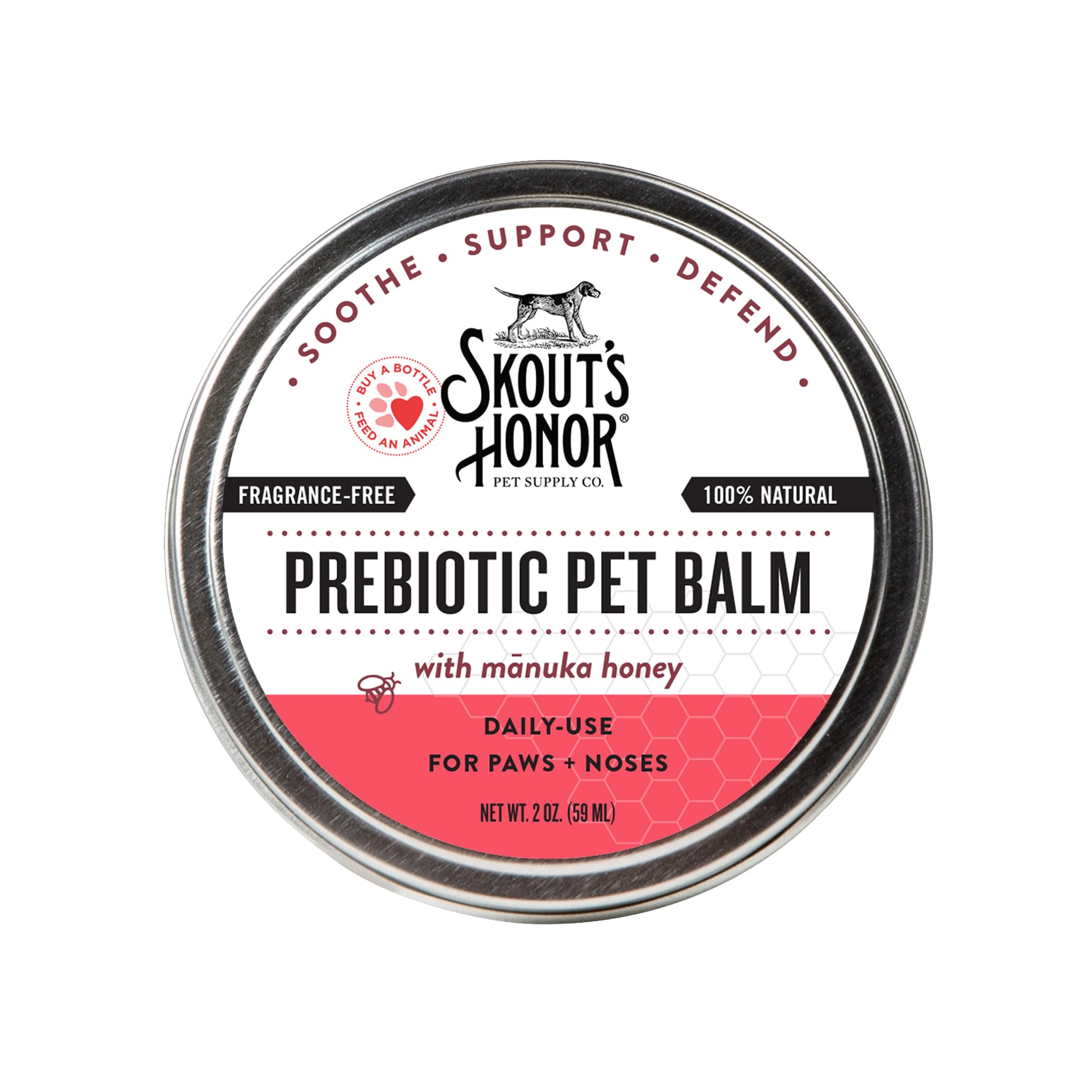
Skout's Honor Prebiotic Pet Balm

Top Pick
Skout's Honor Prebiotic Pet Balm

Scent-sensitive cats

Our Score 9.4/10
Check Price

Worth Noting

  • Pricier than the other 2-ounce tins
Use
Paws, noses, skin folds
Size
2 oz tin
Scent
Unscented
Key Ingredient
Manuka honey
Read the full review

There's no smell. Not a faint one, not a clean one — nothing, which is unusual in a category where balms announce themselves from across the room. For a cat who already dislikes being handled, that's most of the battle won before you've touched a paw.

Manuka honey is the headline ingredient and the balm is labeled for both cats and dogs. We reach for it when the pads are already irritated from licking, because it goes on light and sinks in rather than sitting on the surface. It also stays where you put it: we didn't find transfer marks on wood floors the way we did with greasier tins.

In a cold room the texture swings the other way and firms up to something closer to a candle than a butter, which means digging at it with a thumbnail. A minute in your hand solves that, so we don't count it against the balm — but you'll be doing it in January. The tin is wide and flat, which makes it easy to hold steady with one hand while the other keeps a paw still.

It's the most versatile formula in the group. Paws, nose and the folds around the face all take the same balm, which is more than most of the tins here can claim.

Bottom line: If scent is what makes your cat bolt, this is the pick: there's none at all, and the same balm handles noses and skin folds as well as pads.

2

Burt's Bees Nose & Paw Balm

Burt's Bees Nose & Paw Balm

Noses and touch-ups

Our Score 9.4/10
Check Price

Worth Noting

  • Labeled for dogs, not cats
  • Only 0.45 ounce in the tube
Use
Noses and paw pads
Size
0.45 oz tube
Formulated For
Dog skin pH
Key Ingredients
Beeswax, cocoa butter
Read the full review

The tube is small enough to vanish into a jacket pocket, which is the point. Under half an ounce is plenty for a nose and a couple of rough pads, and not much beyond that.

Beeswax and cocoa butter, no added color, sulfates or parabens, and a texture that's genuinely smooth — it glides on without warming or digging, and it stays where you put it long enough to do something. Of everything here, it needed the least fiddling to apply, which counts for a lot with a wriggling cat.

The labeling is the thing to know. Burt's Bees writes this one for dogs, and the pH note on the packaging is about dog skin rather than cat skin. The ingredients are mild enough that plenty of people use it on cats anyway, but it's the pick here with no cat claim on the label — worth a word with your vet if your cat has sensitive skin.

And the size cuts both ways. On four cracked pads used twice a day you'll be through it in weeks rather than months; on noses and the occasional rough heel, it lasts a season and takes up no room at all.

Bottom line: A tiny, genuinely smooth balm for noses and quick pad touch-ups, and the least you can spend to find out whether your cat will sit for any of this.

3

Bag Balm Pet Paw Balm

Bag Balm Pet Paw Balm

Rough working pads

Our Score 9.4/10
Check Price

Worth Noting

  • Greasy residue that transfers
  • Lanolin smell of its own
  • Sold as a pet balm, not a cat product
Pack
2 tins
Free From
Added fragrance, alcohol, parabens
Key Ingredient
Lanolin
Read the full review

The first thing you notice is the residue. This is an ointment rather than a butter: it sits on the surface, takes its time sinking in, and leaves a shine on your fingers that survives a hand wash. On four paws in a carpeted house, that's a real consideration.

For a cat with genuinely thickened, weathered pads, the barrier is the point. Lanolin stays put and keeps working, and it's the balm for a cat who spends real time on concrete or gravel — and the wrong one for a cat who sleeps on your pillow.

The smell is worth addressing because the tin is a little misleading about it. It contains no added fragrance, which is what the label says and what it means, but the lanolin base has an unmistakable smell of its own: sheep-ish, faintly medicinal. Anyone who has opened one of these knows it before reading the ingredient list.

You get two tins, and they're the kind of thing that gets passed around a house with dogs and horses as well as cats. As a first balm for a cat, it's too much and too greasy; as the tin by the back door for every animal you own, it holds its place.

Bottom line: An old-school lanolin ointment that puts a serious barrier on hard, weathered pads — as long as you can live with the grease.

4

Blissful Cat Paw Butter

Blissful Cat Paw Butter

Dry, crusty pads

Our Score 9.0/10
Check Price

Worth Noting

  • Small tin for the money
  • Contains essential oils
Size
2 oz tin
Lick-safe
No active ingredients listed
Key Ingredients
Shea butter, almond oil, olive oil
Read the full review

The company made its name on dogs, but this butter is genuinely formulated for cats, and it's the only cat-specific balm here that's a plain paw product rather than a skin cream. What we cared about most is what's missing: no active drug ingredients, so a cat who grooms her paws a dozen times a day isn't swallowing anything medicated. Shea butter, almond oil and olive oil do the softening.

On pads that had gone rough from winter air and litter dust, the change came faster than we expected. The butter softens the moment it meets a warm pad, so there's no hard rubbing on skin that's already sore, and the pads came back supple over a few days of nightly use. You're dabbing, not scooping — a fingertip's worth covers a paw.

Two things to know before you buy. The tin is small for the money, which is the fair criticism of this one. And the ingredient list includes essential oils; most cats won't react, but it's the first line to check if your cat has ever had a problem with a grooming product.

What tipped it for us was the texture. A balm you have to warm or wrestle out of the tin adds a negotiation to a process that already involves a cat who'd rather be elsewhere, and this one removes that step entirely.

Bottom line: The one we recommend first for a cat with dry, crusty pads: a cat-specific butter with no active ingredients that softens fast and goes a long way.

5

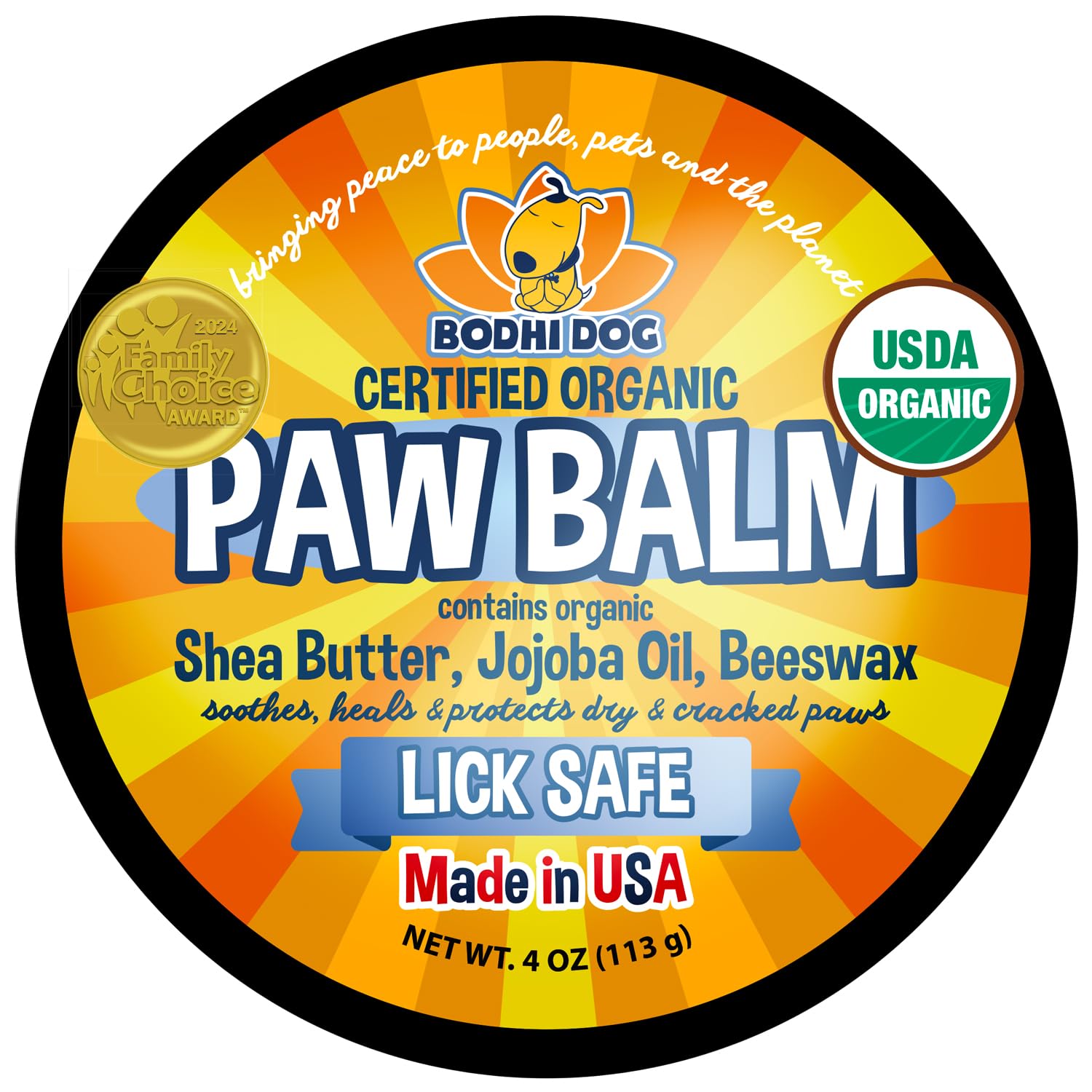
Bodhi Dog Paw Balm

Bodhi Dog Paw Balm

Multi-cat homes

Our Score 9.0/10
Check Price

Worth Noting

  • Can arrive hard, grainy or short-dated
  • Labeled for dogs first
Size
4 oz tin
Certification
USDA Organic
Key Ingredients
Shea butter, jojoba, beeswax, calendula
Read the full review

Four ounces is a lot of balm for four small paws, and that's the whole case for this one. It's the biggest tin here by a wide margin, it's USDA certified organic, and once you divide by the size it works out well below the smaller tins on this page.

The formula is shea butter, jojoba, beeswax, calendula and rosemary extract, and it spreads thinner than the butters — one pass covers a whole paw, and it doesn't leave prints on a wood floor. The rosemary gives it a faint earthy smell that fades within a few minutes, which is worth knowing if your cat objects to scent.

The catch is freshness. A big tin of a natural product has more time to sit around before it reaches you, and it can arrive hard, grainy or short-dated. Buy it where you'll work through it within a few months and check the contents before you commit to it.

It's also written for dogs first, with cats riding along in the title. The ingredient list is the same sort of thing as the cat-specific picks, but if you want a product formulated with cats in mind, this isn't that product. For a two-cat household in a dry climate, it's the tin that won't run out mid-winter.

Bottom line: The tin for a household with more than one animal: four organic ounces that spread thin, absorb, and don't leave grease on the floor.

6

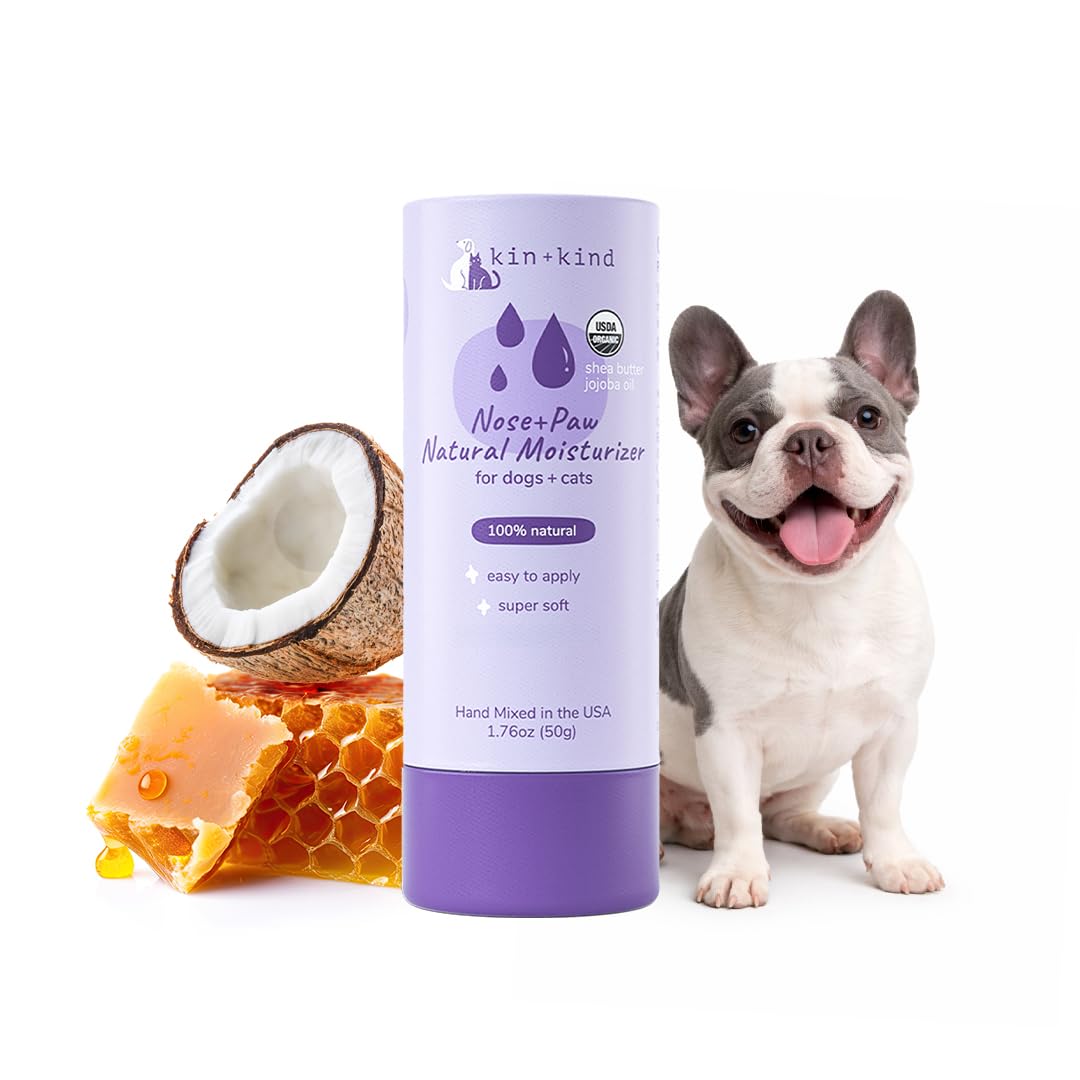
kin+kind Nose + Paw Balm Stick

kin+kind Nose + Paw Balm Stick

Wriggly cats

Our Score 8.8/10
Check Price

Worth Noting

  • Lays down a thin layer, so thick coverage takes passes
Size
1.76 oz stick
Format
Twist-up stick
Certification
USDA Organic
Key Ingredients
Coconut oil, shea butter, jojoba
Read the full review

It looks like a lip balm and works like one: twist, dab, twist back. With a cat who treats a paw hold as a personal insult, that isn't a gimmick. You get about two seconds of cooperation, and a stick spends them applying rather than scooping, which is the whole argument for this format over a tin.

The formula backs the format up: USDA organic, listed as unscented, with coconut oil and shea butter for moisture and jojoba alongside. A carnauba wax base is what holds the shape, and it's also the reason the stick feels firm in the tube.

That firmness is the catch. On a cool morning it can feel like drawing with a crayon, and you end up pressing harder than you want to on a sore pad. We keep it in a pocket for a few minutes first and it glides; skip that step and the application you bought it for gets slower than the tin you were avoiding.

Compared with the butters here, you trade a little control for a lot of speed. Where a pad is deeply cracked and you want a thick layer left on overnight, a butter does that better. For the everyday job of getting something onto four resisting paws, the stick wins.

Bottom line: For a cat who won't hold still, the twist-up stick is the fastest route to a treated paw — dab, twist, done, with no balm on your fingers.

7

ResQ Organics Cat Paw Balm

ResQ Organics Cat Paw Balm

Itchy, irritated skin

Our Score 8.6/10
Check Price

Worth Noting

  • Pricier than every other pick here
  • Can leave already-irritated skin angrier
Use
Pads, hot spots, itchy skin
Size
2 oz
Scent
Fragrance-free
Formula
Manuka honey, pH balanced
Read the full review

Read the label closely and you'll see what this really is: a cat skin cream that doubles as a paw balm, sold for hot spots and itchy patches as much as for dry pads. That's worth knowing before you buy, because it changes what the jar is good at.

It's fragrance-free, alcohol-free and pH balanced, which is why it doesn't sting on skin that's already raw, and it sinks in quickly enough that a cat has less time to lick it straight back off. On scuffed, angry-looking pads we saw redness settle over several days of twice-daily use, and it's the only pick here that's cat-only from the start.

The texture is a cream rather than a butter, and that's the trade-off. Where a pad is thickened and cracked and you want something still sitting there in the morning, this is absorbed long before then — we used it during the day and kept a butter for bedtime.

It's also the priciest balm here and the one that sits closest to the medicine cabinet. That's either the reason to buy it or the reason to skip it, depending on what's actually wrong with your cat's pads.

Bottom line: For pads that are red and itchy rather than merely dry, this cat-only cream earns its price — just don't expect a thick overnight butter.

How We Tested 14 Cat Paw Balms on Real Paws

We started with about 40 balms sold for cats and dogs, reading ingredient panels and cutting anything built around strong essential oils, since a cat will lick off whatever goes on its paws. We also dropped anything that sold itself on scent or came in packaging that made a pea-sized dose into a two-step chore. That left 14 balms, all under about $25, which we used on our own cats from November through February, when the heat runs constantly and pads crack fastest.

Every tin got the same run: a pea-sized amount massaged into the pads and between the toes once the cat had settled for a nap, then a timer. We noted how firmly the balm sat in the tin at room temperature, whether it spread without dragging the skin, and how many seconds passed before the cat stopped flicking its paw and walked off. Ten minutes later we pressed a paper towel to the pad to see how much came off. The greasy ones left a visible print, and those were also the ones that tracked onto bedding and grabbed litter.

Each cat got a photographed baseline of its worst pad, then checks at day one, week one, and week four. We felt for softness and looked at whether cracks were actually closing or just being coated, and we reapplied on the schedule each label recommended, because a balm that needs three coats a day to hold a result costs more than its tin price suggests. Fragrance was scored by two noses and, more usefully, by the cats themselves. Durability showed up in the small stuff: whether a balm survived a trip through the litter box or a rinse at the water bowl.

How to Choose Cat Paw Balms

Start With What's Safe to Lick

Every cat grooms her paws, so whatever you put on them ends up in her mouth. Look for a balm labeled lick-safe with no active drug ingredients — the Blissful butter makes a point of having none, and kin+kind leans on a food-grade, USDA organic list. A product listing hydrocortisone or an insecticide isn't a paw balm; it's a treatment and needs a vet's direction.

One trap worth knowing: "fragrance-free" describes what was added, not what you'll smell. Bag Balm adds no fragrance and still carries a strong lanolin smell of its own.

Match the Container to Your Cat's Patience

There's a reason the stick format exists. A tin of butter needs a finger, a cooperative paw and a few seconds of stillness; a twist-up stick needs one dab. If your cat lets you hold a paw, a tin gives you more control over how thick the layer is, which matters for cracked pads you want covered overnight. If she pulls away, buy the stick. A thin layer applied daily beats a thick one applied never.

Read the Texture, Not the Thickness

Thick reads as effective on a label and behaves badly in a cold room. Waxy balms — anything heavy on carnauba or beeswax — firm up and drag across the pad, so you end up pressing on skin that's already sore. Greasy ointments go the other way: they sit on top, print on the floor and get licked off before they do much good. The sweet spot is something that softens at skin temperature, which is why we keep a stiff balm in a pocket for a minute rather than digging at it.

Dryness Is a Balm Job; Redness Is Not

Rough, crusty, pale pads respond well to a balm used nightly for a week or so. Red, raw, oozing, hairless or foul-smelling pads are a different problem, and no balm here fixes an infection or an allergy — the ResQ cream is marketed close to that line, but it's still a moisturizer rather than a treatment. If the pads look worse after a few days, or your cat is limping or chewing at them, book the vet visit.

Buy the Amount You'll Actually Use

A small tube is a season of nose-and-pad touch-ups; a 4-ounce tin is a multi-cat household's winter. Natural balms without preservatives don't keep forever, either — the Bodhi tin is the one most likely to arrive hard or short-dated, so buy it where you'll use it within a few months. For a single cat, the 2-ounce tins here are the sensible middle.

Frequently Asked Questions

Final Verdict

Start with the Blissful Cat Paw Butter. It's a cat formula with no active ingredients, it softens crusty pads within a few days of nightly use, and it melts on contact instead of demanding a hard rub on skin that's already tender.

Two situations change that answer. If your cat won't tolerate a paw hold, the kin+kind stick trades thickness for speed, and speed is what you'll actually get. If the pads are red and itchy rather than dry, move to the ResQ cream — but get a vet's opinion before you treat a skin problem with a moisturizer.