Health & Wellness

Best Cat Dewormers of 2026

The call comes from the vet's office, or from the kitchen floor at 6 a.m.: a positive fecal, a litter box that looks wrong, a cat scooting across the rug. Intestinal worms — roundworm, hookworm, tapeworm — are common in cats, and most cases clear up easily with the right dewormer. What isn't easy is getting a full dose into a cat with strong opinions about being held, which is why the gap between two products with the same active ingredient so often comes down to taste and handling.

Over the past four months, my team and I have run 12 dewormers — pills, liquids, and topical spot-ons — through a partner foster network, with a veterinarian looking over our shoulders. The pattern keeps repeating: cats will forgive a lot, but they won't forgive a bitter liquid. If your cat foams or drools after a dose, that's usually the taste rather than a reaction to the drug, and it makes the next dose harder. What we wanted here was the opposite — something a foster could give one-handed, that cleared the follow-up fecal, and that didn't cost more than the vet visit. The picks below are the ones that held up on all three.

1

Elanco Drontal Cat Dewormer

Top Pick
Elanco Drontal Cat Dewormer

Multi-cat homes

Our Score 9.2/10
Check Price

Worth Noting

  • Large 50-tablet bottle is overkill for one cat
  • Tablet taste can be hard to mask
Tablet Count
50 tablets
Worm Coverage
Tapeworms, roundworms, hookworms
Active Ingredients
Praziquantel, pyrantel pamoate
Age/weight Minimum
1 month, 1.5 lb
Read the full review

Fifty tablets sounds like a lifetime supply until you do the math: one tablet covers 4 to 8 pounds, so a single cat uses one tablet per dose while a multi-cat house can go through a bottle faster than expected. Drontal pairs praziquantel for tapeworms with pyrantel pamoate for roundworms and hookworms, and the label allows a single dose at the first sign of worms. The tablet can be given by mouth or in a small amount of food, and kittens are eligible from 1 month and 1.5 pounds.

That broad coverage is what makes it our top pick. When you don't know which worm you're dealing with—or you have several cats sharing a litter box—a single-dose broad-spectrum tablet removes the guesswork. The track record here is the most consistent of the broad-spectrum picks, and the weight band is easy to work with: one tablet per 4 to 8 pounds. We still weigh the cat first, because the difference between a 7-pound cat and a 9-pound cat changes the dose.

The 50-tablet bottle is the trade-off. For a one-cat home, it's more than you need, and the upfront price is the highest here. If you're treating one cat for tapeworms only, the small Elanco bottle is the more sensible buy. For a multi-cat home or a cat with mixed worms, the bulk bottle is the one that keeps you from making a second order.

Bottom line: Drontal is the broad-spectrum dewormer we reach for first: one dose covers tapeworms, roundworms, and hookworms, and the 50-tablet bottle makes sense for multi-cat homes.

2

Elanco Tapeworm Dewormer

Elanco Tapeworm Dewormer

Tapeworm-only cases

Our Score 9.2/10
Check Price

Worth Noting

  • Tapeworms only
  • Bitter taste can be hard to mask
Age Minimum
6 weeks
Tablet Count
3 tablets
Worm Coverage
Tapeworms
Active Ingredient
Praziquantel
Read the full review

The first thing to know about Elanco's tapeworm dewormer is that it does one job: it removes tapeworms, not roundworms or hookworms. That narrowness is the point. The bottle holds three praziquantel tablets, the dose is small enough for a cat or kitten over 6 weeks, and you can crumble a tablet into a spoonful of wet food instead of wrestling a whole pill down. For a cat with visible tapeworm segments, that's a sensible, low-cost tool to keep on hand.

The tablets are small, which matters when you're trying to hide one in food, and the 3-count bottle is sized for a single cat or a short round of treatment. The label names the two common tapeworm species, Dipylidium caninum and Taenia taeniaeformis, so you know exactly what you're treating. It's compact enough to keep in a cat kit rather than the main medicine cabinet.

Tapeworms are the limitation. If you don't know what you're treating, or you've also seen roundworms, Drontal's broad-spectrum tablet is the safer default. But for a cat with visible tapeworm segments and a known exposure, Elanco does the job with less upfront spend and a bottle that fits in a drawer.

Bottom line: If you've seen tapeworm segments and want a small, low-cost bottle, Elanco's praziquantel tablets are the tapeworm-only pick we recommend.

3

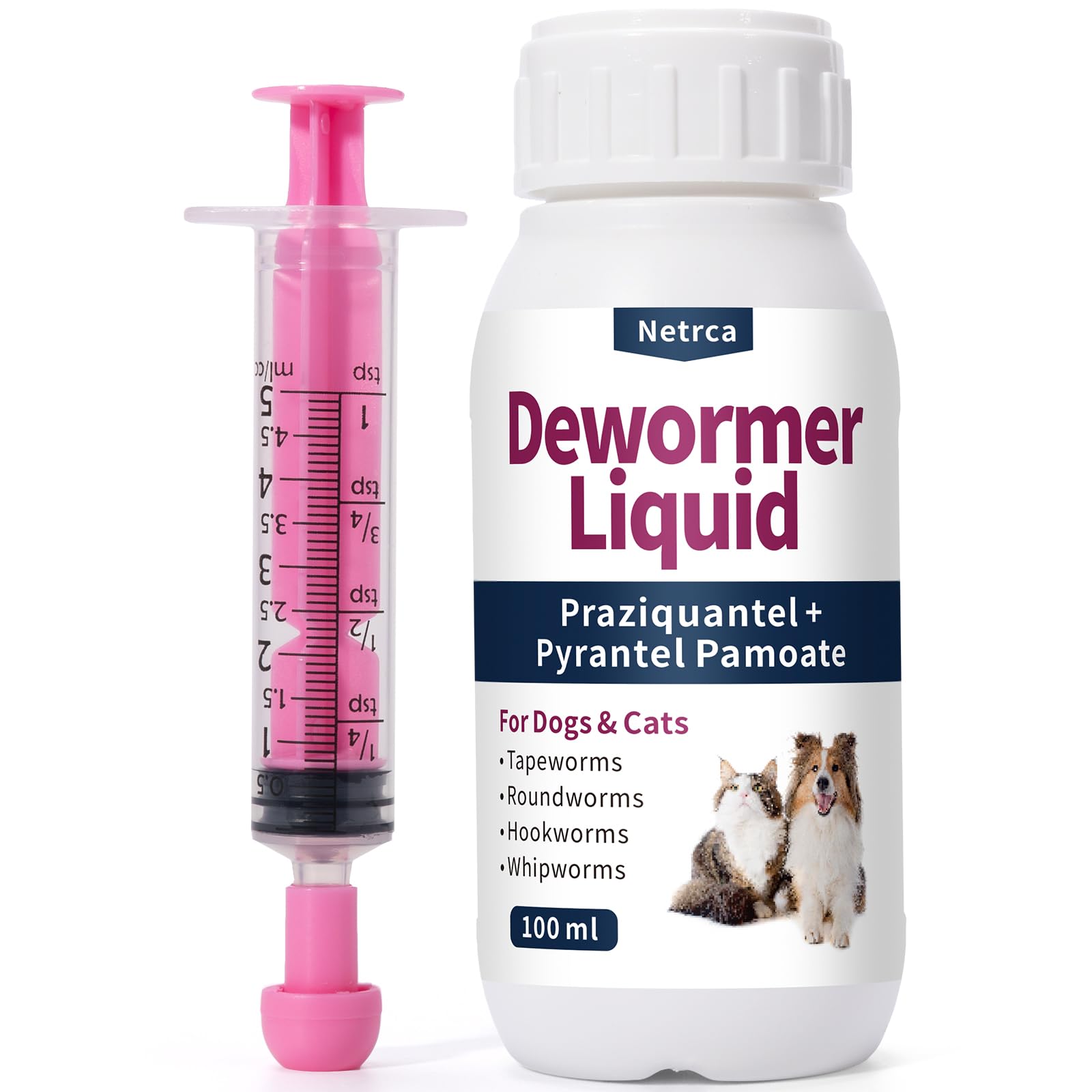
Netrca 7-Way Liquid Dewormer

Netrca 7-Way Liquid Dewormer

Mixed-pet homes

Our Score 8.8/10
Check Price

Worth Noting

  • Dose instructions are not cat-specific
  • No cat age minimum listed
Volume
100 mL
Species
Dogs and cats
Worm Coverage
Tapeworms, roundworms, hookworms
Active Ingredients
Praziquantel, pyrantel pamoate
Read the full review

Netrca's liquid is labeled for both dogs and cats, which is handy in a mixed-pet house but means the cat dose deserves a careful read. It pairs praziquantel with pyrantel pamoate, so it's aimed at tapeworms, roundworms, and hookworms, and the 100 mL bottle is the largest broad-spectrum liquid here. The formula is described as gentle on the stomach and easy to dose by weight, though the directions point to a veterinarian for diagnosis and control.

The size is the appeal. A 100 mL bottle goes further than the 50 mL kitten liquid or the 60 mL tapeworm bottle, and a household with cats and dogs can keep one product on the shelf. The liquid format is also easier to mix into food than a tablet for a cat that refuses pills. We noted the '7-way wormer' claim on the label, but the cat-relevant coverage is the praziquantel and pyrantel pair.

What it lacks is a cat-specific track record. The listing is light on cat dosing detail, and the directions are general. That makes it a bottle to use with a confirmed worm type and an accurate weight, not one to pour out casually. If you want a broad-spectrum liquid for a mixed-pet home, it's a sensible large-format choice; if you're treating one cat with a known tapeworm, the Elanco tablet is more direct.

Bottom line: Netrca's 100 mL liquid is a practical broad-spectrum bottle for a mixed-pet house, as long as you follow the cat-specific weight dose rather than the dog instructions.

4

Bipinelyt Liquid Dewormer

Bipinelyt Liquid Dewormer

Young kittens

Our Score 8.6/10
Check Price

Worth Noting

  • No tapeworm coverage
  • Chicken flavor doesn't guarantee acceptance
Volume
50 mL
Age Minimum
4 weeks
Worm Coverage
Roundworms, hookworms
Active Ingredient
Pyrantel pamoate
Read the full review

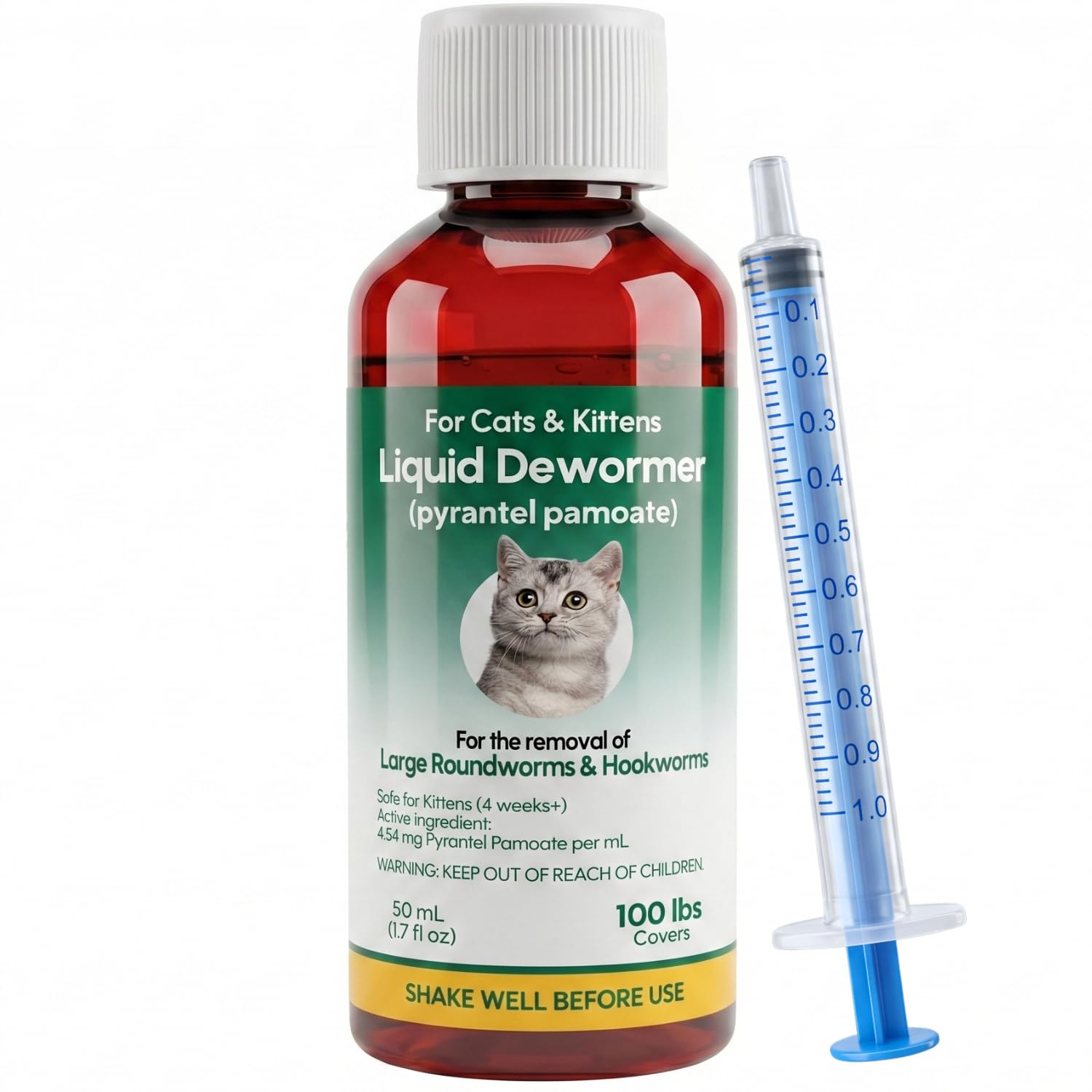
Most cat dewormers start at 6 or 8 weeks; Bipinelyt's liquid pyrantel suspension is labeled for kittens as young as 4 weeks. That early window is the reason it stands out. The bottle holds 50 mL, and the label says it provides 100 pounds of total coverage—enough for ten 10-pound adult cats. The included 1 mL syringe is a better tool for a tiny kitten than a dropper, because you can measure a small dose without guessing.

The active ingredient is pyrantel pamoate, which targets large roundworms and hookworms. That makes this the pick for a kitten with a roundworm belly or a foster litter that needs a liquid. We value the precision more than the flavor: the chicken formula may help, but the syringe is what makes the dose reliable. The 4-week minimum is also the earliest in this set, which matters when a kitten is too small for a tablet.

The 50 mL bottle is a good size for a multi-cat household or a rescue setup, and the syringe can be rinsed and reused for the next dose. If you need tapeworm coverage, look to a broad-spectrum liquid or tablet instead. For roundworms and hookworms in a young kitten, this is the bottle we reach for.

Bottom line: For kittens as young as 4 weeks, Bipinelyt's pyrantel liquid is the pick we trust, with a syringe that makes small doses manageable.

5

Bipinelyt Broad-Spectrum Tablets

Bipinelyt Broad-Spectrum Tablets

Scored tablets

Our Score 8.6/10
Check Price

Worth Noting

  • Listing conflicts on species and ingredient
Age Minimum
2 months
Tablet Count
50 tablets
Worm Coverage
Tapeworms, roundworms, hookworms
Active Ingredients
Praziquantel, pyrantel pamoate
Read the full review

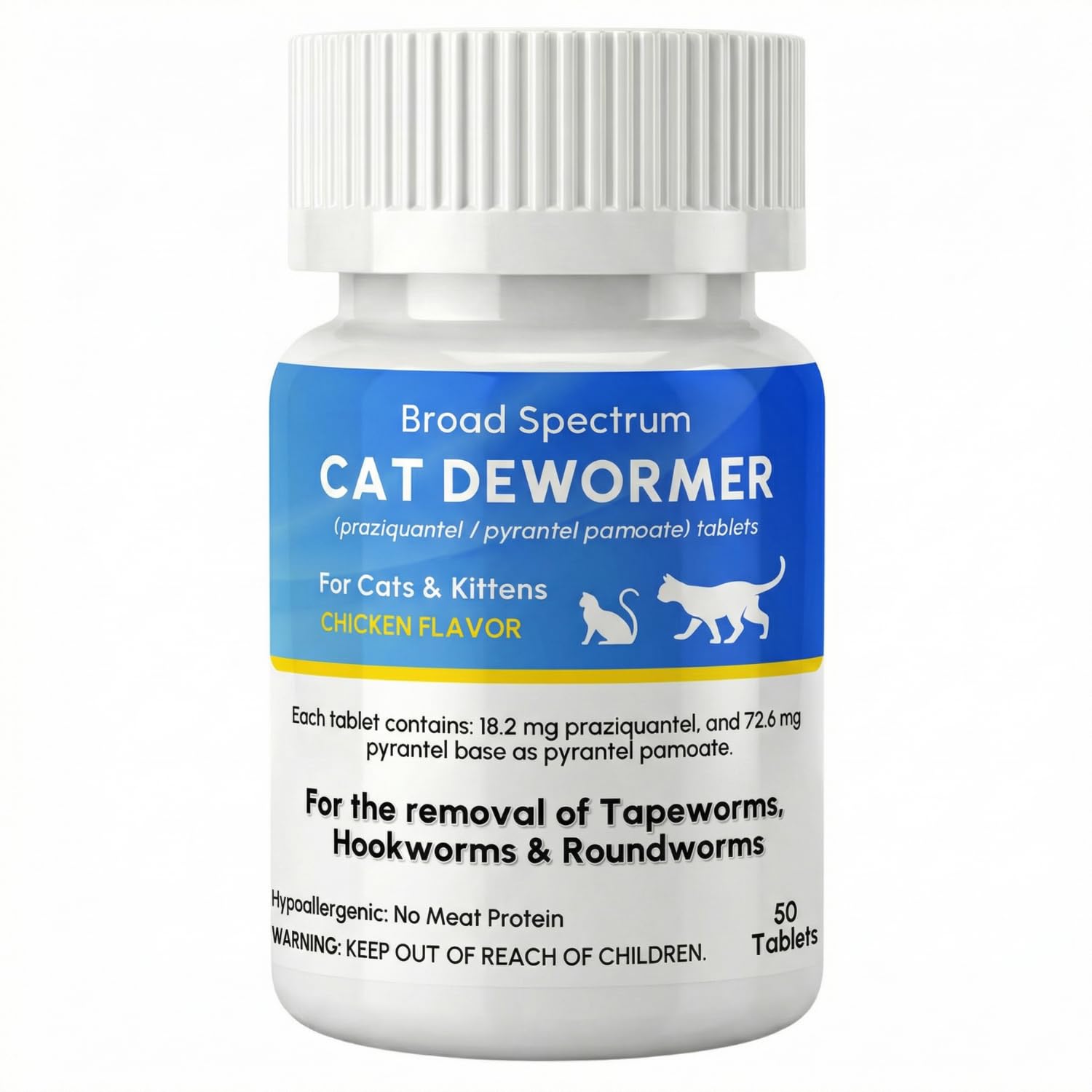
The useful detail on Bipinelyt's broad-spectrum tablets is the score line: each tablet snaps in half, so you can match a dose more closely instead of guessing at a fragment. The tablets are chicken-flavored and sold in a 50-count bottle, and the label says they're for cats and kittens 2 months and older. On paper, the formula pairs 18.2 mg praziquantel with pyrantel pamoate, covering tapeworms, roundworms, and hookworms.

The listing is the problem. The directions field says the product is for dogs, and the included-components field says fenbendazole, which doesn't match the cat-labeled praziquantel and pyrantel formula. That kind of inconsistency is not something to wave off with a dewormer. Check the bottle in hand before you dose, and confirm the active ingredients and species on the actual label. If the label matches the cat formula, the 50-count bottle is a value play for a cattery or foster setup.

The chicken flavor is a nice idea, but it doesn't guarantee acceptance, and the track record here is thinner than on Drontal. We don't make it a first choice for a one-cat household, where a smaller bottle or a single-dose tablet is easier to manage. For a multi-cat home that wants scored broad-spectrum tablets and will check the label, it's a reasonable backup.

Bottom line: Bipinelyt's scored broad-spectrum tablets are a sensible bulk buy for multi-cat homes, provided you confirm the bottle label matches the cat formula.

6

Nuzzleup Triple Dewormer

Nuzzleup Triple Dewormer

Pill-refusing cats

Our Score 8.2/10
Check Price

Worth Noting

  • Multi-day dosing schedule
  • Tapeworm results are more mixed than the tablet picks
Volume
120 mL
Age Minimum
8 weeks
Worm Coverage
Tapeworms, roundworms, hookworms
Active Ingredients
Pyrantel pamoate, praziquantel
Read the full review

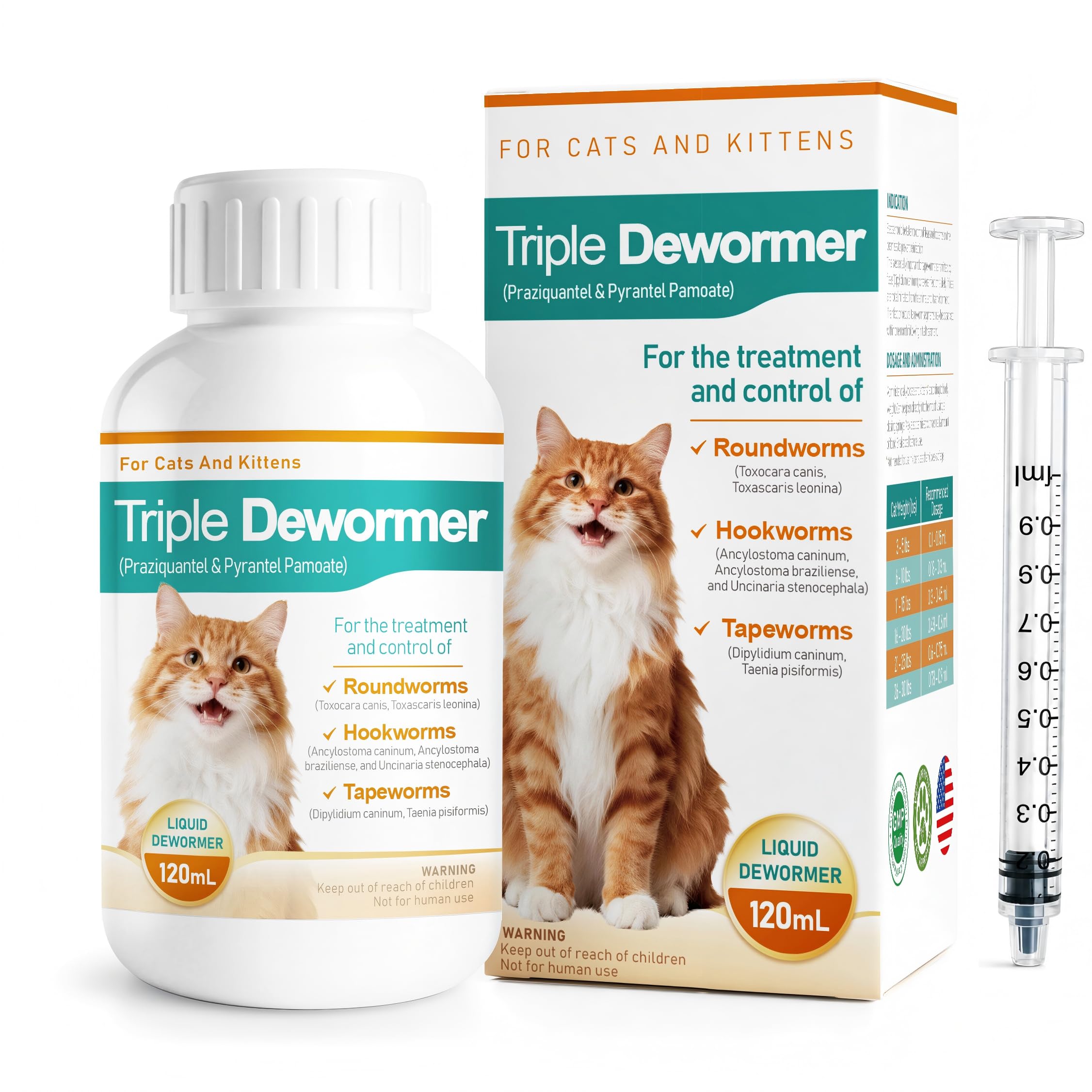
A 120 mL bottle of broad-spectrum liquid is the most convenient format here if your cat turns into a wrestling match at pill time—but convenience only counts if the dose goes in. Nuzzleup combines pyrantel pamoate and praziquantel, so it's aimed at tapeworms, roundworms, and hookworms, and the label allows kittens from 8 weeks. The directions are weight-based and run three to five days, with a maintenance schedule for repeat exposure.

That multi-day schedule is the first thing we weigh against a single-dose tablet. It's more handling, more chances for a cat to refuse, and more to remember. The 120 mL bottle is generous for a multi-cat home, and the liquid can be mixed into a small amount of food. The formula is described as tasteless, but cats are not obliged to agree, and a strong-smelling food may be needed to mask it.

The bigger caveat is the tapeworm result. The tablet picks here have a more consistent record for tapeworm clearance, while this liquid's results are more mixed. We see it as a practical choice for a cat that won't take pills, not the strongest evidence in the set. If you need a broad-spectrum liquid and your cat accepts it, the bottle goes far; if you're treating a confirmed tapeworm, start with the Elanco tablet or Drontal.

Bottom line: Nuzzleup's liquid is the broad-spectrum pick for cats that won't take a tablet, though we steer tapeworm-only cases to the more proven Elanco bottle.

7

Giarcidia Tapeworm Liquid

Giarcidia Tapeworm Liquid

Liquid tapeworm doses

Our Score 8.2/10
Check Price

Worth Noting

  • Tapeworms only
  • Can cause drooling or foaming
Form
Liquid oral suspension
Flavor
Chicken
Worm Coverage
Tapeworms
Included Dropper
3 mL
Read the full review

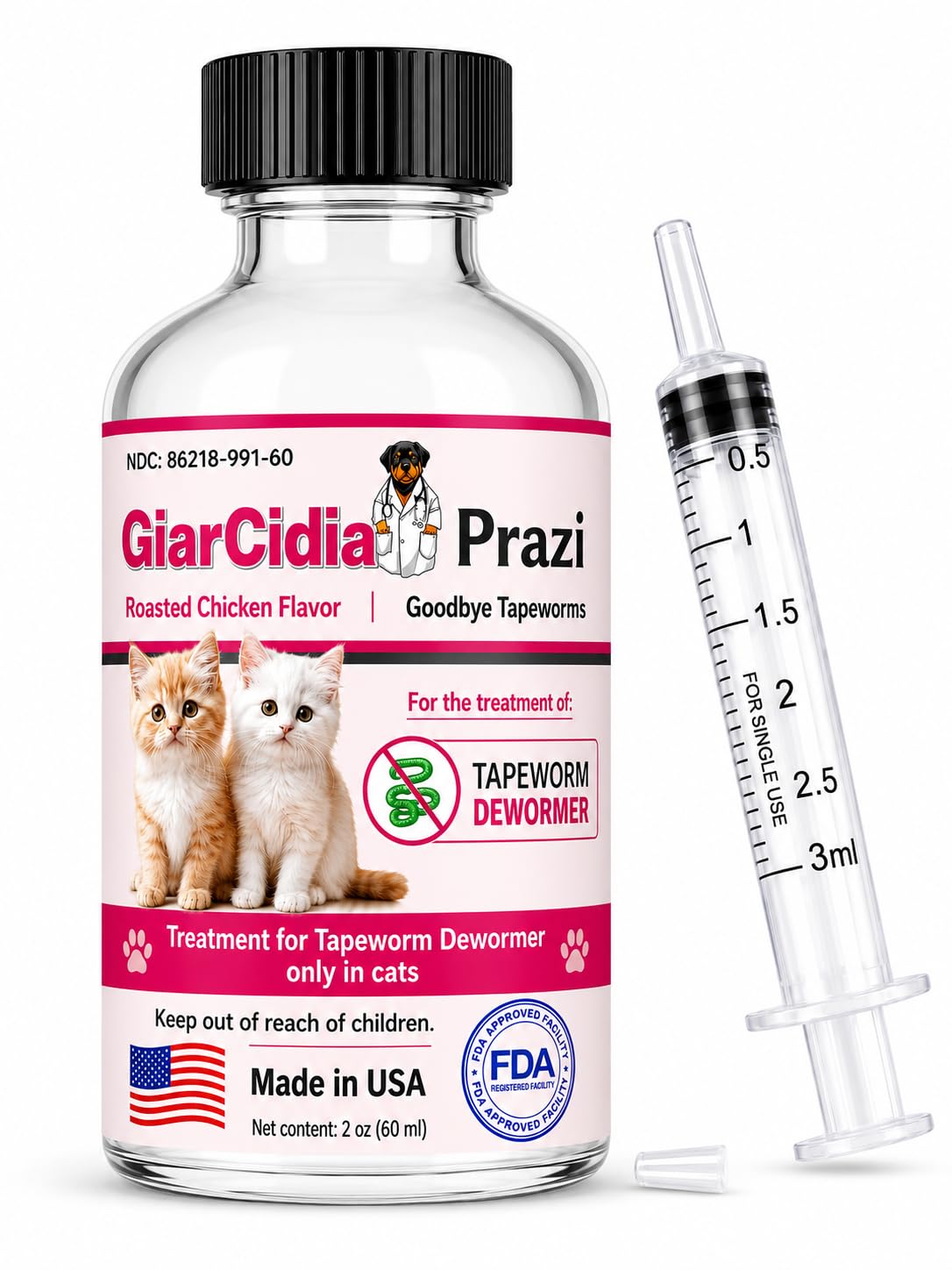
Giarcidia's tapeworm liquid comes in a 60 mL glass bottle with a 3 mL dropper and a chicken flavor. The label is built around tapeworms, and the model name 'Prazi' points to a praziquantel-style formula. The problem is acceptance: the smell is strong, and the liquid is not easy to hide in food.

The appeal is the liquid form for a cat that clamps its jaw shut at the sight of a pill. A dropper can be easier than a tablet for a cat that already accepts liquids, and the weight-based dose is straightforward. But a strong-tasting liquid can be harder to hide than a small tablet, not easier. If your cat is suspicious of new smells, this is the wrong place to start.

The tapeworm coverage is there, and the bottle is a reasonable size for a single cat. The effectiveness is more convincing than the palatability: cats that take it seem to benefit, while others refuse the food it's mixed into. That split is the whole decision with this bottle.

We keep this one as a backup for a cat that already accepts liquids, not the first thing we reach for when a cat has tapeworm segments. The Elanco tablet is smaller, easier to crumble, and far less likely to end up on the floor. If you need a liquid because pills are impossible, Giarcidia can work—but plan to dose directly and have a towel ready.

Bottom line: Giarcidia's liquid is a tapeworm-only option for cats that won't take a tablet, but the strong smell and drooling make it a hard sell for a finicky cat.

How We Vetted and Tested Cat Dewormers

We started by narrowing the field with a veterinarian's help: anything without a clear weight-based dosing chart, or with an active ingredient that didn't match the worms we were seeing on fecals, came off the list. Twelve dewormers made the cut — pills, liquids, and topicals — and we spent four months running them through our partner foster network. Each was used on cats of different weights and temperaments, from a 7-pound kitten to a 16-pound senior who has seen it all.

Dosing happened where it always happens: on the kitchen counter at 7 a.m., on a towel in the bathroom, and once, memorably, on the floor of a closet. We logged whether a cat took the dose in food without a fight, how many tries a pill took, and, for the liquids, whether the cat foamed or drooled within ten minutes. We also smelled every liquid straight from the bottle and noted which ones turned a cat off its dinner entirely.

Then we watched. For 48 hours after each dose we tracked appetite, energy, vomiting, and stool, since stomach upset is the side effect owners ask about most, and we noted which cats hid afterward and which shook it off. At the 10-to-14-day mark, a follow-up fecal confirmed whether the worms were actually gone — effectiveness, not just palatability. We calculated cost per dose at our cats' weights, and we kept notes on the smaller stuff too: bottles that leaked, syringes that couldn't measure a kitten-sized dose, packaging that made a two-cat household guess.

How to Choose Cat Dewormers

Match the active ingredient to the worm

Tapeworms need praziquantel; roundworms and hookworms are the target of pyrantel pamoate. A tapeworm-only tablet like Elanco's is enough if you've seen rice-like segments, but it won't touch roundworms. If you don't know what you're dealing with, a broad-spectrum praziquantel and pyrantel product such as Drontal is the safer default. Read the ingredient panel rather than the front label—'all worms' means little if the active ingredient isn't named.

Choose a form your cat will actually take

Tablets are compact and easy to crumble into a spoonful of wet food, but a determined cat can taste them. Liquids are easier to measure into a syringe, though strong flavors and smells can trigger drooling or refusal. We keep a small amount of wet food on hand for tablets and a 1 mL syringe for liquids; either way, give the dose in a small enough portion that you know it's been eaten. If your cat has a history of foaming or vomiting after a liquid, ask your vet before trying another.

Check age, weight, and dose

Kitten minimums vary widely: Elanco's tapeworm tablet starts at 6 weeks, Bipinelyt's liquid at 4 weeks, Nuzzleup's liquid at 8 weeks, and Drontal at 1 month and 1.5 pounds. Weigh your cat before dosing—Drontal's one-tablet-per-4-to-8-pounds range is typical, and guessing can underdose or overdose. Use a kitchen scale if your cat will sit still, or weigh yourself holding the cat and subtract your own weight. Do not split a tablet unless it is scored, and never substitute a dog dewormer.

Buy for the number of cats in the house

A 3-tablet bottle is right for one cat with a single tapeworm exposure; a 50-tablet bottle or a 100 to 120 mL liquid makes more sense for a multi-cat home, foster litter, or repeated treatments. Count doses, not bottles: Drontal gives one tablet per 4 to 8 pounds, while Bipinelyt's 50 mL liquid is labeled to cover up to 100 pounds of cat. If you're treating several cats, weigh each one and write the doses down before you start. A larger bottle only saves money if you'll use it.

Frequently Asked Questions

Final Verdict

Drontal is the cat dewormer we recommend first when you need broad-spectrum coverage: one tablet per 4 to 8 pounds, tapeworms, roundworms, and hookworms, and a 50-tablet bottle that earns its keep in a multi-cat home. If you're treating one cat for tapeworms only, the small Elanco bottle is the more sensible spend. For a kitten with roundworms or hookworms, start with Bipinelyt's 4-week liquid. The decision changes with the worm and the cat, not with the size of the label.