Grooming

Best Waterless Cat Shampoos of 2026

Bathing a cat is less a grooming chore than a negotiation you're guaranteed to lose — the claws, the yowling, and the puddle that ends up on the floor instead of the cat. Waterless shampoo exists for exactly that stalemate: a pump, spray, or foam that lifts grease and dander off the coat without running a single tap, so a senior cat, a cat recovering from surgery, or one who simply despises the tub can stay clean and lap-friendly. What it fixes is the standoff. What it doesn't automatically fix is the residue a cat will lick off the moment you turn your back, or a scent strong enough to send them under the bed for an afternoon.

I have one cat who sits placidly in the sink and another who acts as though I'm trying to end him, so both temperaments got a vote. Over four months our team worked through 14 waterless shampoos on those two and a rotating cast of foster cats, and the winners separated themselves on things that had nothing to do with the label copy: whether the cat bolted, whether the coat felt clean or coated, and whether anyone was scratching an hour later. The keepers are below.

1

Wahl Cat Waterless Shampoo

Top Pick
Wahl Cat Waterless Shampoo

Odor between baths

Our Score 9.0/10
Check Price

Worth Noting

Dose
One pump per bath
Form
No-rinse foam
Size
7 fl oz
Scent
Coconut lime verbena
Read the full review

Wahl's cat formula is built around a single pump. The label states one pump is enough for an entire bath, combed through the fur and then dried completely. That dosing is unusually clear, and it is the reason this is the bottle we reach for when a cat has rolled in something and we want to avoid guessing how much foam to use.

We like it best for odor. The coconut-lime-verbena scent is the most assertive in this group, and it hangs around long enough to make a smelly cat smell like a clean one again. Oatmeal extract is there for dry or damaged skin, and the foam works into the coat without dripping. It is a practical choice for a cat that has picked up a strong smell but does not need a full bath.

The flip side is that this is not the pick for a scent-sensitive cat. The fragrance is a feature when odor is the problem and a liability when it is not. We keep it for occasional strong odors rather than routine touch-ups, and we reach for the unscented Burt's Bees when the goal is simply a clean coat. A 7-ounce bottle gives you plenty of doses, though one pump is all you need.

Bottom line: We keep this one for strong odors: the one-pump foam and lasting coconut-lime scent make short work of a smelly coat, but it is not for scent-sensitive cats.

2

Burt's Bees Waterless Cat Shampoo

Burt's Bees Waterless Cat Shampoo

Fragrance-sensitive cats

Our Score 8.8/10
Check Price

Worth Noting

Form
No-rinse spray
Size
10 fl oz
Scent
Unscented
Key Ingredients
Shea butter and honey
Read the full review

The fragrance-free label is what makes Burt's Bees our top pick. A no-rinse shampoo stays on the coat, where a cat will groom it off, so starting with a formula made without added fragrance, sulfates, or colorants is a sensible default for most households. The 10-ounce pump bottle is also the most practical size here for regular between-bath cleanups, and the shea butter and honey formula is meant to condition as it cleans.

On the coat, the appeal is a clean, soft finish without the wet-cat ordeal. The label credits shea butter and honey with conditioning and says the formula helps reduce dander and flaking; that makes it a reasonable first choice for a cat with a dull coat or light flaking rather than a heavy grease problem. It can be worked into the coat and toweled off, with no rinsing step to turn a quick freshen-up into a wrestling match.

Application is the part to think through. A pump spray gives you control and covers a large area quickly, but the sound can be more alarming than the product itself. We prefer to mist a cloth or soft brush and work it through the coat when a cat is skittish; that keeps the product off the face and gives the cat less to object to. The bottle is big enough that one container lasts through several touch-ups.

Cats are the deciding variable. Some will tolerate a quick mist and a towel rub; others will decide the pump is a predator. If yours is in the second group, a foam is the kinder route, but Burt's remains the best all-around match for a cat that will stand for a spray, especially if you want to avoid added fragrance.

Bottom line: We recommend Burt's Bees first for most cats: it is cat-specific, fragrance-free, and comes in a 10-ounce bottle that suits regular between-bath cleanups.

3

Vet's Best Waterless Cat Shampoo

Vet's Best Waterless Cat Shampoo

Dry, itchy skin

Our Score 8.8/10
Check Price

Worth Noting

  • Foam pump can stop producing foam
Form
No-rinse foam
Size
4 fl oz
Scent
Aloe vera
Minimum Age
12 weeks and older
Read the full review

Vet's Best arrives as a foam, and that is the first thing we notice in use. There is no mist hanging in the air and no pump bottle hissing at the cat; you dispense a small amount into your hand or a cloth and work it into the coat. For a cat that already dislikes being handled, that alone can make the difference between a quick clean-up and a chase around the living room.

We recommend this one for cats with dry, itchy, or sensitive skin. The formula combines aloe vera, neem oil, vitamin E, and oatmeal, and the label is written for cats 12 weeks and older. It is also stated not to affect topical flea-control products, which matters if your cat is on a monthly treatment. The foam is easy to target on a greasy patch under the chin or along the back, and it does not require a rinse.

The trade-off is the 4-ounce bottle. It is the smallest here, so this is a targeted treatment rather than the bottle we keep for full-body refreshes on a large cat. We still reach for it when the skin looks angry or the coat feels dry, because the ingredients read more like a soothing wash than a perfume-first freshener.

Bottom line: For a cat with dry, itchy, or sensitive skin, we reach for this soothing foam, though the small bottle makes it a targeted treatment rather than an all-purpose default.

4

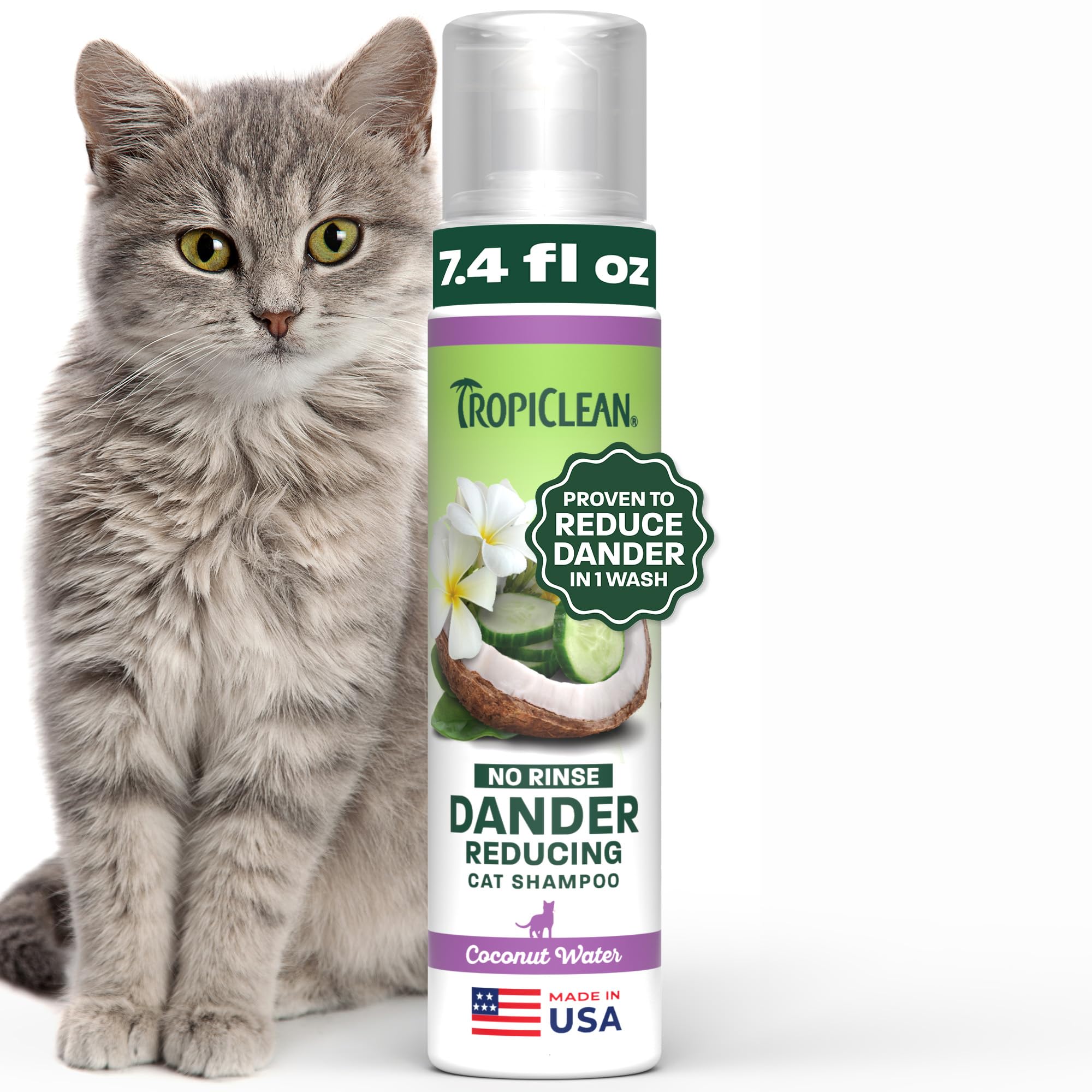
TropiClean Waterless Cat Shampoo

TropiClean Waterless Cat Shampoo

Dander-prone coats

Our Score 8.8/10
Check Price

Worth Noting

  • Pricier per ounce than our top pick
Form
No-rinse liquid
Size
7.4 fl oz
Scent
Coconut and cucumber
Minimum Age
12 weeks and older
Read the full review

Dander is a different problem from dirt, and TropiClean is the pick we point to when flaking is what sends you looking for a waterless shampoo. The formula is cat-specific, uses aloe and coconut, and is labeled to reduce dander and allergens while cleaning without a rinse. It is also one of the larger cat-specific bottles here at 7.4 ounces, which makes it easier to use regularly on a cat that leaves white flakes on a dark blanket.

The coconut and cucumber scent is fresh and noticeable. That is useful when odor is part of the problem, but it is also the first thing we consider before recommending it to a cat with sensitive skin or a household that dislikes perfume. The formula is not a heavy-duty degreaser; it is best for surface dirt, light oil, and the everyday smell a cat picks up from bedding or the litter box.

We rate it near the top of this set for dander and coat feel. The label allows use on cats 12 weeks and older, and the aloe-and-coconut formula is meant to leave the coat soft rather than stripped. If dander is the main complaint, it earns its place; if you want a general freshener for a cat that is merely a little stale, our unscented top pick is the calmer choice.

Bottom line: Our pick when dander is the problem, this cat-specific no-rinse shampoo combines aloe and coconut with a fresh scent and a useful 7.4-ounce bottle.

5

Mooncat Waterless Cat Shampoo

Mooncat Waterless Cat Shampoo

Short-haired cats

Our Score 8.8/10
Check Price

Worth Noting

  • Small 5-ounce bottle at a premium price
Form
No-rinse foam
Size
5 fl oz
Coat Type
Short-haired cats
Minimum Age
8 weeks and older
Read the full review

Mooncat's label is unusually specific, and that is why it earns a place here. It is a foam for short-haired cats, labeled for kittens 8 weeks and older, with a stated pH of 6.5 to 7.0 and a formula described as lick-safe. The specificity is useful: this is not a bottle to buy for a long-haired cat with mats, but for a shorthair that needs a quick clean, it is the most thought-through option in the group.

The foam is easy to work into a short coat and towel off, and the light botanical scent is mild enough that it does not announce itself from across the room. The lick-safe claim matters for a cat that grooms immediately after handling; it does not mean you can skip the label, but it answers a real concern with a leave-in product. The formula avoids alcohol, parabens, and sulfates, which helps if the skin is easily irritated.

For a senior shorthair that has stopped grooming or a kitten getting used to handling, the foam is gentle and the scent is restrained. It will not turn a greasy, matted coat into a show coat, and it is not meant to. If your cat is long-haired or heavily soiled, this is the wrong tool.

Bottom line: We see Mooncat as the short-haired specialist: its lick-safe foam and stated pH range suit shorthairs and kittens 8 weeks and older, at a premium price.

How We Tested, With Considerable Help From the Cats

We started with more than 30 formulas sold for cats, from big pet brands to small grooming labels, and cut the list by reading ingredient panels first — anything loading up on essential oils, alcohol-forward mists, or heavy perfumes was set aside, since cats groom whatever lands on their fur. From there we weighed price per ounce, format (pump, spray, foam, and no-rinse wipes), and whether the directions actually accounted for cats rather than dogs. Fourteen made the cut, and we lived with them for four months across greasy chins, dander on a senior who can't be bathed anymore, muddy paws, and one shelter kitten who arrived smelling like a kennel.

Getting it on the cat came first. We noted how many hands the job took, whether the pump clogged mid-application, how much foam came out versus how much actually reached the fur, and whether the bottle survived being shoved off the counter by a cat who wanted no part of this. We watched each cat for flinching, flattened ears, and bolting, then checked whether they groomed the spot afterward or avoided it entirely — the closest thing to a review a cat will give you.

After drying, we felt the coat for tackiness and ran a brush through to see whether the hair looked lifted or lank. We sniffed at one hour and again the next day to judge how long a fragrance lingered, and we looked under the fur 24 hours later for redness, flaking, or new scratching. Finally, we tracked how many applications a bottle delivered, because a cheap formula that needs four pumps per cat isn't cheap.

How to Choose Waterless Cat Shampoos

Start With a Cat-Specific Formula

Cats groom themselves, so anything left on the coat can be licked off. We put a cat-specific label first for that reason, and we check the minimum age before anything else. Vet's Best and TropiClean state 12 weeks or older; Mooncat is labeled for kittens 8 weeks and older. A dog shampoo that says "for pets" is not a cat formula, even if the bottle shows a cat. If the label names only dogs, keep looking.

Choose a Delivery Format Your Cat Will Tolerate

Spray, pump, and foam are not interchangeable in a cat's mind. A spray covers a large area quickly, but the hiss can send a nervous cat under the bed; spraying onto a cloth or brush first gives you more control. A foaming pump puts the product exactly where you want it and suits spot cleaning, though a dispenser can clog or stop foaming. We match the format to the cat: foam for the cat that bolts at a mist, spray for a cat that stands still.

Decide How Much Scent You Want

Fragrance is the most personal choice in this category. An unscented or fragrance-free shampoo is the safer start for a cat with sensitive skin or a household sensitive to perfume, and it still cleans a coat that smells mildly stale. A scented formula earns its place when odor is the main problem: Wahl's coconut-lime and TropiClean's coconut-cucumber are the strongest here. We do not expect a scent to fix a greasy coat, and we avoid using a strong fragrance to cover a problem that needs a bath or a vet visit.

Plan for Residue and Dander

Waterless shampoo works best in small sections, not as a pour-on. A little foam or mist worked into the coat and then toweled off leaves less film; too much product is what turns a soft coat tacky. A dander-labeled formula such as TropiClean is the one to try when flaking is the reason for the purchase, while an oatmeal or aloe formula suits dry, itchy skin. Brush after the coat dries to lift loose hair and distribute what remains.

Frequently Asked Questions

Final Verdict

Burt's Bees earns our top recommendation because it pairs a cat-specific, fragrance-free formula with a useful 10-ounce bottle and a dander-reducing brief that covers most between-bath cleanups. The spray is the one thing to test: if your cat objects to misting, choose Vet's Best's soothing foam for sensitive skin. For a short-haired cat that grooms right after application, Mooncat's clear pH range and lick-safe claim make it the more specific choice, provided the small bottle and premium price suit you.