Cleaning & Odor

Best Vacuums for Cat Litter of 2026

Cat litter does not stay in the box. It rides on paws across the floor, settles into rug fibers, and hides along baseboards, which is why the right vacuum has to do more than look powerful on a spec sheet. I have watched weak suction push granules around and emptied bins that sent fine dust back into the room, so I look for controlled suction, a brush roll that grabs instead of scatters, and filtration that keeps litter dust contained. The right vacuum turns a daily nuisance into a two-minute pass without waking the cat or your downstairs neighbor.

Over the past eight months, my team and I tested 12 vacuums for this exact mess, from lightweight cordless sticks to canisters that take more muscle to carry. We watched cleaning performance and power on the first pass, plus battery life on max, noise near a skittish cat, and whether each model stood steady when parked. Value mattered too, since a light, easy-to-use vacuum is not a bargain if replacement filters and bags pile up. The picks below are the ones that handled litter with the least fuss.

1

Bissell Pet Hair Eraser 2390A

Top Pick
Bissell Pet Hair Eraser 2390A

Sofas and stairs

Our Score 9.2/10
Check Price

Worth Noting

  • Three-inch nozzle is slow on open floor
Weight
3 lb
Runtime
17 minutes
Capacity
0.18 gallons
Charge Time
480 minutes
Read the full review

A crevice tool gets litter off a hard floor. A motorized brush gets it out of fabric, and that is the whole argument for the Pet Hair Eraser. The 14-volt handheld ships with a powered brush tool, an upholstery tool, and a crevice tool, and the brush is the one that matters: it agitates the weave so dust and hair come up instead of settling deeper into the nap.

We pointed it at a sofa cushion, a carpeted stair tread, and the felt on a cat tree. The brush left a visible track in the pile, the bin kept hair from wrapping around the roller, and emptying is a latch-and-tip into the trash rather than a hand inside the cup. It weighs 3 pounds, so working overhead on curtains or a high shelf is not a strain.

Where it runs out of road is stamina: 17 minutes of use against an eight-hour charge. We treat it as a spot machine, and on that basis it is the best fabric tool in this group — you do the sofa, the stairs, and the car seats in one short burst and set it back on the charger.

Bottom line: The tool we reach for when litter dust is in the sofa, the cat tree, and the stairs: a motorized brush that lifts it out of fabric rather than off the surface.

2

Dirt Devil Scorpion Plus

Dirt Devil Scorpion Plus

Litter box corners

Our Score 8.8/10
Check Price

Worth Noting

  • Loud enough to clear the room
  • Corded, so you need an outlet nearby
Weight
4.5 lb
Capacity
0.18 gallons
Hose Length
2.5 feet
Power Source
Corded electric
Read the full review

Cat litter is heavy grit, and the thing that undoes a cheap cordless vacuum on it is battery fade — the first pass pulls, the fifth one shoves granules around. The Scorpion Plus sidesteps the problem by plugging in. Its 5-amp motor pulls the same at the last corner of the room as at the first, and that steadiness is the single biggest reason we recommend it first for litter.

Reach is the other half of the job. The QuickFlip crevice tool lives on the machine: flip it out, click it into place, and the 2.5-foot hose gets you behind the box, along the baseboard, and under the lip of the pan without hauling the whole vacuum into the corner. The 1.5-inch cleaning path is narrow on purpose. It is a spot tool, and it is the one that picks up what the broom leaves behind.

At 4.5 pounds it is light enough to carry one-handed from the laundry room to the car, and the 0.18-gallon dirt cup holds a decent scoop of litter before it needs emptying. There is also no battery to lose capacity over the years, which is the usual ending for a cordless handheld.

Bottom line: Our first recommendation for litter duty: corded power that never fades, plus a flip-out crevice tool built for the gap behind the box.

3

Bissell Featherweight 2033

Bissell Featherweight 2033

Hard floor sweeps

Our Score 8.8/10
Check Price

Worth Noting

  • Hard floors and low pile only
Weight
2.6 lb
Capacity
0.67 liters
Cord Length
15 feet
Cleaning Path
9.5 inches
Read the full review

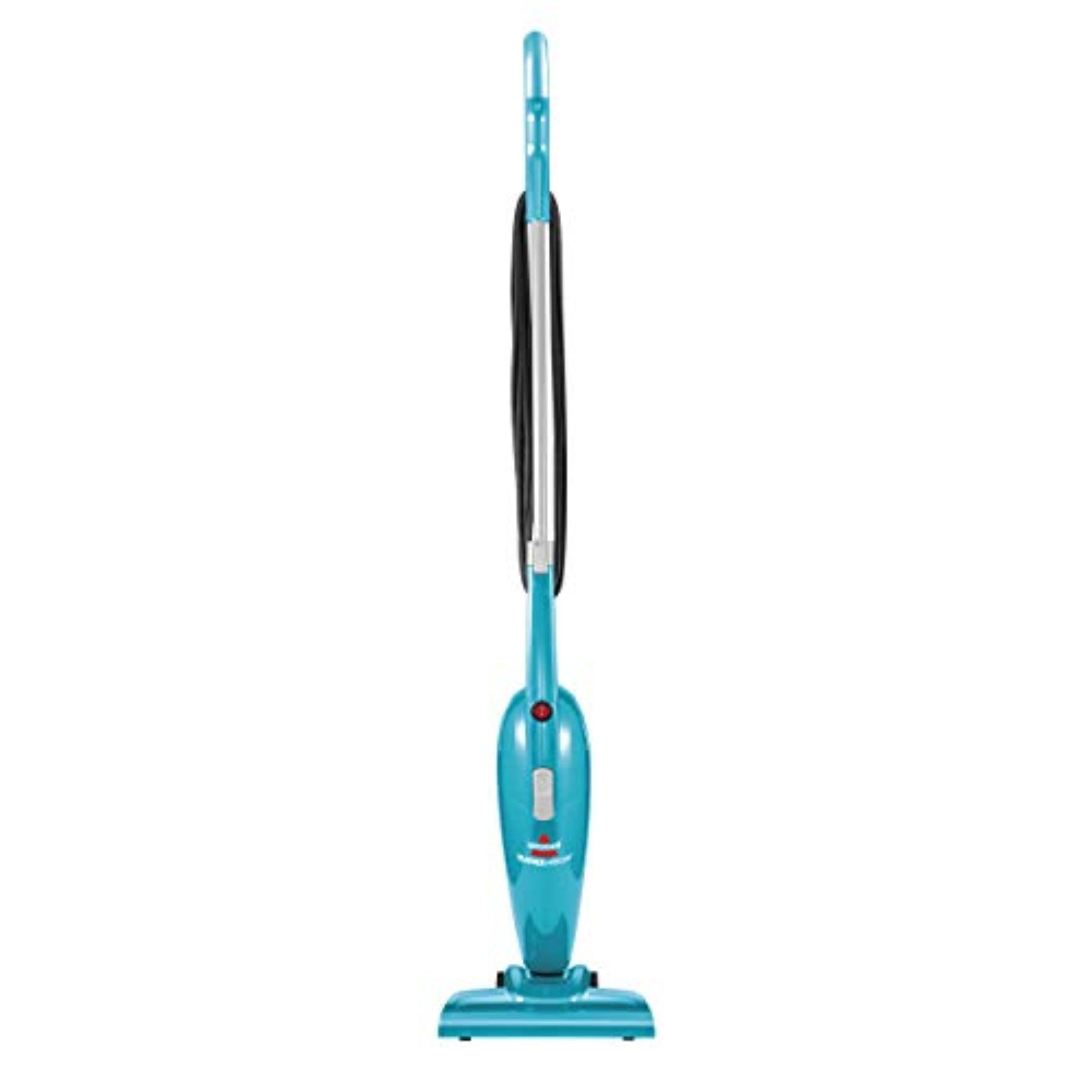
At 2.6 pounds, the Featherweight is the vacuum you can leave leaning in the corner by the litter box and pick up with two fingers. The 15-foot cord crosses most kitchens and laundry rooms without hunting for a new outlet, and the 9.5-inch nozzle covers a wide strip of floor with every pass.

On tile, vinyl, and hardwood, where most litter actually lands, it does the job quickly and without ceremony. The intake is shaped to scoop larger debris rather than push it along, which matters with clay granules that a flat squeegee edge would simply shove into the baseboard. The box surround plus the hallway is a quick job rather than a chore, and the swivel-free simplicity means there is nothing to adjust before you start.

Pop the handle off and it becomes a hand vacuum with a crevice tool for the sofa and the car footwells. The 0.67-liter cup is bagless and releases from the bottom, and the filter is washable, so upkeep is a rinse rather than a reorder.

Bottom line: The cheap corded stick we keep by the box: light enough to grab one-handed and wide enough to clear a litter-scattered floor in a couple of passes.

4

Shark Rocket Pet Plus HV322

Shark Rocket Pet Plus HV322

Whole-home cleanup

Our Score 8.8/10
Check Price

Worth Noting

  • 8.6 pounds is a lot on stairs
Weight
8.6 lb
Capacity
0.9 gallons
Power Source
Corded electric
Cleaning Path
10 inches
Read the full review

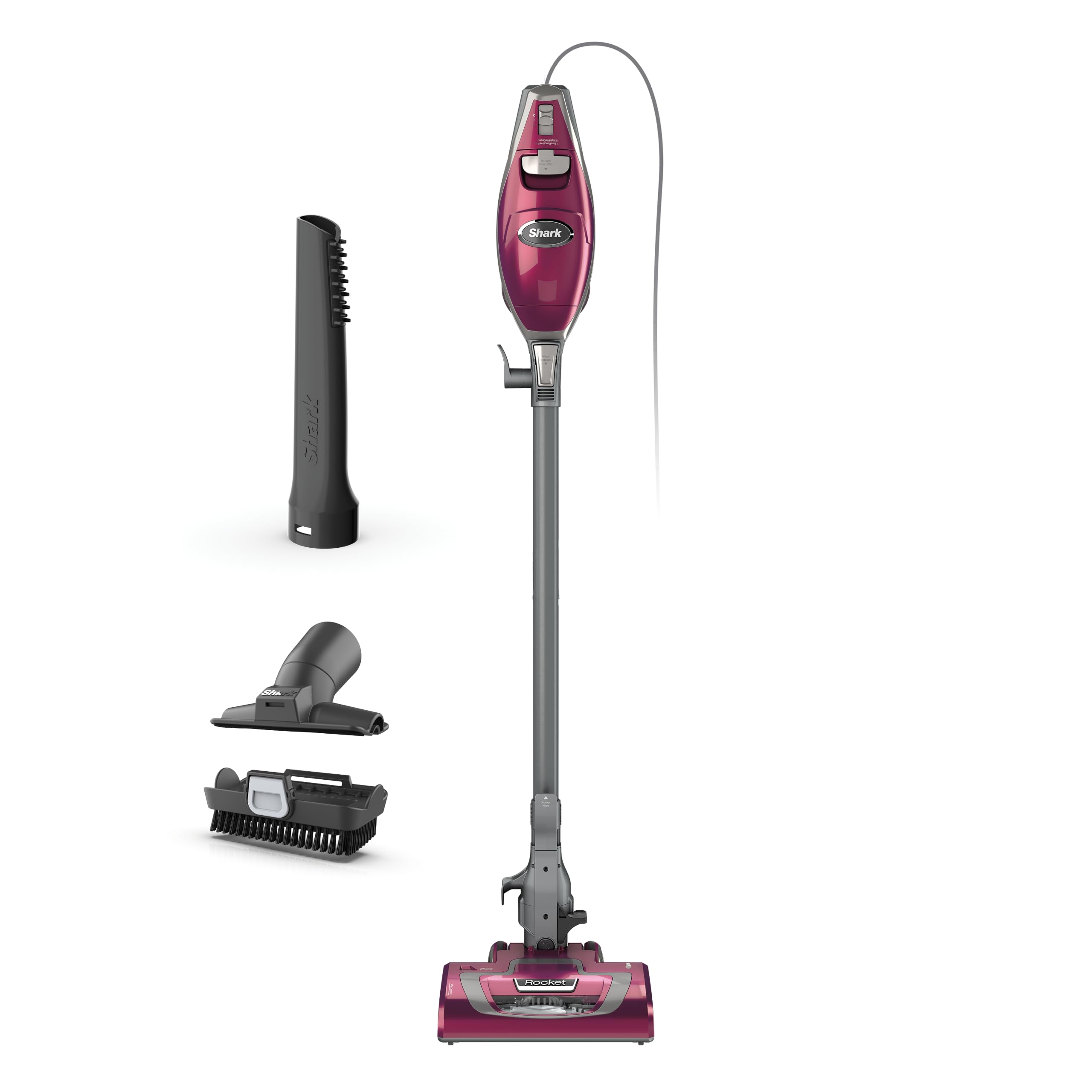
If the Featherweight is the vacuum you keep by the box, the Rocket is the one you get out when the whole apartment needs doing. It is corded too, but everything about it is scaled up: 8.6 pounds, a 10-inch cleaning path, and a 0.9-gallon dust cup that takes far longer to fill than the small cups on the handhelds here.

The headlight is the detail we did not expect to care about. Cat litter is pale grit that vanishes against a light floor, and the LED bar on the front of the nozzle lights it up so you can see the granules you are about to pass over. The Pet Multi-Tool and duster crevice tool both live on board, and the body converts to a hand vacuum for stairs and the car.

The five-year warranty is the longest of any pick here, which counts for something on a machine with a powered brush roll. Filtration is washable foam, so upkeep is a rinse-and-dry rather than a subscription for cartridges.

The one design flaw we keep coming back to is that it will not stand up on its own; the body tips unless you lean it against a wall or lay it down, so there is a small chore attached to every pause. Give it a wall to lean on and the rest of the package is the most complete full-home corded stick in this group.

Bottom line: Our pick when litter and hair cover the whole apartment rather than one corner: a corded stick with a big bin, pet tools, and a headlight that shows what you missed.

5

Black+Decker CHV1410L

Black+Decker CHV1410L

Cordless grab-and-go

Our Score 8.8/10
Check Price

Worth Noting

  • Sealed battery cannot be replaced
Weight
2.6 lb
Runtime
11 minutes
Capacity
605 ml
Charge Time
240 minutes
Read the full review

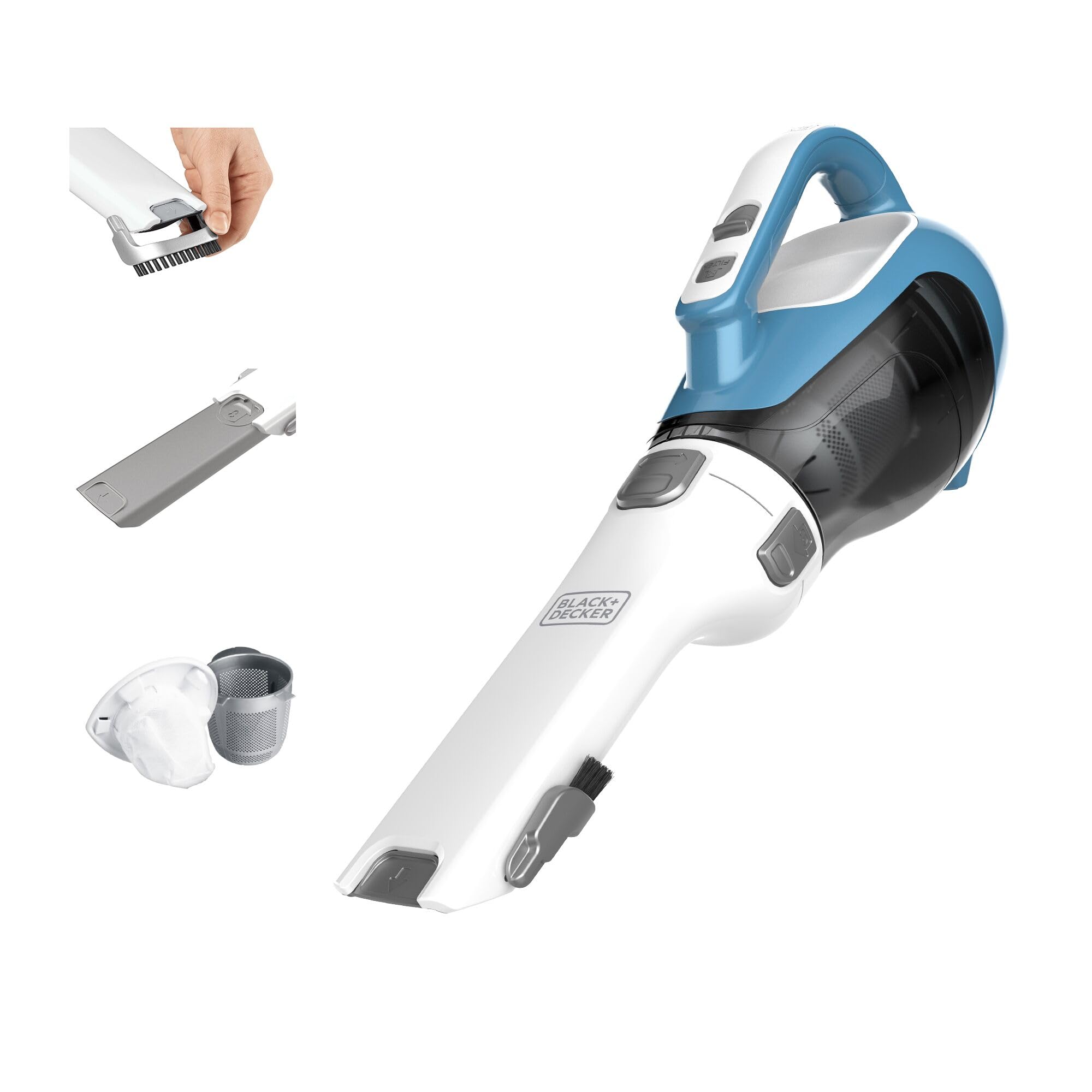
The slim nozzle on the CHV1410L rotates, so you can point it straight down into the gap between the box and the wall, then swing it sideways under the rim of the mat without turning the vacuum around. Add the flip-up brush for the shelf the cat sits on and the crevice tool for the car's seat rails, and it covers the small, awkward places litter collects.

The 16-volt motor clears a litter-box surround on a charge, and the 605-ml bowl is big enough that you are not emptying it between rooms. The wall-mount charging station keeps it topped up and off the floor, which in a small apartment is half the reason to own a handheld at all.

Runtime is the trade: 11 minutes, with a four-hour recharge, so this works as a grab-and-go spot vacuum rather than a whole-room machine. We also noted that the battery is not designed to be swapped, which is worth knowing if you expect years of service rather than a handy tool for the box area.

Bottom line: The cordless handheld we keep charged for litter-box corners, with a rotating nozzle that angles into gaps a fixed one cannot reach.

6

KARDV V06

KARDV V06

All-apartment runtime

Our Score 8.6/10
Check Price

Worth Noting

  • Charge holding can fail over time
Weight
5 lb
Runtime
60 minutes
Suction
40 kPa
Capacity
1.5 liters
Read the full review

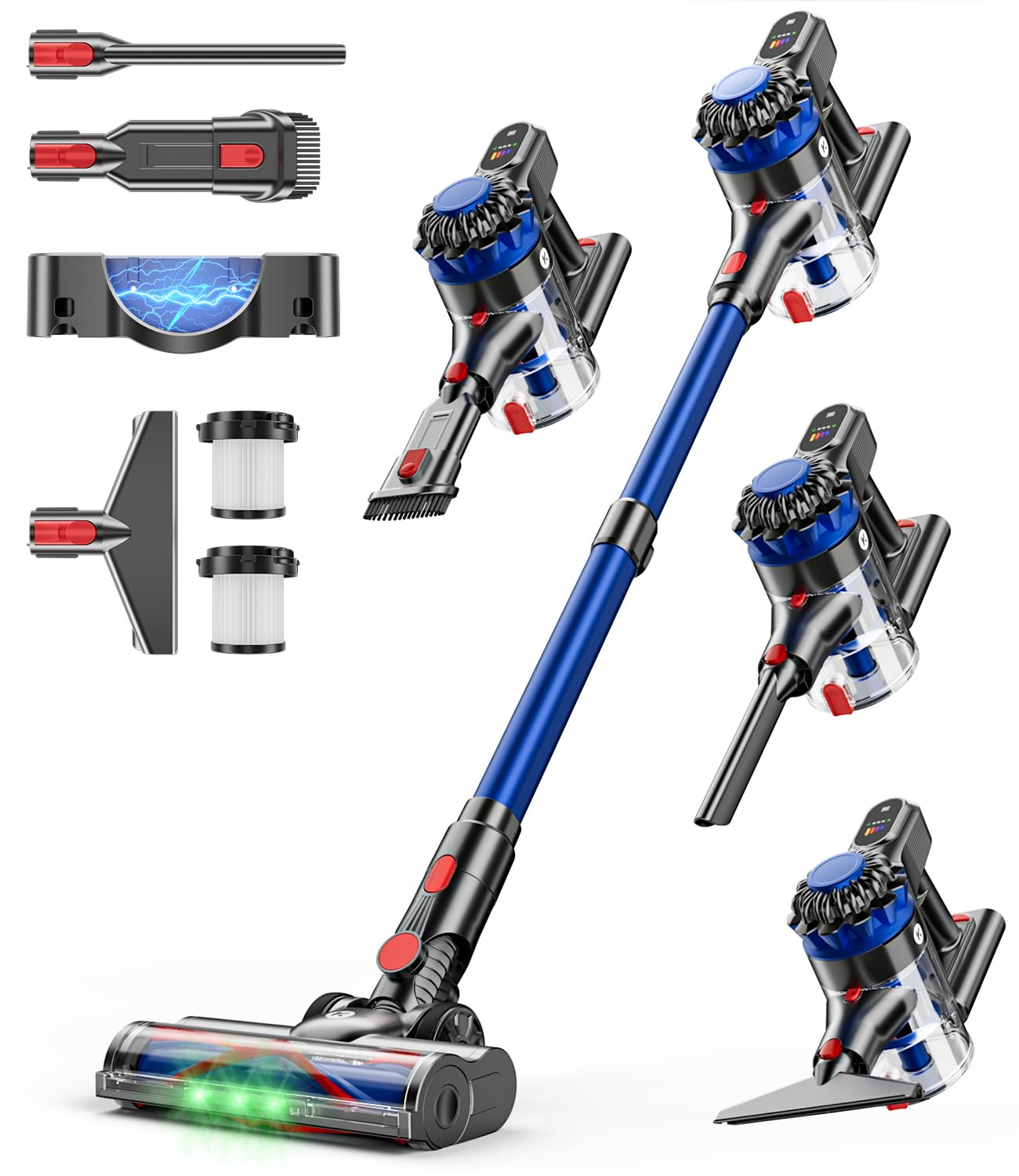
Sixty minutes is the number that separates the V06 from the other cordless sticks here, and the 1.5-liter bin is the other half of the same idea: fewer interruptions. It has two speeds and 40 kPa at the top, a V-shaped anti-tangle brush roll, and a color display that shows an actual battery percentage rather than a bar that drops from full to empty without warning.

That combination is what makes it the cordless pick for a litter-heavy household rather than a single-room one. We ran it from the litter box through a hallway and onto a low-pile rug without stopping to recharge or empty, and the bin still had room. It is also light enough at 5 pounds to carry up a flight of stairs one-handed.

One thing to plan around: the 60-minute figure is a budget, and time on the stronger of the two speeds comes out of it. Litter pickup is exactly when you want the stronger setting, so a whole-apartment pass runs shorter than the headline number suggests.

Bottom line: The cordless stick with the stamina for a whole apartment: a 60-minute rating and a 1.5-liter bin, so one charge handles more than the box corner.

7

Tikom V500

Tikom V500

Light daily use

Our Score 8.6/10
Check Price

Worth Noting

  • Charge holding can fade over time
Weight
5.5 lb
Runtime
32 minutes
Suction
40 kPa
Capacity
1.3 liters
Read the full review

Battery percentages rather than bars is the small thing this one gets right. The color display on the V500 shows suction level and remaining charge, so you know before you start whether you have the hallway left in it or just the box surround.

At 5.5 pounds it is manageable in one hand, and 1.3 liters means the bin is not the limiting factor — on most cordless sticks here you fill the cup before the battery quits, and this one keeps going. The wall dock holds and charges it at the same time, and the anti-tangle brush roll came through a week of long hair without needing to be cut free.

It is rated for 32 minutes on the gentler setting, and the stronger setting is the one for litter, so real time is shorter. The HEPA filter and 6-in-1 tool set cover the sofa and the car, and the whole package costs less than the premium sticks here.

None of this is premium hardware — the plastic is functional and the wand flexes a little under load — but as a light, inexpensive daily vacuum for a one-cat apartment it is easy to recommend. It goes under the sofa, over the mat, and back on the dock without a second thought.

Bottom line: A light cordless stick with a bin big enough to skip the mid-clean empty and a screen that says exactly how much charge is left.

8

Eureka Blaze NES210

Eureka Blaze NES210

Budget hard floors

Our Score 8.2/10
Check Price

Worth Noting

  • Modest suction; carpets need a different vacuum
Weight
4 lb
Capacity
0.6 liters
Cord Length
18 feet
Cleaning Path
9.5 inches
Read the full review

The Blaze's best idea is its front edge. The capture nozzle is shaped to pick up bigger debris rather than push it, which is precisely the behaviour you want from a vacuum aimed at clay litter, and the swivel steering lets the head swing around the legs of a litter box without repositioning your wrist. On bare floors it earns its place.

At 4 pounds it is easy to carry between rooms, and the 18-foot cord covers a hallway and both ends of a kitchen from a single outlet. The 0.6-liter cup is bagless, the foam filter is washable, and the 9.5-inch path is wide enough to clear a mat in two passes.

It also converts to a hand vacuum with a crevice tool, which is how we handled baseboards and the gap under the litter mat. The build is plainly budget — the plastic creaks when you tilt the wand — but nothing on it feels ready to fail, and the one-year warranty matches what you are paying.

Bottom line: A cheap corded stick that handles scattered litter on hard floors and low-pile rugs, with an intake that scoops instead of scattering.

How We Tested Vacuums for Cat Litter

We built the shortlist by reading owner reviews and spec sheets for sealed filtration, brush-roll design, bin capacity, weight, and battery claims, then narrowed more than two dozen candidates to 12 models that covered cordless sticks, canisters, and a couple of uprights. Over eight months, each vacuum lived near a litter box in a home with at least one cat. We ran it after morning scooping, after dinner, and on weekends when tracked granules had dried onto tile and worked into low-pile rugs, paying attention to cleaning performance rather than showroom suction.

On bare floors, we scattered a measured scoop of fresh litter and a scoop of used litter, then watched whether the front of the vacuum pushed granules into a pile or pulled them in on the first pass; we repeated the pass along baseboards and under the sofa. For suction and power, we checked the bin for fine dust and the filter for shakeout after each run. For battery life, we started cordless models on max from a full charge and timed them until they stopped, then repeated the test in auto mode. For noise level, we stood three feet away and listened for pitch, since a high whine tends to bother cats more than a low hum.

Ease of use and lightweight design got judged on real chores: carrying each vacuum one-handed up stairs, emptying bins over a trash can, rinsing filters, and parking it in a closet corner. We noted handles that dug into palms, bins that dropped litter back onto the floor, and sticks that tipped over when nudged. Durability came from eight months of repeated emptying, filter rinses, brush-roll removals, and bumping into furniture legs, with checks for cracks, loose latches, and fading suction. We also compared value against replacement filter and bag costs, not just the sticker price.

How to Choose Vacuums for Cat Litter

Start With Where the Litter Actually Lands

Litter leaves the box three ways: kicked out onto the floor, carried on paws through the next room, and settled as dust into anything fabric. A corded handheld with a crevice tool handles the box surround best, a light corded stick covers hard floors fast, and a motorized brush tool is the only thing that gets dust out of a cat tree. If you want one machine for all three, a stick that converts into a hand vacuum buys you the most coverage for the money.

Walk the route your cat takes after leaving the box and note the surfaces. If it is tile and hardwood end to end, a hard-floor stick is all you need. If there is a rug at the end of the hallway, plan for something with more pull.

Corded Power Versus Battery Fade

Suction figures are quoted at a full charge. As a battery drains, airflow drops, and litter is the worst debris to lose it on because clay granules are heavy. A corded machine gives the same pull at minute twenty as at minute one, which is why our default for the box corner is corded.

Cordless earns its place when the box sits far from an outlet or you want to take the vacuum to the car. Treat the runtime rating as a budget rather than a promise: the stronger of two settings always spends it faster, and litter pickup is exactly when you want the stronger setting.

Reach Beats a Headline Suction Number

Most of the litter you are chasing sits in places a wide floor nozzle cannot go: the two-inch gap behind the box, the seam where the mat meets the wall, the recessed lip of the pan. A crevice tool and either a hose or a long wand do more for you than an extra kilopascal.

Watch the front edge of the nozzle as well. A scoop-shaped intake picks up granules; a flat one can skate over clay litter and flick it backward. Check the height of the head too, since a low profile is what lets you push under the box without moving it.

Bin Size, Emptying, and the Dust You Put Back

Litter is heavy and bulky, so a small cup fills fast and every emptying puts a puff of clay dust back into the room. Bigger bins mean fewer trips to the trash, and a bottom-release door empties more cleanly than a cup you tip with your hand inside.

Empty over a bag, and outdoors if the weather allows. Washable foam and disk filters are cheaper to live with than cartridges, and a sealed HEPA filter is worth having if the box sits in a bedroom or the cat has allergy-prone humans in the house.

Noise, and the Cat's Opinion of It

A vacuum that sends the cat bolting every time it switches on makes the box area a place the cat avoids, which is a bigger problem than the litter. Handhelds in this group differ noticeably in how loud they are, and a 30-second quiet pass beats a full-size machine you keep postponing.

If the box is in a small room or a living space, clean when the cat is elsewhere and leave the area calm afterward. Scooping first and vacuuming second also cuts the noise down to a single short burst.

Frequently Asked Questions

Final Verdict

For most cat households we point people to the Dirt Devil Scorpion Plus. It holds full power on heavy litter because it plugs in, and its flip-out crevice tool and hose are built for the gap behind the box where a broom never reaches.

If litter covers a lot of hard floor rather than one corner, the Bissell Featherweight is the easier daily driver and costs less. And if the sofa, the stairs, and the cat tree are the real problem, the Bissell Pet Hair Eraser's motorized brush is worth the extra money.