Health & Wellness

Best Inflatable Collar for Cats of 2026

The cone comes home from the vet in a plastic bag, and by the second night your cat has clipped three doorframes and given up on the food bowl. An inflatable collar swaps the hard lampshade for a soft ring, so your cat can eat, drink, and use the litter box without bulldozing the furniture. It guards the incision from licking and chewing while letting a cat live a near-normal week. Sizing is where it goes wrong: too loose and it slides off the job, too tight and it rubs.

Over four months we fitted 14 of these on cats recovering from spays and dentals, and the differences are unglamorous: how the valve holds air overnight, whether the cover survives a determined biter, how fast you can get it on a squirming cat. Two things I'd tell a first-timer: measure the neck with cloth tape before ordering, and inflate most of the way, not all of it — a rock-hard ring is what makes cats fight back. The picks below cover both the sleepers and the fighters.

1

Cneo Recovery Donut

Top Pick
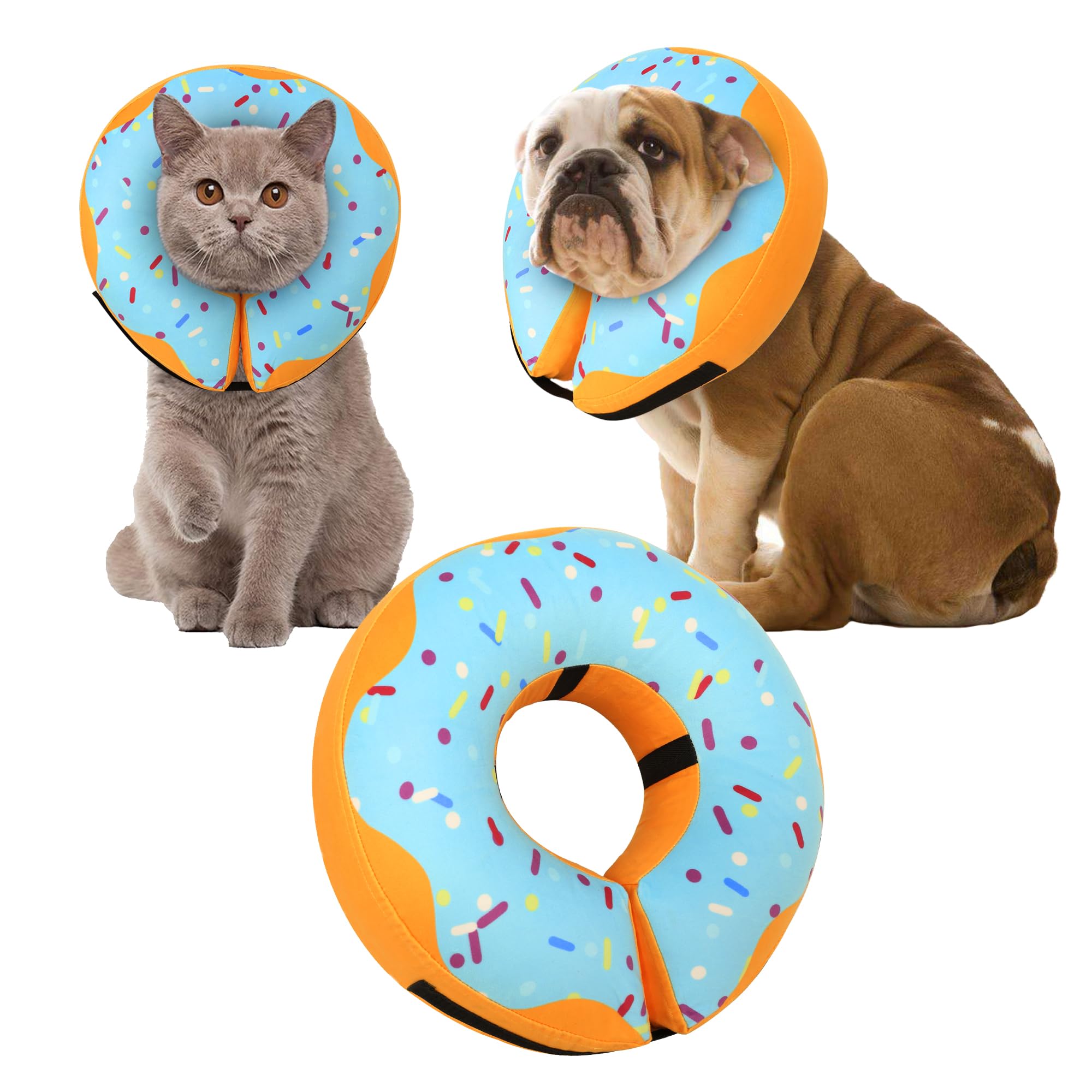
Cneo Recovery Donut

Small cat necks

Our Score 8.4/10
Check Price

Worth Noting

  • Inflation can be slow and firmness varies
Closure
Zipper
Neck Size
8 inches
Cover Material
Fabric
Water Resistance
Waterproof
Read the full review

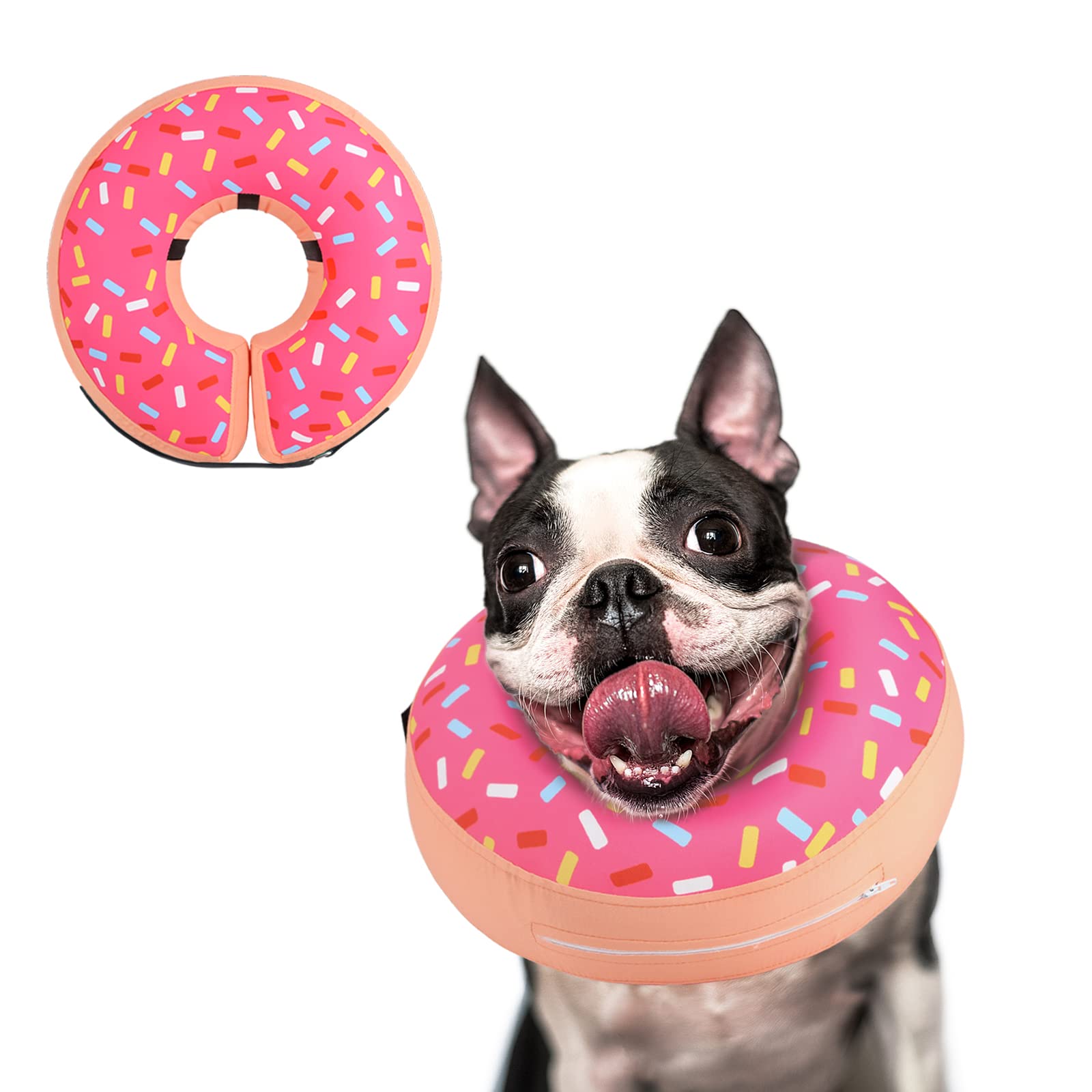
The Cneo's eight-inch neck is what earned it the top spot. A cat needs a ring that sits close without riding up, and this is one of the two eight-inch necks here. It is also one of the few collars here listed for both cats and dogs, which makes the sizing claim easier to trust. The cover is soft fabric rather than slick plastic, and the adjustable straps give you room to fine-tune the fit.

We paid close attention to how much the donut actually blocks. It sits around the neck like a padded ring, so it interferes with a cat turning its head toward a neck, head, or shoulder wound. It is not a barrier in front of the belly. A cat with a spay incision or a rear-leg wound can still curl around the ring, and that is the limit we want buyers to understand before ordering.

The daily-use details are strong. The outer shell is waterproof, and the fabric cover is gentle against fur. We found the zipper faster to manage than a long hook-and-loop strip when a cat is squirming, and the whole cover wipes down without soaking through. That wipe-clean surface makes it the easiest of these to live with between checks.

Bottom line: We recommend the Cneo for most cats: the eight-inch neck, soft cover, and easy-clean shell make it the best default, especially for neck and front-body recovery.
2

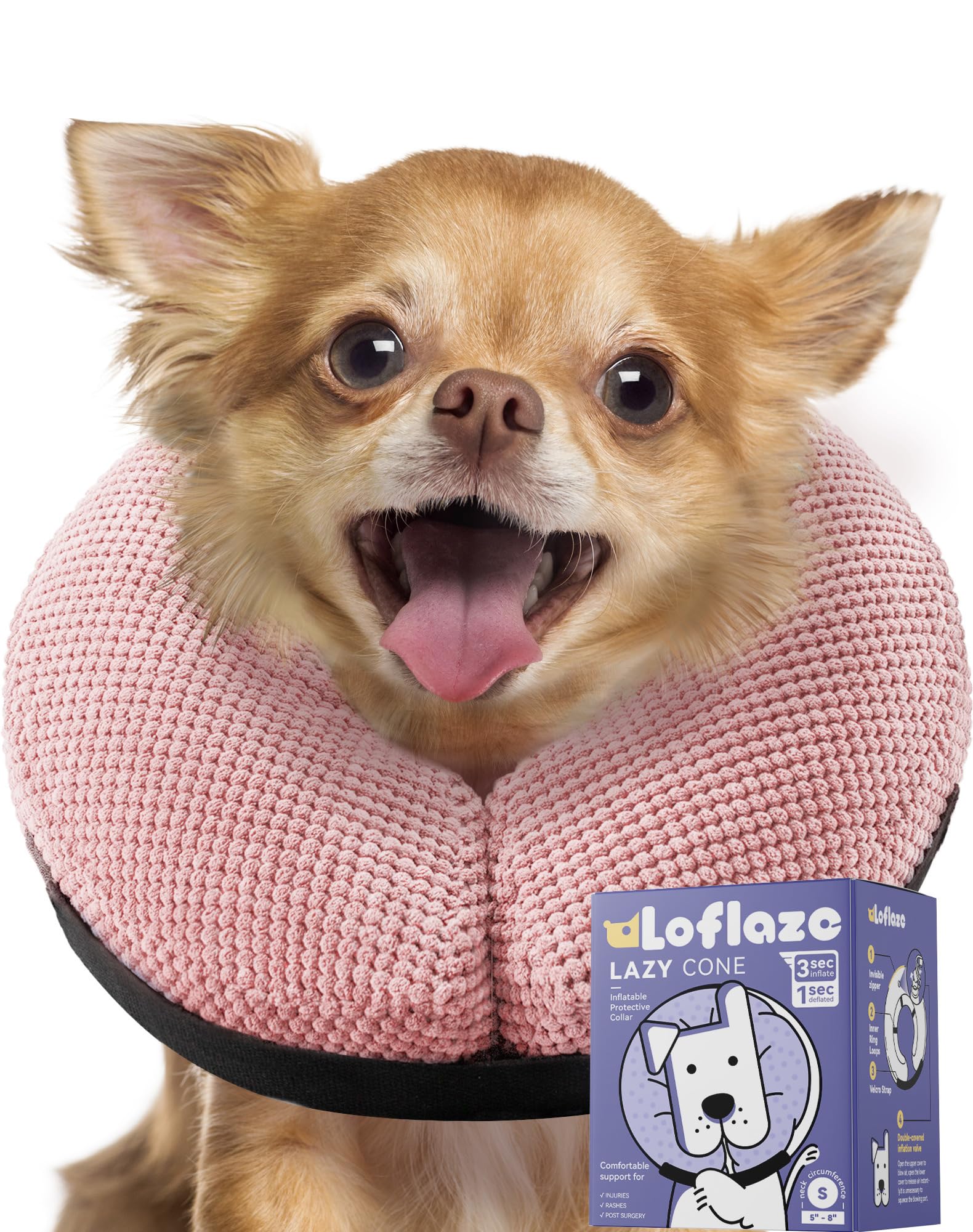
Loflaze Soft Inflatable Collar

Loflaze Soft Inflatable Collar

Budget recovery

Our Score 8.4/10
Check Price

Worth Noting

  • Can be punctured by a determined chewer
Closure
Pull-On
Neck Size
8 inches
Cover Material
Cotton
Inflation Valve
Double-covered
Read the full review

The Loflaze is the least expensive collar here, and it spends that advantage on a genuinely plush cover. The 3D fabric is soft enough that it reads more like a small neck pillow than a medical device, and the eight-inch neck gives a petite cat a closer starting point than the nine-inch rings. The double-covered inflation valve is meant to make filling easier without pressing hard.

We like that the pull-on design keeps the collar simple—there is no zipper to catch fur and no long strap to wrestle with—but it also means the fit has to do more of the work. On a cat that is between sizes, the ring can shift, and the cotton cover is not water resistant. A damp wipe handles small messes; a cat that drools or dribbles water will need more frequent cleaning.

What surprised us is how much the soft cover changes the experience: the collar does not clatter, it does not block forward vision, and a cat can settle into it without the plastic-cone panic. It is still a donut, not a full-body shield. For a front-end wound on a small cat and a short recovery, it covers the basics for less than the other picks.

Bottom line: We recommend the Loflaze as the budget pick: the eight-inch neck suits petite cats and the plush cover is soft from the first wear.

3

Supet Inflatable Collar

Supet Inflatable Collar

Front-body recovery

Our Score 8.2/10
Check Price

Worth Noting

  • Inflation can be inconsistent
Closure
Hook & Loop
Neck Size
9 inches
Outer Fabric
Non-stick fabric
Water Resistance
Water resistant
Read the full review

An inflatable collar is at its most useful when the wound is on the neck, head, or front of the body. That is the case the Supet makes: its nine-inch ring sits around the neck like a padded bumper and keeps the cat from folding back toward the stitches. The non-stick outer fabric is the detail that sets it apart from plusher covers—fur and crumbs wipe away instead of clinging, which matters over a week or two of recovery.

We appreciated the adjustable hook-and-loop closure and the inner loops for threading a daily collar. The shell is water resistant, so a damp cloth handles most messes, and the ring is light enough that a cat can walk without the collar dragging. It is still a nine-inch neck, so a petite cat can swim in it; measure before you order rather than sizing by breed.

The Supet is built for the messy middle of recovery rather than for looking cute on a shelf. The roomy neck and easy-clean cover make it simpler to check the incision without fighting the collar back into place. It is not the softest cover in this group, and it will not stop a cat from reaching a flank or belly incision. For a larger cat with a front-end wound, those are reasonable trade-offs.

Bottom line: We recommend the Supet for neck and front-body recovery: the non-stick cover wipes clean, and the nine-inch ring gives a larger cat room to move.

4

BENCMATE Inflatable Collar

BENCMATE Inflatable Collar

Wider cat necks

Our Score 8.0/10
Check Price

Worth Noting

  • Outer fabric is not water resistant
Closure
Zipper
Neck Size
9 inches
Fill Material
PVC
Water Resistance
Not water resistant
Read the full review

The BENCMATE is the collar to try when the Cneo's eight-inch ring looks too snug. Its nine-inch neck gives a bigger cat room, and the adjustable closure lets you take up some slack. The inner fixation straps are the detail we noticed first: you can thread your cat's everyday collar through them, which gives the donut a second anchor instead of relying on the outer strap alone.

That extra anchor matters on cats, which are experts at backing out of things. We also appreciate the zipper closure, which goes on quickly and stays where you set it, and the soft cover keeps the ring from feeling like a piece of medical equipment. A determined cat can still work the ring off, and the donut shape is not a barrier to a belly or rear wound.

Where it earns its place is on a cat that needs more neck room but still wants to eat, drink, and sleep without a plastic wall in front of its face. We were struck by how much the soft ring disappears into ordinary movement: it does not block forward vision like a cone, and it does not clatter against a food bowl. For an average or larger cat with a front-end wound, it is a sensible step up in coverage.

Bottom line: We recommend the BENCMATE for cats with a neck near nine inches: the inner collar straps add security, and the soft cover is easier to live with than a plastic cone.

How We Tested Inflatable Cat Collars

We started with every inflatable collar we could find that shipped in more than one size, since a single-size ring is a coin flip on a cat, then cross-checked sizing charts, valve style, cover materials, and price against what buyers actually reported. That left 14 collars, tested over four months on cats coming out of spays and dentals, from kittens to a very solid 16-pounder.

Every collar was matched to a cloth-tape neck measurement before it went on, and then we watched. Did it stay put when the cat launched off the couch, or rotate until the seam sat under the chin? We timed how long one person needed to inflate and fit it on a wriggling cat, then squeezed it again the next morning to see which valves had gone soft overnight.

Overnight is where incision protection got settled: a camera on the cat, plus a look at the incision line each morning for redness, moisture, or fresh licking. We tracked softness across a full week — whether the cat slept in the collar, ate with it on, and whether the cover pilled or stayed damp from grooming — and inspected seams and valves for bite marks on the cats that tested them with their teeth. Last, we washed every cover the way its label instructed and weighed what a two-week recovery actually costs against the price tag.

How to Choose the Right Inflatable Collar for Cats

Measure the Neck First

Run a soft tape around the base of your cat's neck where a collar normally sits. The products here list neck sizes of 8 inches or 9 inches, so start with the closest match rather than the breed or weight on the label. A ring that is too loose can rotate, slip, or let a paw through; one that is too tight is worse. Check that the closure can be adjusted without pinching skin or fur.

For a cat that measures near 8 inches, start with an 8-inch collar like the Cneo or Loflaze; for a fuller neck, the 9-inch BENCMATE or Supet gives more room. If your measurement falls between sizes, choose the collar with an adjustable strap and test it supervised before you rely on it.

Match the Shape to the Wound

The donut works by putting a soft bumper between the cat's head and the front of its body. That makes it useful for neck, head, shoulder, and some front-leg wounds. It is not a wall in front of the belly. A cat with a spay incision, a flank wound, or a rear-leg injury can often curl around the ring and reach the area, especially a flexible cat.

If the wound is behind the front half of the body, choose a cone or a recovery suit your vet approves instead of asking a donut to do a job it cannot. For a front-end wound, a donut can be the more comfortable option.

Check the Air Chamber and Cover

An inflatable collar is only protective while it is firm. Look for a valve that fills without a fight and a chamber that holds pressure through a nap, a meal, and a night's sleep. Check the collar before you put it on and again after a few hours; a ring that has gone soft is not blocking much.

The cover matters too. A removable or wipe-clean outer makes recovery less unpleasant, and water resistance helps with drool, food, and small spills. The Cneo is waterproof, the Supet is water resistant, and the BENCMATE and Loflaze need more careful spot cleaning.

Plan for Security and Supervision

Closure style changes how secure the collar feels in daily use. Zippers are quick and tidy, hook-and-loop is easy to adjust, and pull-on designs depend almost entirely on a close fit. Inner loops that let you thread a daily collar through the donut add a useful second anchor, particularly for a cat that twists and backs out of harnesses.

None of these collars is escape-proof. Test one for a short supervised session, then check whether your cat can reach the wound, catch a claw in the cover, or work the ring off. If it can, size down, tighten the fit, or switch to a cone. A soft collar that stays on is better than a clever one on the floor.

Frequently Asked Questions

Final Verdict

For most cats, we recommend the Cneo. Its eight-inch neck gives smaller cats a closer fit, the waterproof cover wipes clean, and the zipper is simple to manage. If your cat measures closer to nine inches, choose the BENCMATE for the extra room and inner collar straps. For a belly or rear incision, a donut is not the right tool; use a cone or recovery suit your vet approves.