Grooming

Best Cat Toothpaste of 2026

Most cats have some degree of gum disease by the time they turn three, and the first sign is usually the breath — that sour, metallic waft when they yawn six inches from your face. Brushing is the fix, but a cat is not a dog, and the paste has to taste good enough that they'll tolerate it on their tongue for the thirty seconds it takes to do any good. I've brushed my two cats' teeth for years — one a senior with strong opinions, one a former stray who'd never seen a toothbrush — so I can usually tell within a single swipe whether a paste is going to fly.

Over the past four months, my team and I put 14 cat toothpastes through nightly brushings, and the pattern was hard to miss: flavor decides everything else. A paste the cat won't sit still for can't clean a thing, no matter what the label promises about tartar and whitening. What follows are the ones that actually got used up in our house, plus a couple the dog next door kept trying to steal.

1

C.E.T. Enzymatic Toothpaste

Top Pick
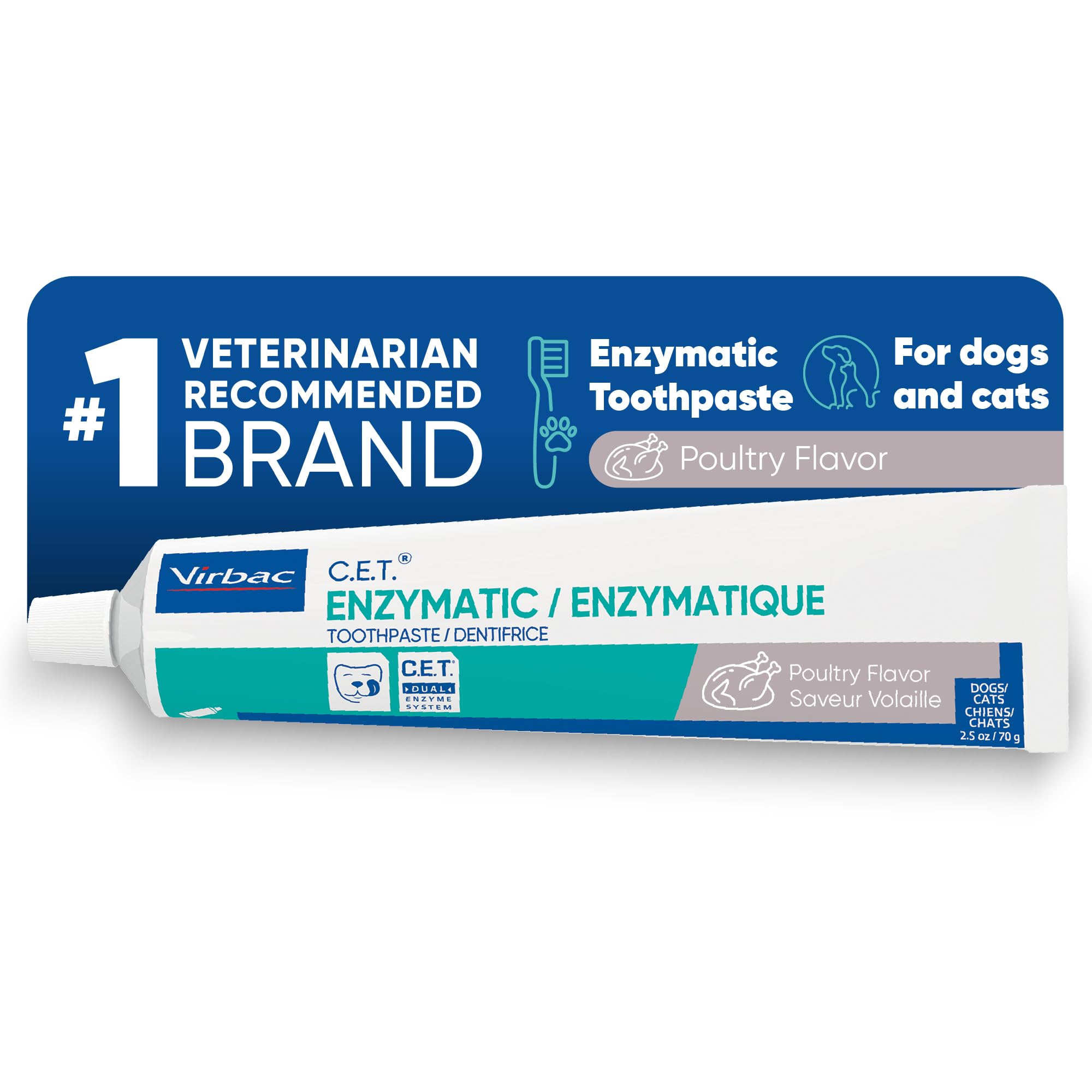
C.E.T. Enzymatic Toothpaste

Everyday cat brushing

Our Score 9.2/10
Check Price

Worth Noting

  • Requires a toothbrush for best results
Flavor
Poultry
Tube Size
2.5 oz
Application
Toothbrush
Formulated For
Dogs and cats
Read the full review

The C.E.T. tube is the one we reach for first when a cat will tolerate a toothbrush at all. Virbac builds it around an enzymatic system and a poultry flavor, and that combination is why it earns our top spot: the paste is non-foaming and safe for pets to swallow. In our testing, the practical question was whether a cat would stay put for a few seconds of brushing, and the poultry flavor gave us a better opening than the beef flavor in this group. It also carries the strongest veterinary-brand claim in this group.

Flavor is not a guarantee. Some cats turn their noses up at poultry, and the same tube that makes brushing easier for one cat can turn into a negotiation for another. What we appreciate is the texture: it squeezes out of the tube without a fight, and because it's non-foaming, a cat that swallows it isn't getting a mouthful of suds. The 2.5-ounce tube is a sensible size for a single cat, though a multi-cat home will go through it quickly.

Where it wins is the balance. It doesn't ask you to buy a specialty gel or learn a new routine; it's a straightforward paste that works with the brush you already have. We keep it as the default for cats that accept a few seconds of brushing, and we save the brushless options for the cats that don't. If your cat already likes poultry, this is the easiest place to start.

Bottom line: For cats that will accept a brush, the C.E.T. paste is our default: a poultry-flavored enzymatic formula that's safe to swallow and easy to work into a routine.

2

ZYMOX Oratene Brushless Gel

ZYMOX Oratene Brushless Gel

Brush-resistant cats

Our Score 9.2/10
Check Price

Worth Noting

  • Less mechanical cleaning than a brush
Texture
Clear gel
Tube Size
2.5 oz
Application
Brushless or finger
Formulated For
Dogs and cats
Read the full review

Brushing a cat is often less a dental chore than a negotiation, and the ZYMOX Oratene gel is built for the cats that end the negotiation by clamping their mouths shut. It's a clear, brushless gel: you can apply it with a finger or a toothbrush, and the label describes no need to brush or rinse it away. That makes it the pick we reach for when a cat will tolerate a finger along the gum line but not a bristled brush.

What we like most is the low-drama application. The gel is non-drying and doesn't cause excess salivation, which matters when you're trying to keep a cat calm enough to finish. It's also a milder option than the poultry pastes, so it's a sensible first try for a cat that turns up its nose at chicken. The trade-off is mechanical cleaning: a brushless gel can help with freshness and surface cleaning, but it won't do the same job as bristles along the gum line. For a cat that truly won't tolerate a brush, that's a trade worth making.

The 2.5-ounce tube is a standard size for daily use, and the clear gel is easy to see on a finger or brush. We keep it for the cats that make brushing impossible, and we accept the extra effort of wiping it along the gum line because the alternative is no cleaning at all.

Bottom line: When a cat fights the toothbrush, we reach for the ZYMOX gel: it applies with a finger, skips rinsing, and gives up some mechanical cleaning in exchange for actually getting used.

3

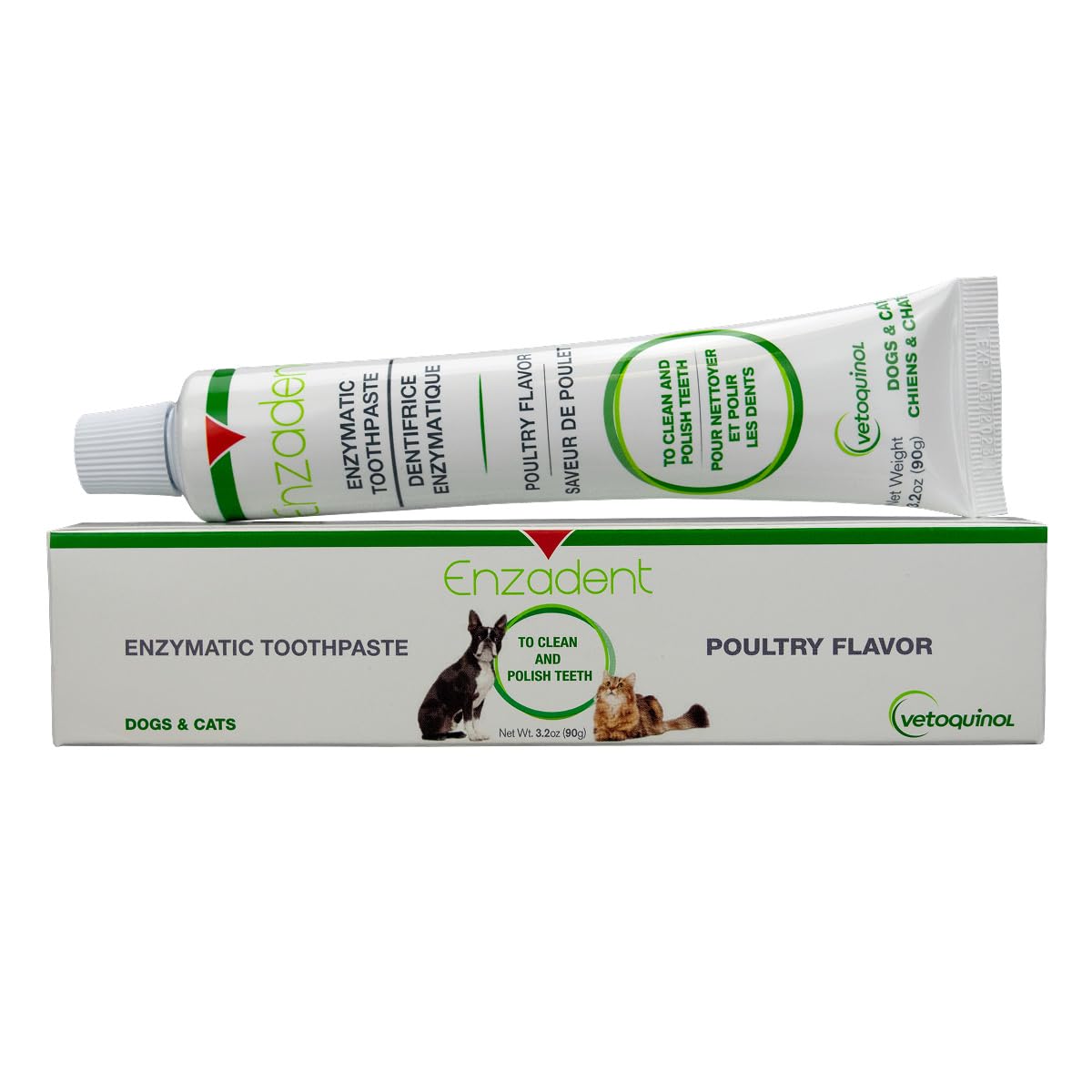
Enzadent Enzymatic Toothpaste

Enzadent Enzymatic Toothpaste

Multi-cat homes

Our Score 9.2/10
Check Price

Worth Noting

  • Requires a toothbrush
Flavor
Poultry
Tube Size
3.2 oz
Application
Toothbrush
Formulated For
Dogs and cats
Read the full review

The Enzadent paste looks like a straightforward alternative to our top pick: same poultry flavor, same enzymatic brief, but a larger 3.2-ounce tube. That extra paste is the reason we keep it in the rotation for multi-cat homes. If you're brushing two or three cats every night, the tube lasts longer and the cost per ounce is easier to justify.

The texture is a soft paste that squeezes out without a fight, and the poultry flavor is the same category that works for many cats. We found it easy to load on a small brush, and because it's non-foaming, you don't have to rinse. The catch is the same one that applies to every poultry paste here: a cat that doesn't like chicken won't be won over by a different label. The flavor is the whole sell, so start with a small amount before committing to the larger tube.

What earns it a runner-up spot is the size-to-price math. It's not a better formula than the C.E.T. paste, and it doesn't carry the same veterinary-brand claim. But for a household brushing more than one cat, the larger tube is the practical choice. We reach for it when the top pick is running low and we don't want to ration the last few squeezes.

Bottom line: Multi-cat homes get the most from the Enzadent tube: the same poultry approach as our top pick in a larger 3.2-ounce size, at a lower cost per ounce.

4

Petsmile VOHC Toothpaste

Petsmile VOHC Toothpaste

VOHC-accepted care

Our Score 9.0/10
Check Price

Worth Noting

  • Premium price
  • Beef flavor is a narrower bet for cats
Flavor
London Broil
Tube Size
4.2 oz
Acceptance
VOHC accepted
Formulated For
Dogs and cats
Read the full review

The VOHC acceptance is what sets Petsmile apart on this list. It's the only pick here with that credential, and the formula is built around Calprox, a proprietary calcium-and-phosphate blend the company describes as cleaning, whitening, and remineralizing enamel. The London Broil flavor is designed to be treat-like, and the paste can be used without a brush if your cat won't sit still.

We wanted to like this one more than we did. The no-brush instruction is appealing, and the tube is generous at 4.2 ounces. But the texture is a thick liquid rather than a paste, which is a different feel on the brush. For a cat that already likes beefy flavors, it's a reasonable choice. For a finicky cat, we start with the C.E.T. tube.

The VOHC credential is still worth something: it tells you an independent body reviewed the formula against its standards, which is a meaningful check to have. We just don't think that credential outweighs the flavor risk for every cat. If your cat is a beef eater and brushing is a struggle, this is the premium alternative we point to; otherwise, the poultry pastes are the easier sell.

Bottom line: Petsmile earns a place for beef-loving cats and households that want a VOHC-accepted, no-brush option, as long as the premium price makes sense.

5

Beaphar Toothpaste

Beaphar Toothpaste

Large-tube value

Our Score 8.8/10
Check Price

Worth Noting

  • Flavor may not suit every cat
Flavor
Liver
Fluoride
Fluoride-free
Tube Size
3.53 oz
Formulated For
Dogs and cats
Read the full review

A 100-gram tube is the first thing you notice about Beaphar's cat-and-dog toothpaste. That's roughly double the 2.5-ounce tubes here, and it changes the math for a multi-cat household or a household that brushes daily. The formula is straightforward: liver flavor, anti-plaque and anti-tartar claims, and no fluoride. We like that it doesn't ask you to buy a tiny tube every few weeks.

Liver is a sensible choice for cats because it's a meaty flavor they often recognize, and the no-fluoride formula keeps the ingredient list simple. The catch is the size: you're buying a lot of paste before you know whether your cat will accept it. If your cat already accepts brushing, the big tube is a smart buy; if not, start with a smaller tube of something else.

What we appreciate most is the no-fluoride formula and the sheer amount of paste. It's not the most exciting pick, and it doesn't have the veterinary-brand story of the C.E.T. tube. But for a household that has already mastered brushing and wants to stop thinking about reordering, the big Beaphar tube earns its place.

Bottom line: The Beaphar tube is our value pick for daily brushers who want a big, fluoride-free liver-flavored paste and don't need a trial-size commitment.

How We Tested Cat Toothpastes

We started by pulling every feline-specific paste we could find — enzymatic gels, no-brush foams, and a few kits that come with a finger brush — along with several pastes labeled for both cats and dogs, then read the ingredient panel before anything else. Anything listing xylitol, fluoride, or human-grade detergents came off the list immediately. From there we filtered by protein source, cost per ounce, and whether the tube had a nozzle narrow enough to dose onto a brush one-handed.

That left 14 pastes, which we used nightly for four months on my two cats and a rotating foster or two. Testing happened where brushing actually happens: on the bathroom counter after the evening feed, one hand steadying a cat and the other working a brush, and occasionally at 11 p.m. when a cat who'd refused earlier finally settled. We noted how eagerly each one licked the paste off the brush versus turning their head, how many seconds they'd hold still before a paw came up, and how much ended up smeared on the counter instead of in the mouth.

Taste and tolerance were scored as one thing — the pastes that won were the ones both cats came back to, with no drooling, lip-smacking, or pawing at the mouth afterward. For effectiveness and whitening, our vet tech checked tartar along the gumline at the start and end of testing, and I took weekly photos of the same canine teeth under the same bathroom light. Breath quality got the least scientific test and the most honest one: I smelled their breath the next morning before feeding. Ease of use came down to whether I could get a pea-sized dab onto a finger brush while holding a squirmy cat, and value to how many doses a tube actually gave up. A coworker's dog sampled the dual-labeled pastes to see which would survive a multi-pet house.

How to Choose the Right Cat Toothpaste

Start With a Cat-Safe Formula

The first check is species, not flavor. A toothpaste labeled for dogs and cats is fine for a cat, but a dog-only paste is not a shortcut; the label should explicitly include cats. Look for a formula that is safe to swallow and doesn't require rinsing, because cats will swallow some of it no matter how careful you are. Human toothpaste is not a substitute: it can contain fluoride, xylitol, or foaming agents that cats should not ingest. If a listing is vague about species, treat that as a reason to check with your vet before buying.

Match the Flavor to Your Cat

Cats tend to accept poultry and liver more readily than mint or fruit, but there's no universal favorite. A poultry paste like the C.E.T. or Enzadent tube is a sensible first try; a liver-flavored paste like Beaphar is a good alternative for a cat that turns up its nose at chicken. Beef flavors can work, but they're a narrower bet, which is why we treat Petsmile's London Broil as a premium option rather than a default. Buy the smallest tube that makes sense for a trial, and don't stock up before your cat has voted.

Decide How Much Brushing Your Cat Will Tolerate

A toothbrush does more mechanical cleaning than a brushless gel, but a brush you can't use is worth less than a gel you can. If your cat already accepts a small brush, stay with a paste and a soft-bristled brush. If it clamps its mouth shut, a brushless gel like ZYMOX lets you apply with a finger and skip the rinsing step. We think of brushless gels as a bridge, not a perfect substitute: use them to build tolerance, and add a brush when your cat allows it.

Buy for the Routine, Not the Label

Daily use is what makes toothpaste worth buying, so tube size and cost per use matter more than the sticker on the shelf. A 2.5-ounce tube is a reasonable single-cat size; a 3.2-ounce or 100-gram tube makes more sense in a multi-cat home or for a household that has already built a daily habit. Toothpaste is not a treatment for existing dental disease, and it won't replace a veterinary cleaning. If your cat has bad breath that persists, bleeding gums, or pain, book a dental exam rather than switching pastes.

Frequently Asked Questions

Final Verdict

We recommend starting most cat households with the C.E.T. Enzymatic Toothpaste. It pairs a poultry flavor many cats accept with a simple enzymatic formula that's safe to swallow, and it works with the brush you already have.

If your cat won't tolerate bristles, we point you to the ZYMOX Oratene gel; it sacrifices some mechanical cleaning to make daily care possible. Multi-cat homes can size up to the Enzadent tube, and Beaphar is the value buy for cats that already like liver.