Carriers & Travel

Best Cat Carriers of 2026

The moment the carrier comes out of the closet, most cats turn to liquid and vanish under the bed — and some of that dread is the carrier's own fault. A door that drops open with a clatter, a bottom that sags under a twelve-pound cat, a zipper that splits across the top: any one of those can turn a ten-minute vet trip into a cat loose in a parking lot. The right carrier opens quietly and wide, holds its shape when you lift it, and gets a nervous animal inside without a wrestling match.

We've spent the past four months loading 13 carriers with cats of very different temperaments, from a placid senior who sleeps through the drive to a kitten who treats every mesh wall as a climbing surface. What separated the good ones wasn't glamorous: hardware that doesn't flex, zippers that stay shut, and a frame you can unclip so the top lifts off at the clinic. Measure your cat from nose to tail base and compare that to the interior dimensions, not the exterior number on the box. The picks below are the ones that held up.

1

Vceoa Pet Carrier

Top Pick
Vceoa Pet Carrier

Everyday vet trips

Our Score 9.6/10
Check Price

Worth Noting

  • Interior height is tight for big cats
  • Pad is hand wash only
Entry
Top and side
Dimensions
17.5"L x 11"W x 11"H
Carrier Weight
2.18 lb
Maximum Weight
16 lb
Read the full review

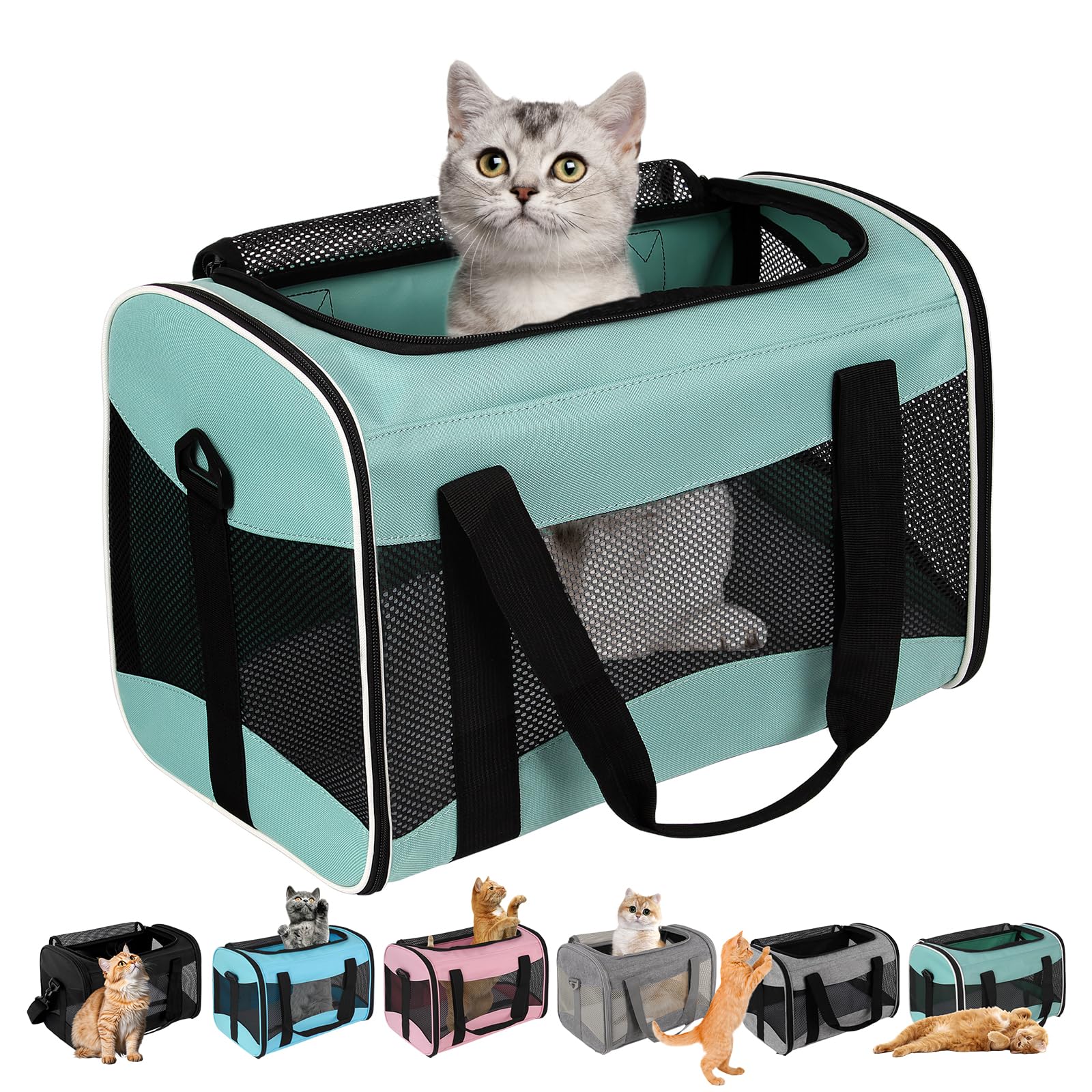
Cats that brace against a front door go into this carrier through the roof instead. The top panel unzips into a wide opening, so you lower the cat in and close it up before it has time to plant its feet — and that one detail is why this is the carrier we point most people toward. Everything around the door is sensible too: mesh on three sides, locking zippers, a fleece pad over a removable base insert, and a shell that folds flat enough to keep in a closet.

Size is where buyers get caught. The 16-pound ceiling reads as generous, but 17.5 by 11 by 11 inches is what actually decides the fit: a long cat needs to turn around, and 11 inches of interior height is snug for a big tom. Measure nose to the base of the tail, add a couple of inches, and compare that with the inside of the bag — a lanky 14-pound cat and a loaf-shaped 14-pound cat do not fit the same carrier.

Living with it is pleasantly uneventful. The pad lifts out for washing, the base insert stops the floor sagging when a cat shifts its weight, and the shoulder strap makes the walk from the parking lot to the clinic door a one-hand job. It is built to slide under most cabin seats, though the airline's own under-seat measurement still decides that, not the product page. Leave it open on the floor between trips and it stops being a carrier at all, because cats nap in it — which is half the battle next time you need to load one.

Bottom line: Our default pick: a top door that gets a resisting cat in without a fight, plus a washable pad and a fold-flat shell for ordinary vet trips and cabin travel.
2

Pecute Expandable Cat Backpack

Pecute Expandable Cat Backpack

Hands-free walks

Our Score 9.4/10
Check Price

Worth Noting

  • Rated only to 11 pounds
Extras
Expandable back panel
Dimensions
12.6"L x 10.2"W x 16.5"H
Carrier Weight
3.4 lb
Maximum Weight
11 lb
Read the full review

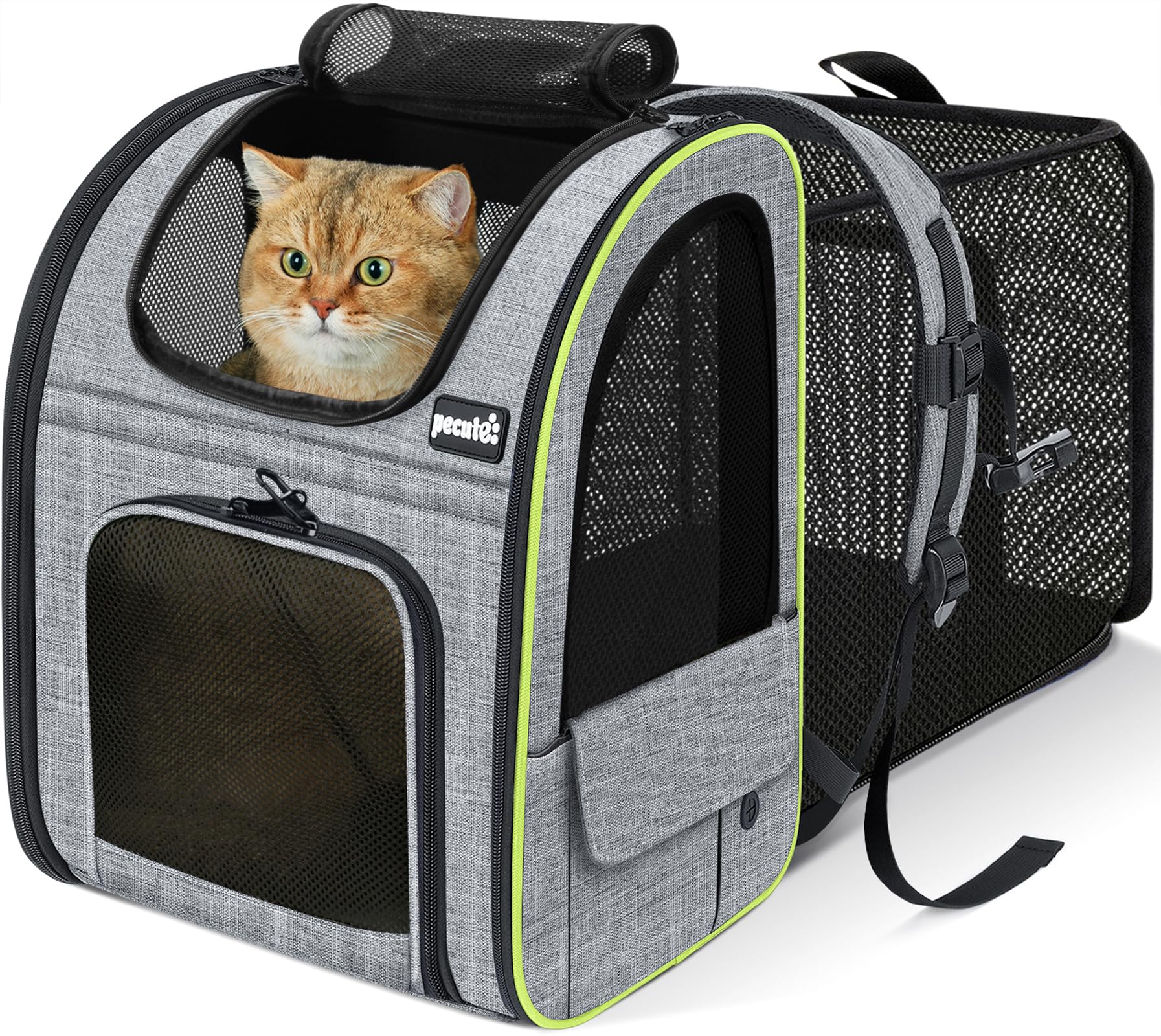
The back panel unzips and folds out, roughly doubling the depth of the bag, and that is what turns this from somewhere to put a cat into somewhere a cat can stretch. Set the pack down at a picnic table, open the panel, and the cat has room to stand and turn instead of just sitting. It is the backpack we recommend first, and at 3.4 pounds with padded shoulder straps and a back pad it is also the easier of the two here to wear.

The cloth is Oxford weave, which should shrug off scratching better than mesh alone, and the zippers lock together so a cat cannot nose them open. Inside there is a clip-on safety rope for a harness and a removable pad, plus breathable mesh on all four sides. It stands up on its own when you set it down, which matters more than it sounds when you are opening a car door with a cat on your back.

The ceiling is 11 pounds, low enough to rule out a lot of adult cats, and the load sits high on your back. On a twenty-minute walk to the coffee shop that is fine; on a long hike with a heavier animal it is not. We treat backpacks as the hands-free option for confident cats that like to see out, not as a replacement for a carrier that goes under a plane seat.

Bottom line: Our backpack pick: an expandable panel that gives a carried cat real room, on padded straps that stay comfortable on a walk.

3

Top tasta Cat Carrier

Top tasta Cat Carrier

Budget backup

Our Score 9.4/10
Check Price

Worth Noting

  • Zippers can stick under load
Warranty
2 years
Dimensions
17"L x 11"W x 11"H
Carrier Weight
1.87 lb
Maximum Weight
15 lb
Read the full review

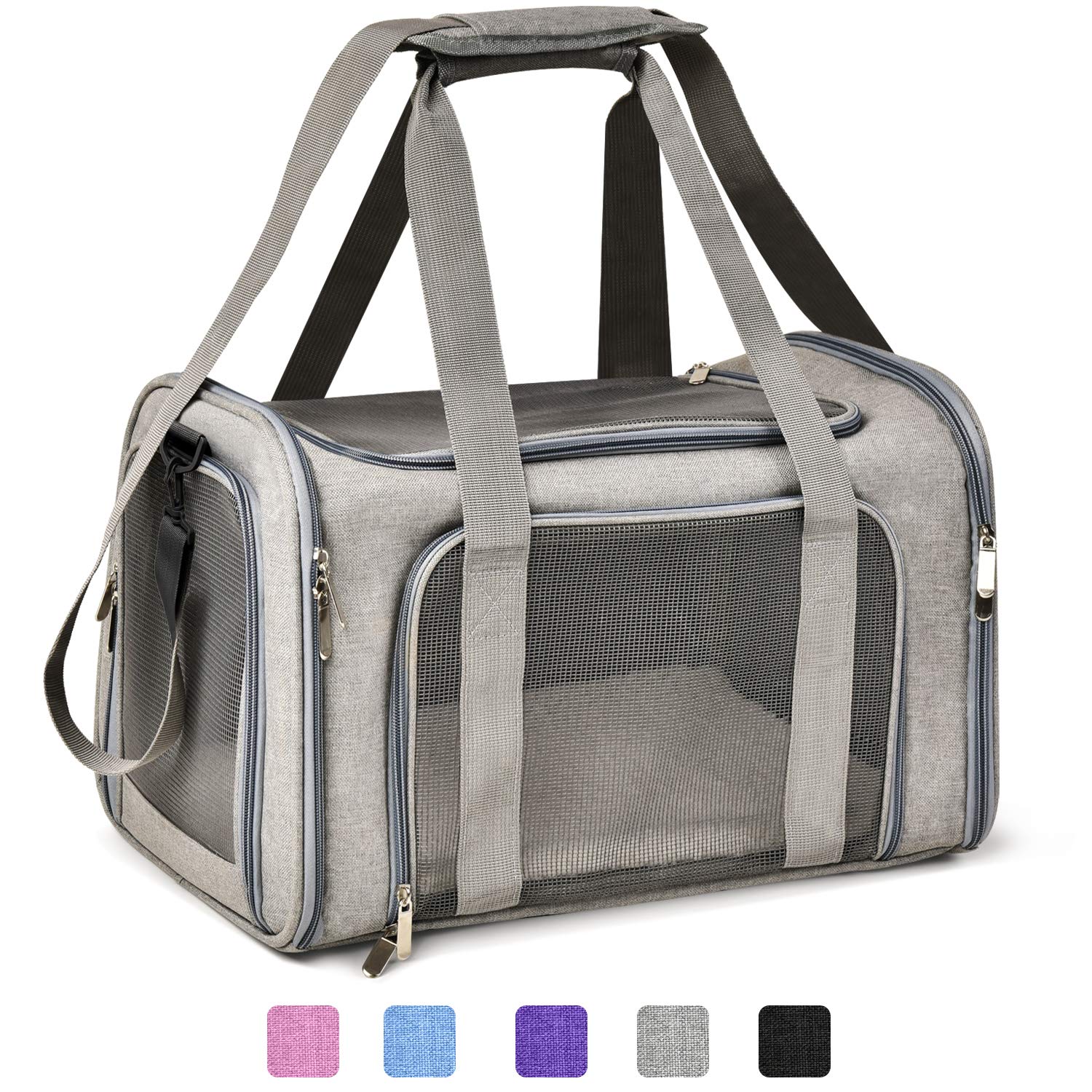
The footprint is identical to our top pick — 17 by 11 by 11 inches, top and side entry, a removable mat — but the frame is a steel ring rather than a stitched edge, so the mouth of the bag stays open while you are loading a cat.

The hardware is where the two part company. Metal zippers run both openings, the included mat is wool rather than fleece, and the bag carries a two-year warranty, longer than anything else on this page. It pops open and zips together in seconds, which is the sort of thing you appreciate at six in the morning with a cat under one arm.

We expected a bare foam pad and got a wool one, and we expected the steel ring to make the bag awkward to store and it does not — it folds nearly as flat as the cheaper carriers. What keeps it off the runner-up list is the hardware that matters most: the zips are the least settled part of the design, and a stuck pull with a cat inside ends a trip. As a budget stand-in for our top pick, or a second bag in a different color, it earns its place.

Bottom line: A budget alternative to our top pick, with the same footprint, a steel-ring frame, and a two-year warranty.

4

Amazon Basics 2-Door Hard Carrier

Amazon Basics 2-Door Hard Carrier

Large cats, chewers

Our Score 9.2/10
Check Price

Worth Noting

  • Top door latches can need two hands
  • Needs assembly with screws first
Doors
Front and top
Dimensions
22.8"L x 15"W x 13"H
Carrier Weight
4.54 lb
Maximum Weight
20 lb
Read the full review

Four screws bolt the top and bottom shells of this kennel together, and if you have ever watched a cat pop a soft carrier open in a waiting room, that sentence is the whole pitch. The plastic is molded, the doors are steel wire, and the halves are screwed as well as clipped, so the escape route a determined cat usually finds simply is not there.

At 22.8 by 15 by 13 inches it is the roomiest carrier in this group, sized for cats and small dogs in the 12-to-20-pound range. There is genuine space for a big cat to stand, turn, and lie down, and ventilation runs along the sides, top, and back. The trade is that a hard shell does not give: at this length it travels by car rather than under a cabin seat, and a small cat will slide around inside unless you add a blanket.

We rate it as the pick for a cat that has already destroyed one bag. A chewer or a panic-scratcher gets nowhere against wire and molded plastic, and the top door lets you lower the cat in and latch it without a wrestling match. Carrying a 20-pound cat in a rigid box is more work than slinging a tote over a shoulder, and it takes a shelf rather than folding into a drawer — that is what the durability costs you.

Bottom line: The one we choose for chewers and escape artists: a bolted hard shell, two doors, and enough room for a genuinely large cat.

5

Morpilot Cat Carrier

Morpilot Cat Carrier

Air travel

Our Score 9.2/10
Check Price

Worth Noting

  • Mesh and zips can give way to a cat that fights
Included
Folding bowl and dual-sided cushion
Dimensions
17.3"L x 12.2"W x 13.4"H
Carrier Weight
2.58 lb
Maximum Weight
16 lb
Read the full review

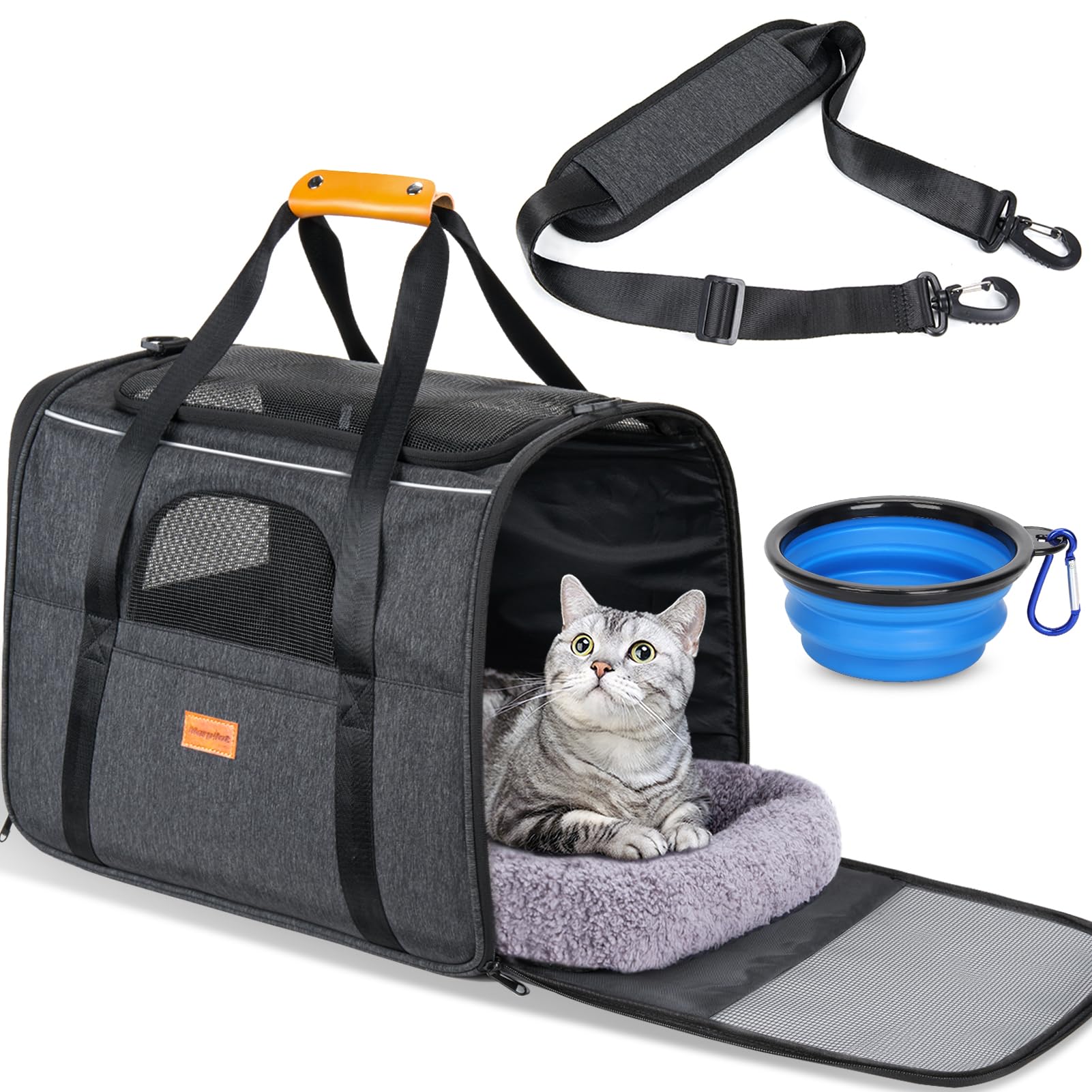
A folding water bowl and a cushion with a cool side and a warm side come in the box — small extras, but the bowl is the one that earns its place on a long drive, when offering water at a rest stop otherwise means improvising with whatever is in the cup holder.

This is the soft carrier we take when the trip involves a plane. At 17.3 by 12.2 by 13.4 inches it is taller and wider than the standard 11-inch bags, so a cat can sit up rather than crouch, and mesh covers roughly 40 percent of the surface for airflow and a view out. The zippers have a buckle backup, the pad flips for warm or cool weather, and the 12-month warranty runs longer than most here.

The height that helps on a plane is the height to check before you book, since 13.4 inches is on the tall side for an under-seat space once a cat is inside. A soft bag has some give, which is the point — but the airline's own measurement is the one that counts, and it is worth confirming before you reach the gate.

Bottom line: Our pick for flying: extra height, four-sided mesh, and a folding bowl that makes a long travel day easier on the cat.

6

Petmate Two Door Kennel

Petmate Two Door Kennel

Small cats

Our Score 9.2/10
Check Price

Worth Noting

  • Interior suits cats up to about 10 pounds
Doors
Front and top
Dimensions
19.4"L x 10"W x 12.8"H
Carrier Weight
16 oz
Maximum Weight
10 lb
Read the full review

This is the narrow one: 19.4 by 10 by 12.8 inches against the 15-inch width of the bigger hard-sided kennel here, and that tighter floor is what stops a small cat sliding around on a car seat. The shell is molded plastic, the front door is steel wire, and the squeeze latches are easy to work with one hand.

The second door, on top, is why we keep recommending it for vet visits. A cat that flattens itself against the back can be lifted out through the roof instead of dragged out the front, and the stay-dry moat at the base directs fluids away from the animal on the way home from a procedure. It is made in the USA from recycled plastic and carries a folding handle for the walk into the clinic.

Two things to weigh before you order. Plan around the 10-pound figure rather than the 15 mentioned elsewhere in the description, because the tighter number is the one that matches a 19-inch box. And the claim about airline specs is about cargo rather than the cabin, so this is checked baggage or the back seat, not a carry-on.

Bottom line: The compact hard kennel we suggest for a small cat: a top door for lifting out a resistant animal and a narrow floor that stays put in the car.

7

Henkelion Cat Carrier

Henkelion Cat Carrier

Spare carrier

Our Score 9.2/10
Check Price

Worth Noting

  • Straps and mesh are the first parts to fail
Entry
Top and side
Dimensions
17"L x 11"W x 11"H
Collapsible
Yes
Maximum Weight
15 lb
Read the full review

Four sides of mesh, two connecting loop handles, an adjustable shoulder strap, and a shell that folds flat enough to slide under a car seat — this is the bag that lives folded in the closet until the morning you need it.

It shares the 17-by-11-by-11 footprint of several carriers here, but the sizing guidance is unusually honest: ignore the shell, it tells you, and choose for a pet measuring 15 by 9 by 9 inches or less. That is a more useful number than a weight limit, and it explains why some 15-pound cats rattle around inside while others barely turn.

The openings are what we actually use. A top zip lets you lower a cat in, a side zip lets you reach in for a paw or a harness clip without opening the whole bag, and the flat-fold design means it goes back in the closet in three seconds. It is light on the shoulder and unobtrusive enough to carry on a crowded bus without announcing what is inside.

Buy it as the second carrier in a two-cat house, or as the one that stays folded in the trunk for unplanned clinic runs. It is not the bag we reach for with a cat that fights, and it is not the one for an animal at the very top of its 15-pound rating.

Bottom line: A fold-flat spare that handles everyday vet runs, sized by an honest 15-by-9-inch interior rather than a hopeful weight limit.

8

Texsens Bubble Backpack

Texsens Bubble Backpack

Window-gazing walks

Our Score 9.2/10
Check Price

Worth Noting

  • Zips can work loose under load
  • Clear panels leave a nervous cat exposed
Panels
Three PVC mesh sides
Dimensions
12.6"L x 11.4"W x 16.5"H
Chest Strap
Yes
Maximum Weight
18 lb
Read the full review

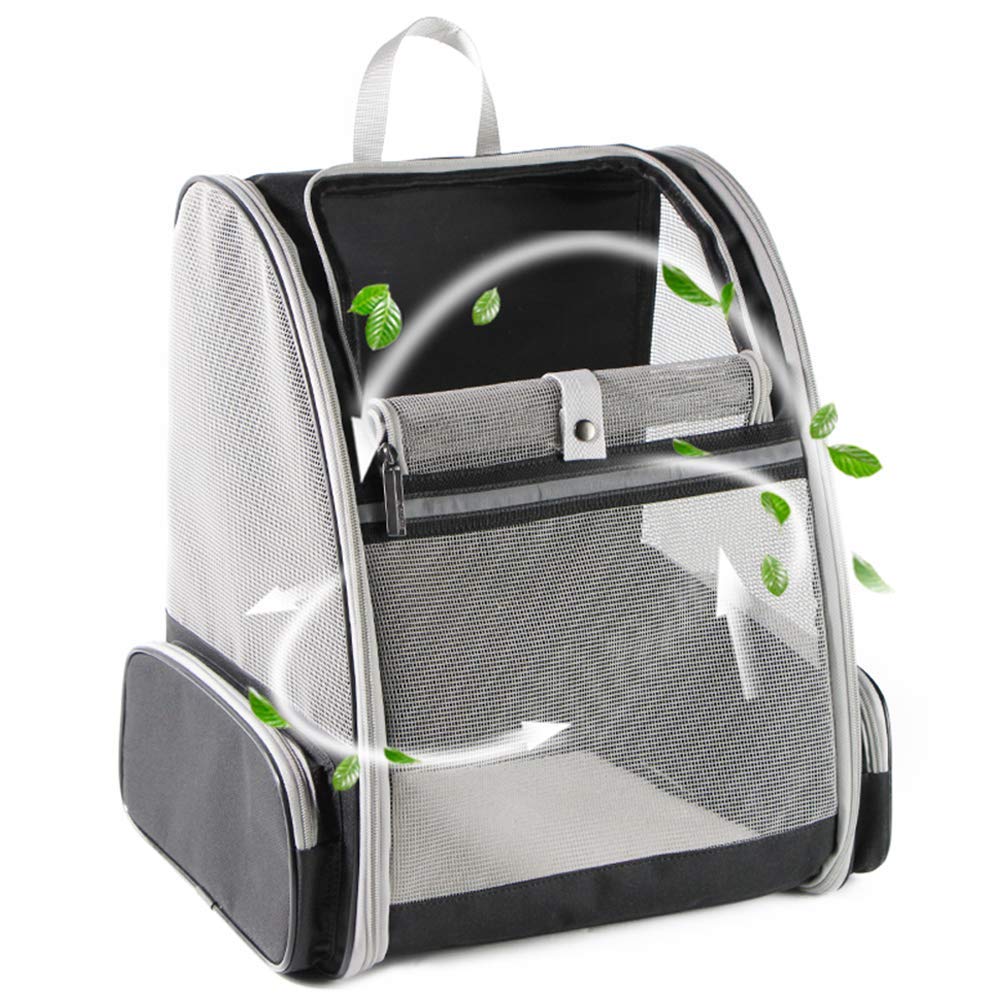
Three of the four sides are clear PVC mesh, so the cat rides along in a fish tank on your back — and for a cat that wants to watch the world go by, that is most of the appeal. You can see the ears swivel.

The rest is standard backpack thinking, done decently: a removable mat, side pockets, a shell that stands up on its own, and chest buckles that stop the shoulder straps sliding while the cat shifts its weight. It is rated for cats up to 18 pounds, well above the 11-pound ceiling on our other backpack pick, though the specification's own 8-kilogram recommendation is the figure to plan around.

The trade is privacy and balance. Clear panels mean a nervous cat has nowhere to hide, and a fifteen-pound animal in a top-heavy pack is a lot of weight high on your shoulders. For the vet we want a covered carrier; this one is for the walk, the farmers' market, and the hike where the cat is the attraction.

It is a lot of bag for the money, and the removable mat makes it easy to keep clean after a muddy outing. Check the zip pulls before every trip — a slider that works loose at hip height is a long way for a cat to fall, and a quick tug at the door is a cheaper habit than a repair.

Bottom line: The see-out backpack we hand to people whose cats already ride on their shoulders, within a generous 18-pound rating.

How We Tested 13 Cat Carriers

We started with every carrier we could find that published honest interior dimensions, then filtered for the things that decide whether one actually works: a door that opens from the top as well as the front, a shell that comes apart without tools, a base that doesn't fold under weight, and zipper pulls and latches that looked like they'd survive a few hundred appointments. We also weighed what each one's price bought — a rigid floor and metal hardware, or just nicer fabric over the same plastic frame. That left 13 carriers, which we lived with for four months.

Those four months were mostly ordinary life: vet visits, a six-hour drive, a move, and a lot of in-and-out of the car. Each carrier was loaded with a 15-pound bag of flour so the weight was identical from one to the next, carried up and down a flight of stairs by the handle and again by the shoulder strap, and set down hard on pavement the way you do when your hands are full. We timed how long each took to go from flat-packed box to ready, because a carrier that needs a video tutorial isn't one you'll reach for. We also loaded and unloaded a willing cat through every door configuration and noted which designs let you lower an animal in rather than push it through a hole.

Zippers and latches got the closest attention, since that's where carriers fail. We opened and closed every door 50 times, watched whether the pull tab drifted open on its own, checked whether a claw could catch in the teeth, and inspected the stitching at the corners where the fabric takes the most stress. We tested secure fit by pushing on the assembled sides to see if panels flexed apart and by listening for a positive click when a hard-shell locked shut. After each outing we wiped the interiors with a damp cloth and noted which fabrics held onto odor and which came clean.

How to Choose Cat Carriers

Size the carrier to your cat, not to a weight limit

No two 14-pound cats need the same box. A stated maximum load is the seller's ceiling for strap and seam strength, and it rarely accounts for length. The Henkelion's sizing guidance is the honest version of this: ignore the 17-by-11-inch shell and choose for an animal measuring roughly 15 by 9 by 9 inches inside it.

Measure nose to the base of the tail and floor to the top of the head, add about two inches in each direction, and compare that with the interior. An inch or two of spare room in every direction is the target; much more than that and the cat slides around on every corner.

Decide whether you need a top door

If your cat walks in on its own, a front door is enough. If it plants four feet and flattens, a top opening is worth paying for: you lower the cat in, close the zip or latch, and skip the wrestling match entirely. Our top pick, the Morpilot, the Petmate, and the hard-sided Amazon Basics all give you that route in.

On a hard-sided carrier, pay attention to the latch action. A top door that needs two hands is a nuisance when one hand is already holding a cat, and stiff latches are the most frequent complaint about the otherwise-solid plastic kennels.

Soft shell or hard shell

A fabric carrier is lighter, folds flat, and has enough give to squash under a seat; a hard shell keeps its shape, resists claws, and holds up better in the car. A cat that has torn its way out of mesh needs molded plastic and wire — there is no fabric answer to that problem.

For cabin travel, treat "airline approved" as marketing rather than certification. Check the airline's own under-seat dimensions, and remember the difference the shells make: a soft bag can compress a little, a hard one cannot compress at all.

Backpacks carry less than the listing implies

Backpack carriers put the load high on your back and are rated lower for a reason — our two stop at 11 and 18 pounds, and the higher figure comes with an 8-kilogram recommendation elsewhere in the same specification. Put the empty pack on before you commit and look for a chest strap and genuinely padded shoulders, since those decide whether a twenty-minute walk is pleasant.

Backpacks suit confident cats on errands, walks, and hikes. For the vet, we prefer a covered tote, where the cat has less to stare at and less to react to.

Check the parts that actually fail

Zips, mesh, and strap stitching end a carrier's life, not the shell. Look for locking pulls or two sliders that clip together, metal teeth on the opening you use most, and mesh that is stitched into the seam rather than glued to it.

When a new carrier arrives, load it with a bag of rice or flour the weight of your cat, lift it by the strap, and shake it gently. A strap that is going to pull out of its seam will show you before your cat is inside — and a bath towel folded under the pad stops a light cat sliding on the drive.

Frequently Asked Questions

Final Verdict

Our pick for most households is the Vceoa. The top door turns a wrestling match into a two-second job, the fleece pad lifts out for washing, and the shell folds flat between trips — which is why it lives in the car for routine clinic visits.

If your cat has already clawed its way out of a soft bag, go straight to the hard-sided Amazon Basics kennel, where screws and steel do the work. For hands-free walks with a cat under 11 pounds, the Pecute backpack is the one we reach for.