Grooming

Best Cat Brushes of 2026

Every cat brush promises to lift loose fur off the couch, the rug, and your favorite sweater. The catch is that the cat has to agree to it. I've watched my own cats sniff a new brush, allow three strokes, then disappear under the bed, and a brush that gets refused is just clutter with a handle. What a good one actually does is pull a season's worth of undercoat into the trash in a few quiet minutes, without the pulling or the wrestling match.

Fourteen brushes cycled through my house over the past four months, and the pattern held: the ones my cats tolerated were the ones that lifted the most undercoat in the fewest strokes. The rest of the field separated on smaller things — how easily fur peeled out of the bristles, whether the grip stayed comfortable through a five-minute session, and whether the eject button still worked on the tenth press. Judge any brush by your cat's mood after dinner, not the first curious sniff; a sleepy cat is a far more honest tester.

1

Swihauk Self Cleaning Slicker

Top Pick
Swihauk Self Cleaning Slicker

Budget self-cleaning

Our Score 9.2/10
Check Price

Worth Noting

  • Listed weight is heavy for its size
Handle
Lightweight TPR
Weight
8.82 oz
Brush Type
Self-cleaning slicker
Bristle Tips
Rounded plastic
Read the full review

The Swihauk is the self-cleaning slicker to look at first if you want the push-button convenience without paying for the most refined handle in the group. It uses a retractable head, rounded plastic tips, and a TPR grip, so the basic routine is the same: brush, press, wipe. The compact head is easy to angle along a cat's back and flanks.

The rounded tips are the part we appreciate most on a budget brush. They are firm enough to lift loose fur but do not have the sharp wire feel that makes some cats flinch. The push-button release drops the hair in a clump, which is genuinely satisfying, and the handle stays comfortable during a short session. It is not the most polished tool in the hand, but it does not feel disposable either.

Where the Swihauk makes sense is in a short-haired household or as a second brush for a cat that already tolerates grooming. It is not the tool we reach for when a dense double coat is shedding heavily; the pins work better at surface fur than deep undercoat. But for everyday once-overs and quick cleanup, it covers the job at a price that leaves room for a rake later.

Bottom line: The Swihauk is our budget self-cleaning pick: it clears loose fur with a button press and keeps the pins gentle, making it a smart first brush for a short-haired cat.
2

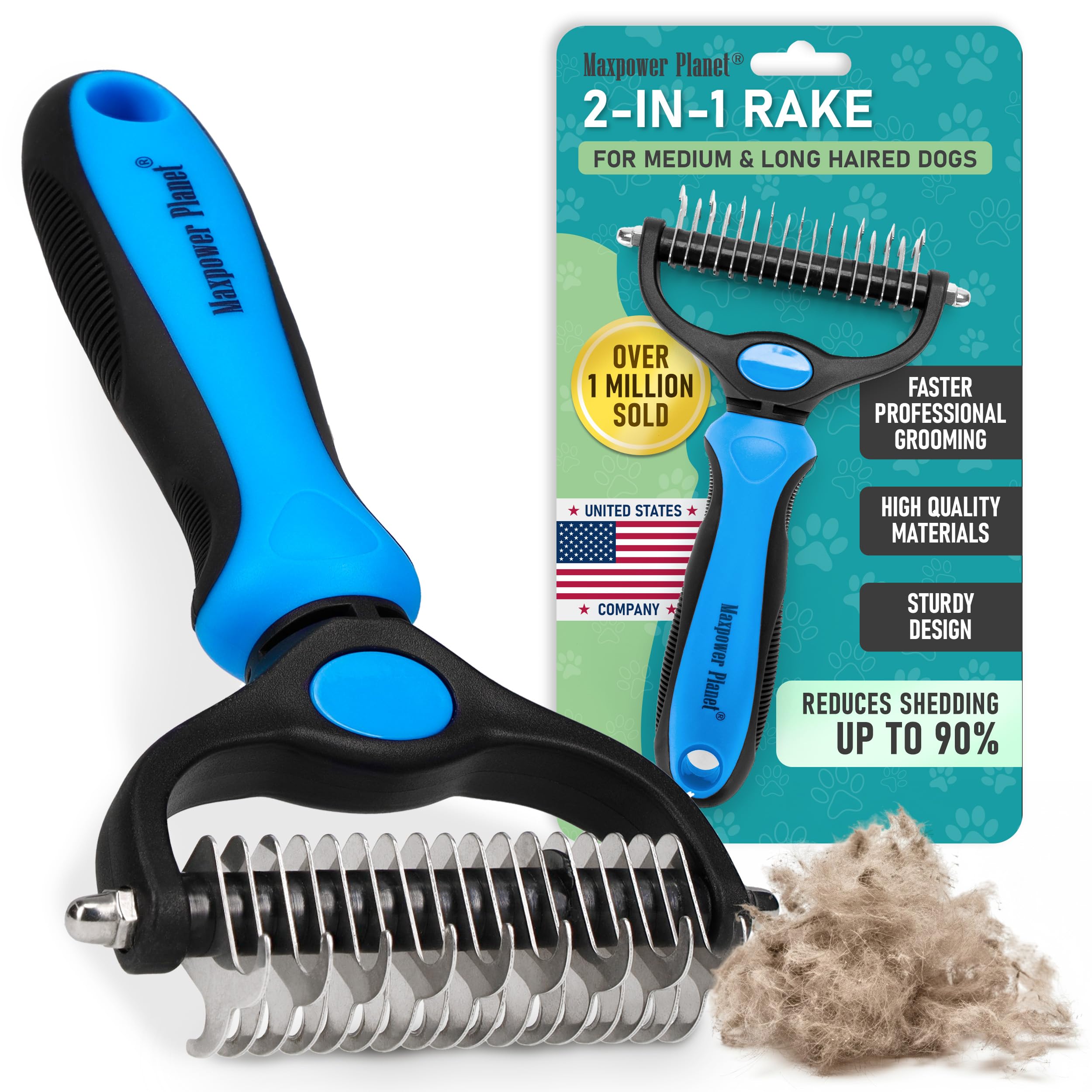
Maxpower Grooming Rake

Maxpower Grooming Rake

Mats and undercoat

Our Score 9.2/10
Check Price

Worth Noting

  • Not a finishing brush for a soft topcoat
Teeth
Rounded metal
Weight
4 oz
Tool Type
Dual-sided undercoat rake
Dimensions
6.6 x 3.9 x 2 in
Read the full review

When a cat comes in with a dense undercoat or a mat behind the ears, a fine slicker is the wrong first move. The Maxpower Planet rake is built for that job: a dual-sided head with a 9-tooth side for working through stubborn tangles and a wider side for pulling loose undercoat. The teeth are rounded, so the tool is doing some serious work without looking like a garden rake. The 4-ounce body is light enough to keep with the rest of the grooming kit.

We like the narrow 9-tooth side for controlled strokes around the hindquarters and belly, where a wide slicker can feel like too much at once. The wider side covers more ground on the back and flanks, and the non-slip rubber base gives you a sure grip when your hands are already furry. The rounded teeth are the detail that keeps it from feeling like a harsh stripping tool.

The dual-sided design is the practical advantage over a single rake, because you do not have to swap tools when you hit a tangle. It also costs less than most of the brushes here, which makes it an easy add-on if your cat is a heavy shedder. The 4-ounce body is light enough to keep with the rest of the grooming kit.

Bottom line: The Maxpower rake is the one we reach for when a cat has dense undercoat or mats: the dual-sided head gets into the coat, and the light body keeps the work manageable.

3

Glendan Slicker Brush

Glendan Slicker Brush

Small areas

Our Score 9.2/10
Check Price

Worth Noting

  • Hair lodges around the swivel; no self-cleaning
Head
180° rotation
Weight
3.17 oz
Brush Type
Rotating slicker
Bristle Tips
Coated
Read the full review

The Glendan's head swivels through 180 degrees, which sounds like a gimmick until you try to brush under a cat's chin or around a back leg. The rotating head lets the pins stay flat against the body instead of digging in at an angle, and the small head is easier to steer into tight spots than a full-size slicker. The coated tips keep the pins from feeling like tiny needles.

At 3.17 ounces, it is light enough to use with a loose wrist, and the handle gives you a secure grip without much bulk. We like it for the awkward places: the chest, the inside of the hind legs, and the strip along the spine where a cat is most likely to twitch. The control is what makes it useful on a wriggly cat.

The swivel takes some of the pressure off your wrist, and the small head lets you follow a shoulder or a hip without resetting your grip. It is not the fastest way to clear a dense undercoat, but it is easier to work with the cat rather than against it.

For a small cat or a cat that dislikes a wide brush head, the Glendan is the one we reach for. It will not replace a rake on a heavy coat, but the swivel head makes it easier to reach the places a cat guards. That control is worth the extra care it asks for.

Bottom line: The Glendan is our pick for tight spots and restless cats: the swiveling head follows the body, and the small size makes awkward angles easier to reach.

4

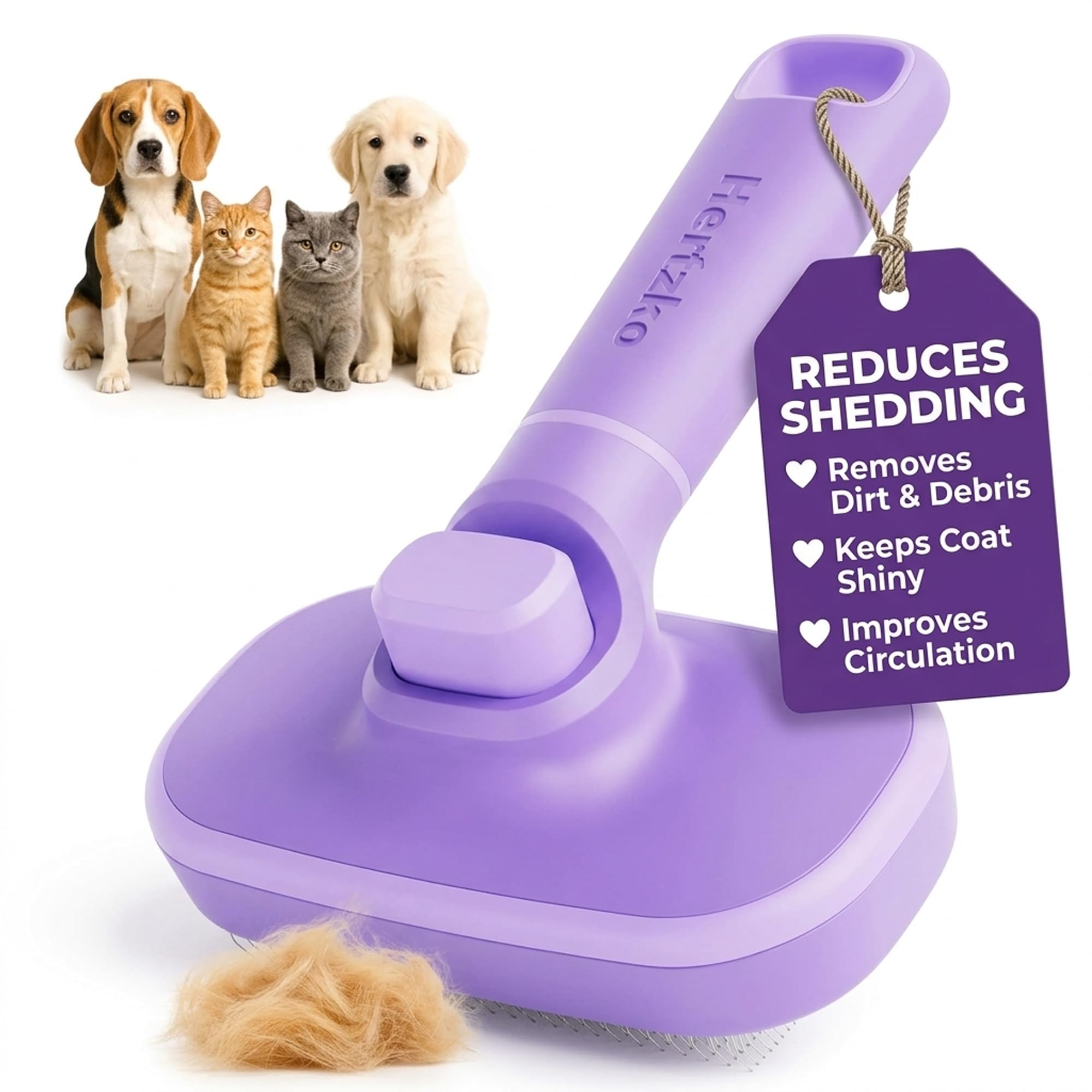
Hertzko Self Cleaning Slicker

Hertzko Self Cleaning Slicker

Multi-cat homes

Our Score 9.0/10
Check Price

Worth Noting

  • Button can stick and need working
Weight
3.2 oz
Bristles
Angled fine pins
Cleaning
Push-button retraction
Brush Type
Self-cleaning slicker
Read the full review

The push-button head is the feature that makes the Hertzko a serious everyday brush: press the button, the pins retract, and the fur slides off in one piece. That is the kind of cleanup that makes a daily brush feel less like a chore, especially if you are moving from one cat to the next. The head is wide enough to cover a back and flank in a few strokes, and the angled pins catch loose hair without a lot of pressure.

What we like most is how efficiently it works in a multi-cat household. You can do a quick pass on each cat, clear the head between them, and not spend the whole session fighting a packed brush. The fine pins are not the gentlest here on a cat with thin skin, so we use light strokes around the belly and hind legs and let the tips do the work. The 3.2-ounce body is easy to control for the size of the head.

The handle has a comfortable grip, and the button falls under your thumb without a reach. We did find that the pins can feel scratchy if you press down, which is why a light hand matters more with this brush than with a rubber-tipped slicker. Used gently, it is a fast, familiar shape that most cats will accept.

Bottom line: For multi-cat homes, the Hertzko is the efficient choice: a wide head, fine pins, and push-button cleanup make short work of loose fur, as long as you keep the button moving freely.

5

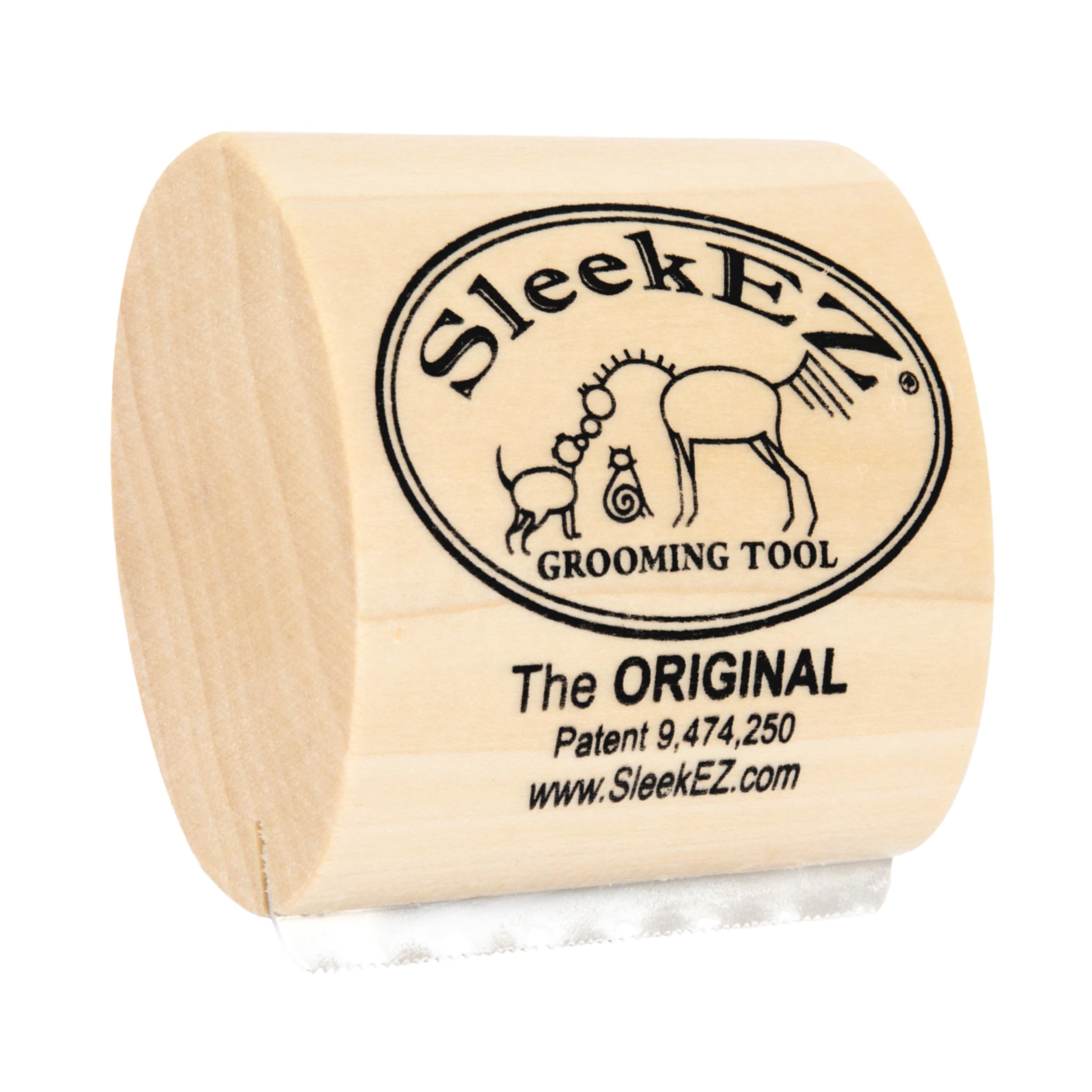
SleekEZ Cat Brush

SleekEZ Cat Brush

Sensitive cats

Our Score 9.0/10
Check Price

Worth Noting

  • Blade has to be wiped clean
Origin
Made in USA
Weight
2 oz
Tool Type
Deshedding blade
Coat Types
Short, medium, long
Read the full review

The SleekEZ is the alternative we keep for cats that tense up at the sight of a pin brush. It is a flat deshedding blade rather than a cushion of wires, so it glides over the coat and lifts loose fur without the scratchy, comb-like feel. The 2-ounce body is easy to control, and there is no button, no retracting head, and no plastic mechanism to stick. That simplicity is the whole appeal.

The blade works on short, medium, and long coats, and it is made in the USA. What we appreciate is how little technique it asks for: a few light strokes pull up a surprising amount of undercoat, and the fur collects on the blade so you can peel it off in a strip. It also earns a second life on carpets and cat trees, which is more useful than it sounds when shedding season hits.

It is not a mat splitter, so a felted knot still needs a rake first. For a sensitive cat that tolerates only a few minutes of grooming, though, the lack of fuss is the point.

Bottom line: The SleekEZ is our pick for sensitive cats: a flat blade glides over the coat without pin pressure, and the simple design leaves less to fuss with.

6

Docrok Grooming Combo

Docrok Grooming Combo

Long-haired cats

Our Score 9.0/10
Check Price

Worth Noting

  • More pieces to store and switch between
Tools
Rake and comb
Material
Stainless steel
Comb Sides
Wide and dense
Rake Sides
Wide and dense
Read the full review

The Docrok set is two tools rather than one: a double-sided rake and a double-sided comb. The rake has a wide side for dematting and a dense side for deshedding; the comb repeats that wide-and-dense pairing for finishing and for tighter spots like the legs, head, and tail. If you have a long-haired cat, that division of labor is the reason to look at it.

The stainless steel teeth feel sturdy, and the TPR handle is comfortable enough to use for a full session. We like the comb for the places a slicker cannot reach cleanly, especially around the ruff and behind the legs. The rake does the heavier work, and then the comb smooths the coat and catches the last loose hairs. It feels like a small grooming kit rather than a single brush with a marketing story.

This is the most deliberate grooming set here, and it asks for a little more patience than a single slicker. You have to choose the right side, work in sections, and keep the teeth clear. For a cat that mats easily or a long-haired cat that needs a weekly routine, that extra step is worth it. For a short-haired cat that just needs a quick once-over, it is more tool than you need.

Bottom line: The Docrok combo is our pick for long-haired cats: the rake opens mats and the comb finishes the coat, giving you the right tool for each stage of the job.

7

Depets Self Cleaning Brush

Depets Self Cleaning Brush

Lightweight daily use

Our Score 9.0/10
Check Price

Worth Noting

  • Soft pins can skate over thick undercoat
Handle
Nonslip grip
Weight
3.53 oz
Brush Type
Self-cleaning slicker
Bristle Tips
Round beads
Read the full review

The Depets brush is light in the hand and soft at the tips: 100 grams, a nonslip handle, and stainless steel pins finished with round beads. That combination makes it a pleasant brush to pick up for a few minutes at a time, especially if your cat is still deciding whether grooming is a good idea.

The one-click cleaning button does what it promises: press it and the hair lifts off the pins in a mat. We appreciate that on a brush at this end of the price range, because cleanup is usually where budget tools cut corners. The handle is comfortable enough for longer sessions, and the round beads give the pins a massage-like feel rather than a sharp point.

The Depets is at its best as a finishing brush: after a rake has loosened the undercoat, it smooths the topcoat and picks up the strays. The small head is also useful around the face and paws, where a bigger slicker feels clumsy. That makes it a good second pass in a longer routine.

What we keep coming back to is the size and weight. It is easy to control around the face and paws, and the head is small enough that a cat can watch what is happening without feeling swallowed by the brush. The 100-gram body is light enough to hold while you steady a wriggling cat with the other hand, and the round beads make a quick session feel more like petting than grooming.

Bottom line: The Depets is a gentle, light everyday brush for cats with short or fine coats, and the one-click head makes cleanup easy without a big investment.

8

Aumuca Cat Brush

Aumuca Cat Brush

Everyday cat grooming

Our Score 8.8/10
Check Price

Worth Noting

  • Not built for heavy mats
Cleaning
One-click shutter
Pin Tips
Rounded rubber
Brush Type
Self-cleaning slicker
Dimensions
4.05 x 1.54 x 9.64 in
Read the full review

The first thing we noticed about the Aumuca is the pin angle: 150° bent needles with rounded rubber tips, rather than the straight, sharp-ended wires on a lot of slickers. That shape is why it earns our top spot for most cats. It lets the pins follow the curve of a cat's flank and underbelly instead of scraping one spot, and the rounded ends give us more confidence around the chest and hindquarters. The one-click shutter is just as useful: press it, the brushed hair lifts away from the needles, and you can keep going without digging at the head with a comb.

The stainless steel pins feel firm enough to reach loose undercoat, but the rubber tips keep the experience from turning into a scratch session. For a cat that tolerates brushing for a few minutes at a time, that matters more than a bigger head. At about 9.6 inches long overall, it has a useful reach without feeling like a dog brush in your hand, and the white body makes it easy to see when the pins need another pass.

Where it stops is heavy mats. The fine pins are made for loose fur and everyday shedding, not for cutting through a felted knot; for that, a rake is the better tool. The button sits at the top of the handle, so it is easy to press mid-session, though we prefer to clear the head over a trash can before the hair builds up. That small rhythm is what makes it a brush we actually keep within reach.

Bottom line: We recommend the Aumuca as the default cat brush for most homes: its angled, rounded pins are gentle on a cat's skin, and the one-click shutter makes cleanup genuinely quick.

How We Tested the Best Cat Brushes

We started with the brushes that kept resurfacing in customer reviews and on pet-store shelves — self-cleaning slickers, rubber curry-style mitts, wide-tooth deshedding combs, and a few old-fashioned bristle brushes — then narrowed by bristle type, tine length, head angle, and construction, since nothing in this category should be complicated or expensive. Fourteen made the cut, covering both short-haired and long-haired designs.

Each brush spent four months in rotation with my two cats and my teammates' cats, mostly in the ten drowsy minutes after dinner, plus a stretch of spring shedding done on the living room rug and one bath-time attempt that nobody enjoyed. For every brush we ran timed three-minute sessions over the same patch of back and flank, weighed the fur that came off on a kitchen scale, and counted the strokes it took before a cat stood up and walked away.

Between sessions we emptied each one and noted whether the fur lifted off in a single sheet or had to be picked out of the tines with a fingernail. Self-cleaning models got their retract button pressed twenty times in a row on day one and again in week ten, because a mechanism that sticks on the third try is worse than no button at all. We also checked handles and seams for wobble after a few weeks of daily use, noted how the grip sat in a smaller hand, and watched how each cat reacted to the sound and feel of the head — a brush they leaned into earned points, and one they flinched from did not.

How to Choose Cat Brushes

Match the tool to the coat and the job

A slicker brush is the everyday workhorse: fine pins catch loose fur and smooth the topcoat. A rake or a deshedding blade goes deeper for dense undercoats and mats. If your cat has a thick double coat, start with a rake such as the Maxpower and finish with a slicker. For a short, fine coat, a self-cleaning slicker such as the Aumuca or Swihauk is usually enough. Do not expect one tool to do both jobs well.

Choose gentleness over speed

Rounded tips matter more than a wide head on a cat with thin skin. Fine metal pins can scratch if you press hard, and a cat that has one bad session will remember it. We use light strokes and let the pins do the work, especially around the belly and hindquarters. A brush with coated or rubber-tipped pins, like the Aumuca or Depets, is a safer starting point for a sensitive cat. If your cat flinches at pins, switch to a flat blade such as the SleekEZ rather than forcing it.

Treat the self-cleaning button as a moving part

Self-cleaning buttons are genuinely useful, but the mechanism is the part most likely to need attention. A button that sticks can turn a one-second cleanup into a two-handed fuss. Press the button a few times before you buy if you can, and keep the head clear of hair so the retraction is not fighting a packed cushion. The Hertzko and Swihauk both use this design; the Aumuca's one-click shutter is the one we prefer in this group.

Size, handle, and the cat in front of you

A smaller head is easier to control around the face, paws, and belly, while a wider head covers more of the back in fewer strokes. Neither is universally better: a wide slicker can feel overwhelming to a nervous cat, and a small head takes longer on a big coat. A light handle reduces fatigue, but a little weight can add control. Watch your cat's tail and ears; if they flatten, stop and try again later. The Glendan's swivel head and the Depets's light body are good examples of matching the tool to the cat.

Frequently Asked Questions

Final Verdict

For most cats, the Aumuca is the brush we recommend first. Its angled, rounded pins are built for a cat's shape, and the one-click shutter makes daily grooming easy to keep up with. If your cat has a dense undercoat or mats, choose the Maxpower rake instead and save the Aumuca for finishing. The Hertzko remains a strong everyday alternative for multi-cat homes, provided the button stays smooth.